 en
 English
 Deutsch
Multifunctional Tool Storage Combination Cabinet
Multifunctional Tool Storage Combination Cabinet Material and appearance: Made of premium cold steel...

You are standing in front of two storage units that look almost identical: a 7-drawer tool cabinet with a solid wood top and a 12-drawer tool chest with a wide flip-up lid. Both are welded steel, both lock, and both can be wheeled. Yet the tool cabinet vs. tool chest decision changes how you work more than the sticker price suggests. This guide explains the structural difference, compares five measurable criteria, and gives you a decision rule that covers home workshops, garages, and professional service bays.
A tool chest is a self-contained storage unit with a hinged top compartment, a shallow divider tray, and one to three full-width drawers beneath it, designed to be carried or wheeled to the job.
The opening top is what separates it from every other box. When you lift the lid, you get a deep tray where hammers, pry bars, pliers, and long wrenches stand upright instead of lying flat in a drawer. Below that tray, the chest body holds a thin parts tray and one to three drawers for sockets, bits, and small fasteners. A typical 26-inch workshop chest weighs about 14 to 18 kg (30 to 40 lb) empty, which is why mechanics grab it by its side handles and move it across a parking lot or construction site.
The strength of a chest is vertical clearance; the weakness is flat area. You get one useful layer for large tools and a few shallow drawers, so volume is limited compared with a cabinet of the same width.
A tool cabinet is a tall storage unit in which full-width drawers occupy nearly all of the interior volume, with no top compartment and usually a work surface on top.
Cabinet drawers run the full depth of the unit and are sized in a vertical ladder: upper drawers for small socket sets and screwdriver sets, lower drawers deep enough for impact wrenches, drill motors, and 108-piece socket sets. Manufacturers like Suzhou Xingwotai Hardware Co., Ltd., which sells tool storage under the Phixwell brand, build cabinets in 7-, 8-, 10-, 11-, 12-, and 13-drawer configurations. The company's Shentai tool cabinet factory alone targets a monthly output of more than 10,000 units, which keeps a 7-drawer model affordable while maintaining all-steel construction and ball-bearing slides rated for heavy daily loading.
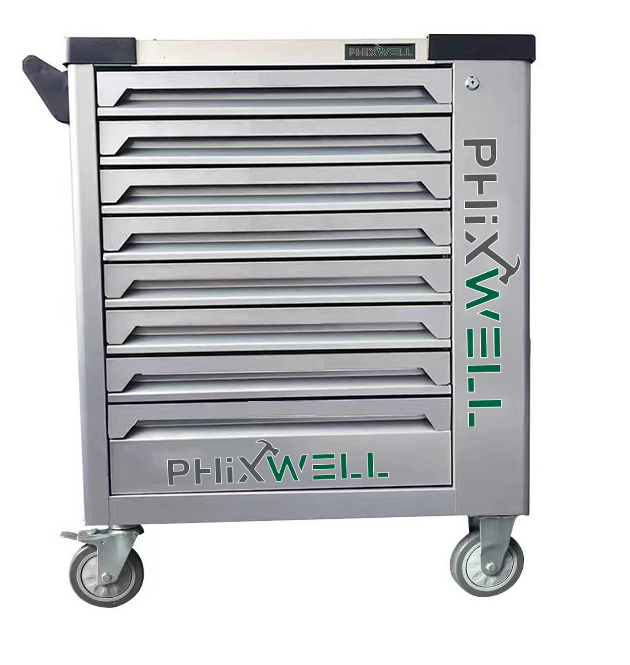 PHIXWELL 8-Drawer Steel Tool Cabinet with Ball-Bearing SlidesThis cabinet balances capacity and floor footprint, holding roughly three times the drawer volume of a chest. Its deep lower drawers suit impact wrenches, while the 8-drawer layout fits compact workshops.View Product →
Because the drawers sit inside the cabinet footprint, a cabinet stores roughly three times the drawer volume of a chest with equal floor space. The trade-off is mobility: a fully loaded 12-drawer cabinet can weigh more than 150 kg, so it stays in one bay and rolls only over smooth concrete with the casters locked.
The two formats differ in shape, portability, and where they place the storage volume. The table below is a condensed reference for planning a purchase.
| Criterion | Tool chest | Tool cabinet |
| Top compartment | Hinged lid with deep tray | Flat steel or wooden top |
| Drawer count | 1-3 below the tray | 5-13 full-width drawers |
| Storage focus | Tall tools in vertical position | Layered flat storage for sets |
| Typical loaded weight | 25-60 kg | 150-250 kg |
| Mobility | Carried or wheeled easily | Rolls on casters, stays in one bay |
| Work surface | No usable bench space | Yes, on wooden or steel top |
| Best use | Mobile work, site visits | Fixed garage or workshop bay |
The right pick comes down to five measurable criteria: drawer volume, mobility, work-surface utility, tall-tool clearance, and lock security. Score your own workflow before spending.
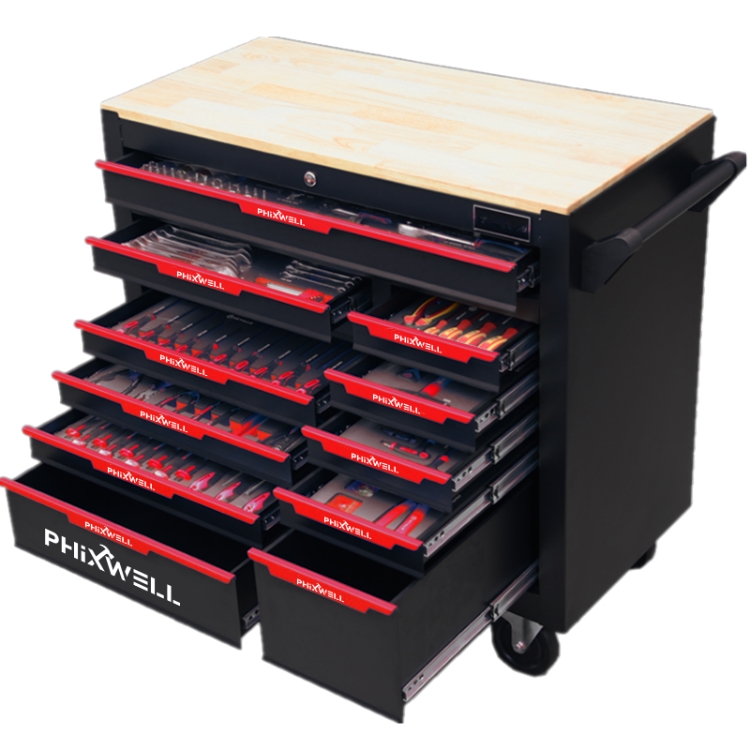 PHIXWELL 12-Drawer Heavy-Duty Tool Cabinet for Large ShopsWith 12 full-depth drawers, this unit offers maximum organized storage for extensive tool collections. Consider its 150 kg loaded weight and stationary placement when planning your workspace and bench surface.View Product →
If you are still planning the shop layout, read our advice on choosing a workbench workstation before you lock in a footprint; the cabinet top often becomes the bench surface.
Choose a tool chest when your tools must travel to the work; choose a tool cabinet when the work comes to a fixed station. Apply the five-step check below and the answer stops being a style preference.
Before you set a budget, scan the 2026 Phixwell catalogue to compare actual steel gauge, slide ratings, and drawer layouts across 7-drawer to 13-drawer models.
The answers below cover the most common follow-up questions buyers ask after comparing chests and cabinets.
Yes. The classic mechanic's stack places a chest on a flat-top roller cabinet, adding a third tier of storage. Confirm the cabinet top is reinforced and the combined height stays below shoulder level so the top drawers remain visible.
In a small garage, a 7- to 12-drawer cabinet wins because it packs three times the flat drawer volume into the same footprint. Reserve a chest for cases where you actually carry the kit to another location.
Ball-bearing slides carry the load and determine smooth travel. Choose slides rated at least 45 kg per pair with full-extension travel; a loaded drawer can tip when less than half of it stays supported inside the cabinet body.
Mechanics storing socket rails, impact guns, and specialty sets usually start with an 8-drawer unit at 46 inches wide and step up to a 12- or 13-drawer cabinet when the bottom drawers need to fit power tools. Depth matters more than width: look for at least 50 cm of clear drawer depth.
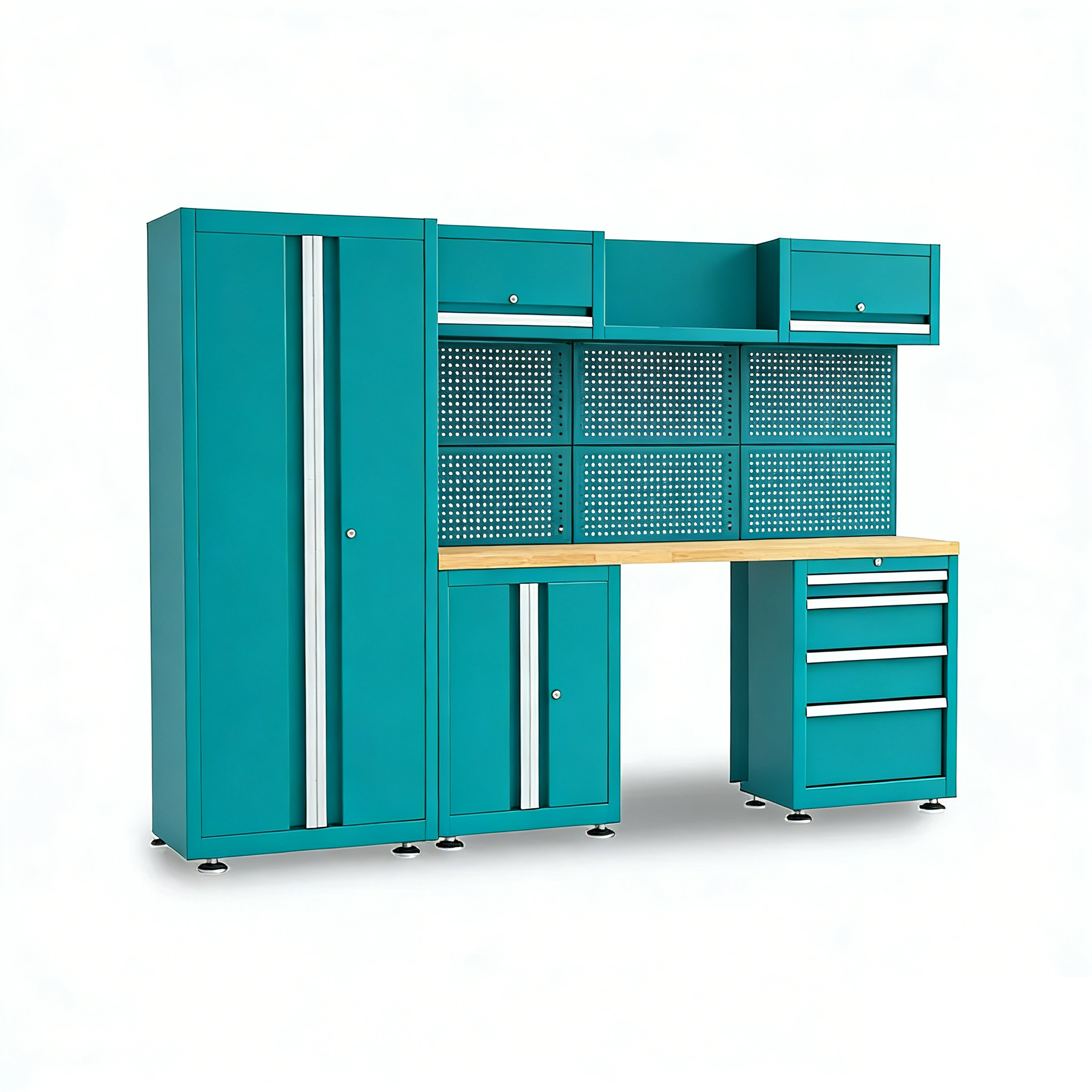
Multifunctional Tool Storage Combination Cabinet Material and appearance: Made of premium cold steel...
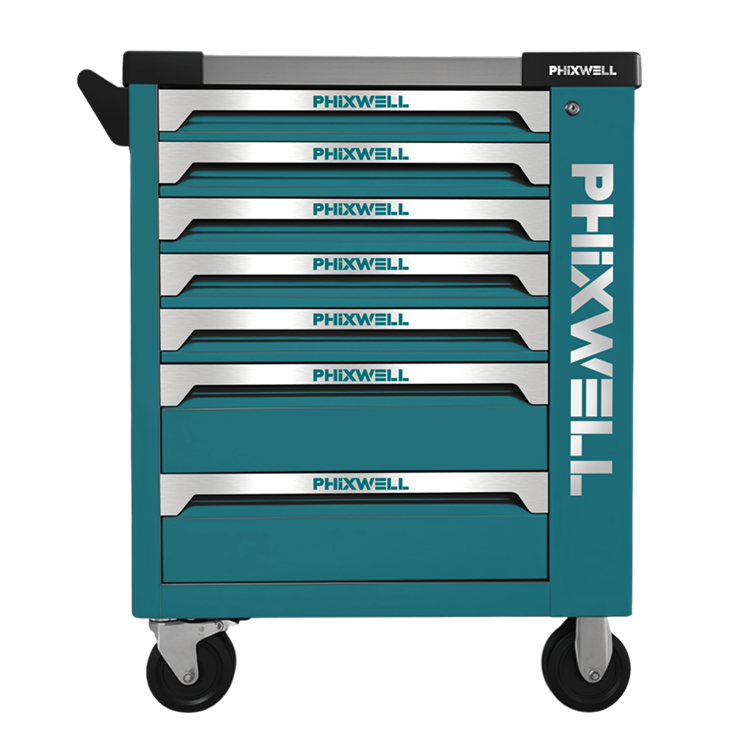
The tool cart group provides a set of tools to solve the problem of tool confusion and difficulty in...

This household tool set is the ideal companion for your home repairs and DIY projects. It includes a...
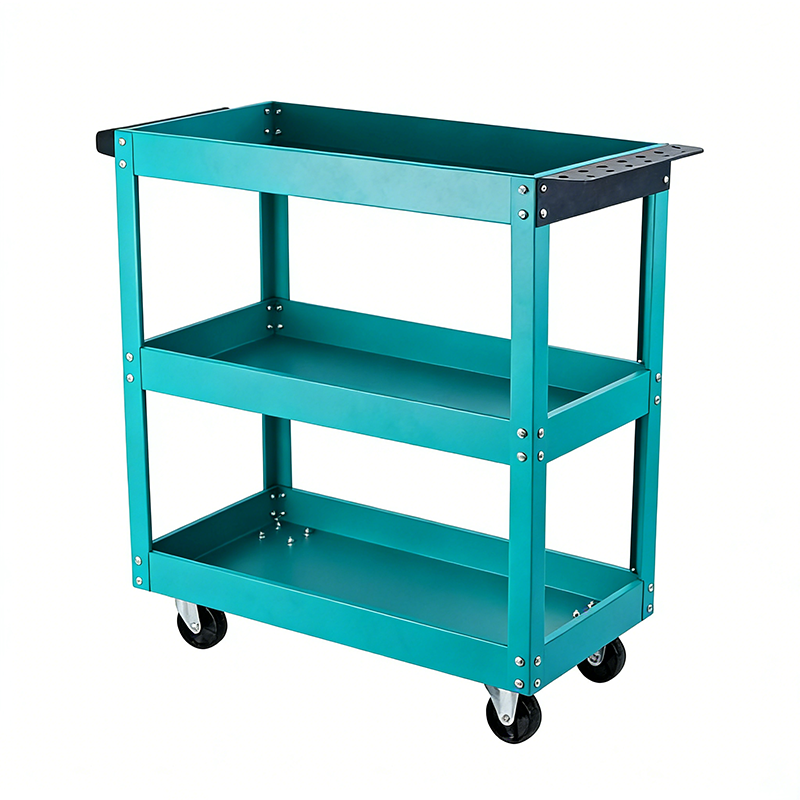
This is a **Three-Layer Auto Repair Tool Cart**, a multifunctional mobile maintenance storage device...
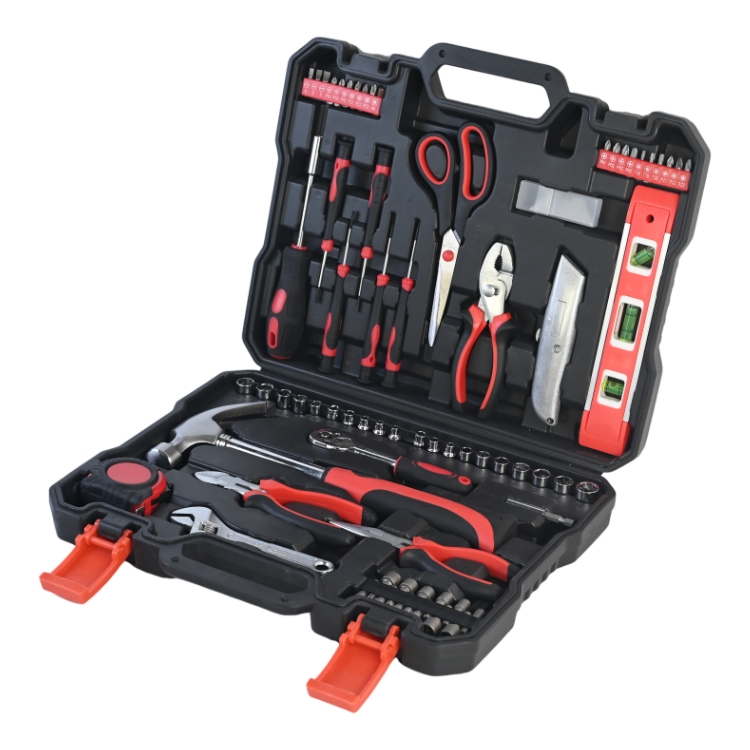
This household tool set is the ideal companion for your home repairs and DIY projects. It includes a...
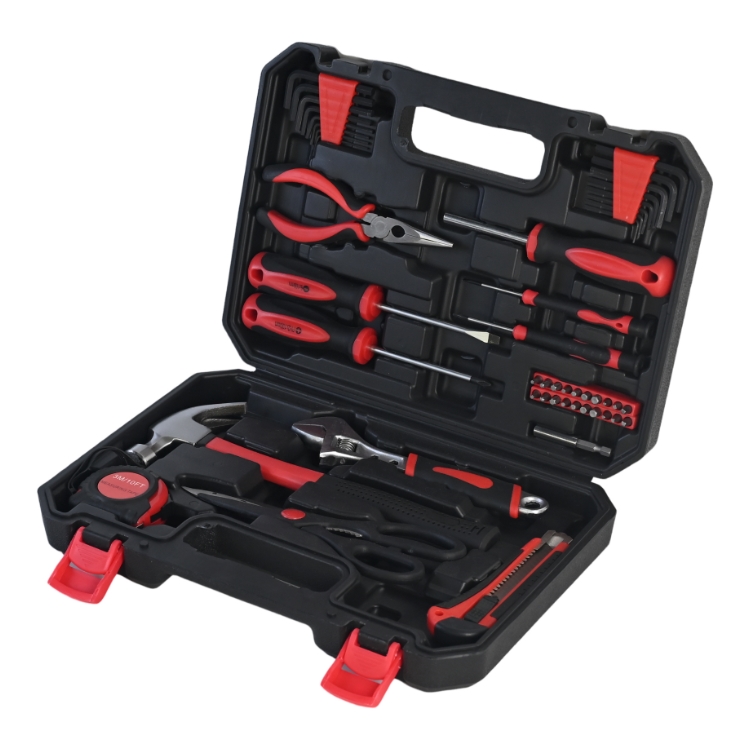
This household tool set is the ideal companion for your home repairs and DIY projects. It includes a...
Content
Our annual output of more than 100,000 tool cabinet can meet the needs of customers with different purchase volumes.

+86-18658800788
+86-0512-58499000

New City Industrial Park, No. 108 Sizha Road, Yangshe Town, Suzhou, Jiangsu, China

