 en
en  English
 Deutsch
Multifunctional Tool Storage Combination Cabinet
Multifunctional Tool Storage Combination Cabinet Material and appearance: Made of premium cold steel...

A tool cabinet is a freestanding or wall-mounted storage unit designed specifically to organize, protect, and provide efficient access to hand tools, power tool accessories, measuring instruments, and workshop consumables. Unlike a general storage shelf or utility rack, a tool cabinet is engineered around the specific demands of professional and industrial tool storage: heavy-gauge steel construction to withstand constant use, drawer slides rated for high load capacity, locking mechanisms that protect valuable tool inventories, and interior fitments — foam inserts, drawer liners, pegboard panels — that keep tools separated, visible, and ready to use.
Tool cabinets are a fundamental fixture of automotive workshops, manufacturing cells, machine shops, maintenance departments, and professional trade services. A well-specified tool cabinet is not simply storage — it is a productivity tool in its own right. Technicians lose an estimated 30–60 minutes per shift searching for misplaced tools in disorganized workspaces; a properly configured cabinet eliminates that loss by giving every tool a defined, immediately visible home.
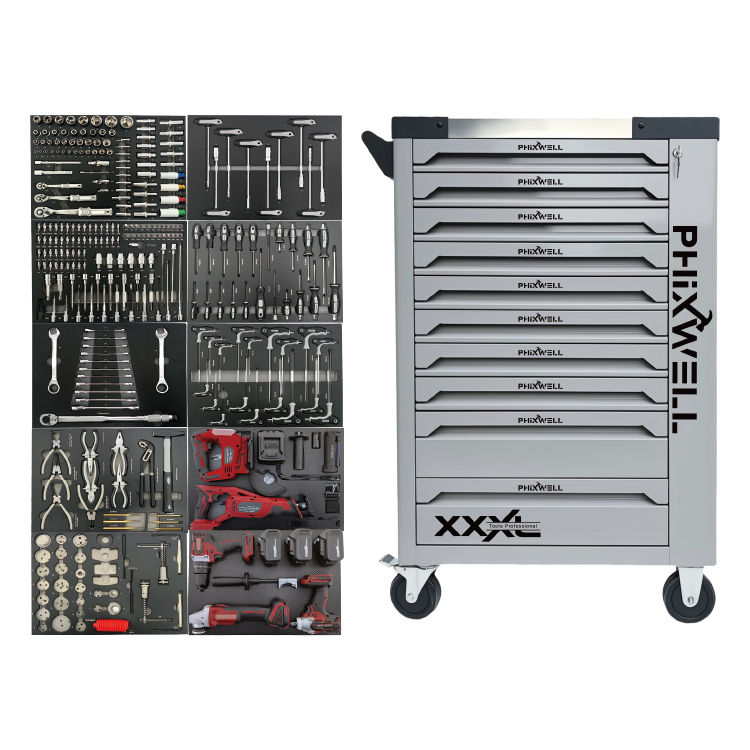
Tool cabinets are produced in several distinct configurations, each suited to a different workspace layout, tool inventory size, and mobility requirement. Understanding the differences prevents the common mistake of purchasing a unit that does not fit the workflow it is meant to support.
The rolling tool cabinet — also called a bottom chest on casters — is the most widely used format in professional automotive and industrial environments. It sits on lockable heavy-duty casters (typically 5" or 6" diameter, rated at 75–150 lbs each) that allow the entire unit to be repositioned to the work area rather than requiring the technician to walk back and forth across the shop. Rolling cabinets are typically wider and taller than portable chests, with drawer banks that can accommodate full sets of socket rails, wrench organizers, and specialty tool trays. Units intended for professional use carry drawer load ratings of 100–200 lbs per drawer and overall cabinet capacities exceeding 2,000 lbs.
A top chest is a portable, handled unit designed to sit on top of a rolling cabinet, forming a combined storage system that maximizes vertical space while keeping frequently used tools at eye level. Top chests are shallower in depth and lighter than their rolling counterparts, typically carrying drawers suited to screwdrivers, pliers, small sockets, and precision instruments. When combined with a matching roller cabinet below, the two units are secured together and the result is commonly called a tool cart combo — the standard configuration in professional automotive dealerships and fleet maintenance operations.
Wall-mounted cabinets bolt directly to a stud wall or reinforced panel and free up floor space in compact workshops, service vans, and vehicle-mounted service bodies. They typically feature a hinged door that opens to reveal a pegboard or slotted panel interior with hooks, bins, and tool holders, sometimes combined with shallow fixed shelves. Load capacity is constrained by wall fixing strength, but well-anchored units handle 200–400 lbs of tool weight without issue. Van-mounted versions use recessed or low-profile designs that sit within the vehicle's cargo wall framing.
Modular tool storage systems allow workshops to configure storage around specific tool inventories rather than buying fixed-size units. Side lockers — tall, narrow cabinets that attach to the side of a rolling base — add vertical storage for power tools, cordless tool chargers, extension leads, and long-handled equipment that does not fit in standard drawers. High-end modular systems from professional tool brands allow interchangeable drawer configurations, adjustable divider systems, and power strip integration, creating a fully customized workstation.
Tool cabinets vary enormously in quality across price points, and the specifications that separate a professional-grade unit from a consumer model are not always obvious from photographs or marketing descriptions. These are the parameters that determine real-world performance and longevity.
| Specification | Consumer Grade | Professional Grade |
|---|---|---|
| Steel Gauge (body) | 22–24 gauge (thinner) | 16–18 gauge (thicker) |
| Drawer Load Rating | 25–50 lbs per drawer | 100–200 lbs per drawer |
| Drawer Slide Type | Single-extension friction slides | Full-extension ball-bearing slides |
| Caster Diameter | 3"–4" | 5"–8" |
| Locking System | Single keyed lock, shared barrel | Central locking, keyed-alike systems, puck locks |
| Worktop | Thin steel or absent | Stainless, butcher block, or thick steel with lip |
| Drawer Liner | Absent or thin rubber mat | EVA foam, kaizen foam, or textured liner |
Steel gauge is the single most important indicator of build quality. Lower gauge numbers mean thicker steel: a 16-gauge body is substantially more rigid, dent-resistant, and load-capable than a 22-gauge unit. Budget cabinets flex when loaded, which causes drawer misalignment, slide binding, and structural distortion over time. Full-extension ball-bearing drawer slides are equally important — they allow the entire drawer depth to be accessed without tilting or reaching blind into the back of the drawer, which matters significantly in a production environment.
Purchasing a quality tool cabinet is only the first step. How the cabinet is organized determines whether it accelerates or complicates the workflow it is meant to support. The most effective tool cabinet organization systems are built around three principles: frequency of use, tool category grouping, and visual inventory control.
Tools used multiple times daily belong in the top two drawers — at waist to chest height — where they are retrieved without bending. Specialty tools used weekly or monthly go in lower drawers or the bottom of a side locker. Seasonal or rarely used equipment belongs in the deepest, least accessible storage. This hierarchy means the technician's most productive movements are the shortest ones.
Kaizen foam and EVA foam shadow boards — drawer liners cut with custom tool-shaped recesses — are among the most effective tool control measures in professional shop environments. Each tool has a unique silhouette cut into the foam; a missing tool leaves a visible gap immediately apparent during a 5-second visual scan. Shadow board systems are standard practice in 5S lean manufacturing environments, aerospace MRO facilities, and surgical instrument management, and are equally valuable in any professional workshop where tool accountability matters.
Sockets are best stored on rail-mounted holders within a shallow drawer, arranged by drive size (¼", ⅜", ½") and progression from smallest to largest. Combination wrenches lay flat on a dedicated wrench organizer — either a clipped rail or a foam insert — arranged in ascending order. Mixing socket sizes or wrench sizes in a single drawer without a holder creates search time every time the drawer is opened and increases the likelihood of using the wrong size and rounding a fastener.
Every drawer should be labeled on its front face with its contents category. Labels need not be elaborate — a printed or hand-written card in a drawer pull slot is sufficient. The goal is eliminating the time spent opening multiple drawers to locate a category. In multi-technician environments, consistent labeling across all cabinets reduces training time for new staff and eliminates the "where do you keep the torque wrenches?" conversation entirely.
Tool cabinets are not a one-size-fits-all product. Different industries place different demands on storage systems, and the correct specification varies significantly between environments.
The right tool cabinet is the one that matches your actual tool inventory, workspace constraints, and workflow — not the largest or most expensive unit available. Working through these four questions narrows the choice efficiently.
The most common tool cabinet purchasing mistake is buying to current inventory rather than projected inventory. A professional technician's tool set grows significantly over the first five years of their career. Purchasing a cabinet that is already at 80% capacity on day one means buying a second unit within two to three years — at higher total cost than buying adequate capacity initially. Budget for 30–40% unused capacity in a new cabinet purchase to accommodate growth without a forced upgrade.
Hydraulic torque multipliers, large impact guns, heavy sets of spanner wrenches, and power tool batteries add significant weight to lower drawers. Verify that the drawer load rating of any cabinet under consideration exceeds your heaviest anticipated drawer load by at least 30–50% to account for uneven load distribution and long-term slide wear.
If the cabinet will be repositioned daily or weekly, caster quality is not an optional upgrade — it is a core function. Large-diameter polyurethane casters roll over floor irregularities (expansion joints, drain channels, floor plate edges) without jarring the cabinet or requiring the contents to be removed first. Swivel casters on all four corners with dual-wheel brakes on two corners provide the best combination of maneuverability and stability when locked at a workstation.
In a private home workshop, a basic keyed lock is adequate. In a shared professional environment, consider a central locking system that secures all drawers simultaneously with a single key, or a puck lock upgrade that provides higher pick and drill resistance than standard barrel locks. For high-value tool inventories in high-traffic areas, combination locks or electronic keypad locks eliminate the key management problem entirely and allow per-user access codes that can be changed if staff turnover occurs.
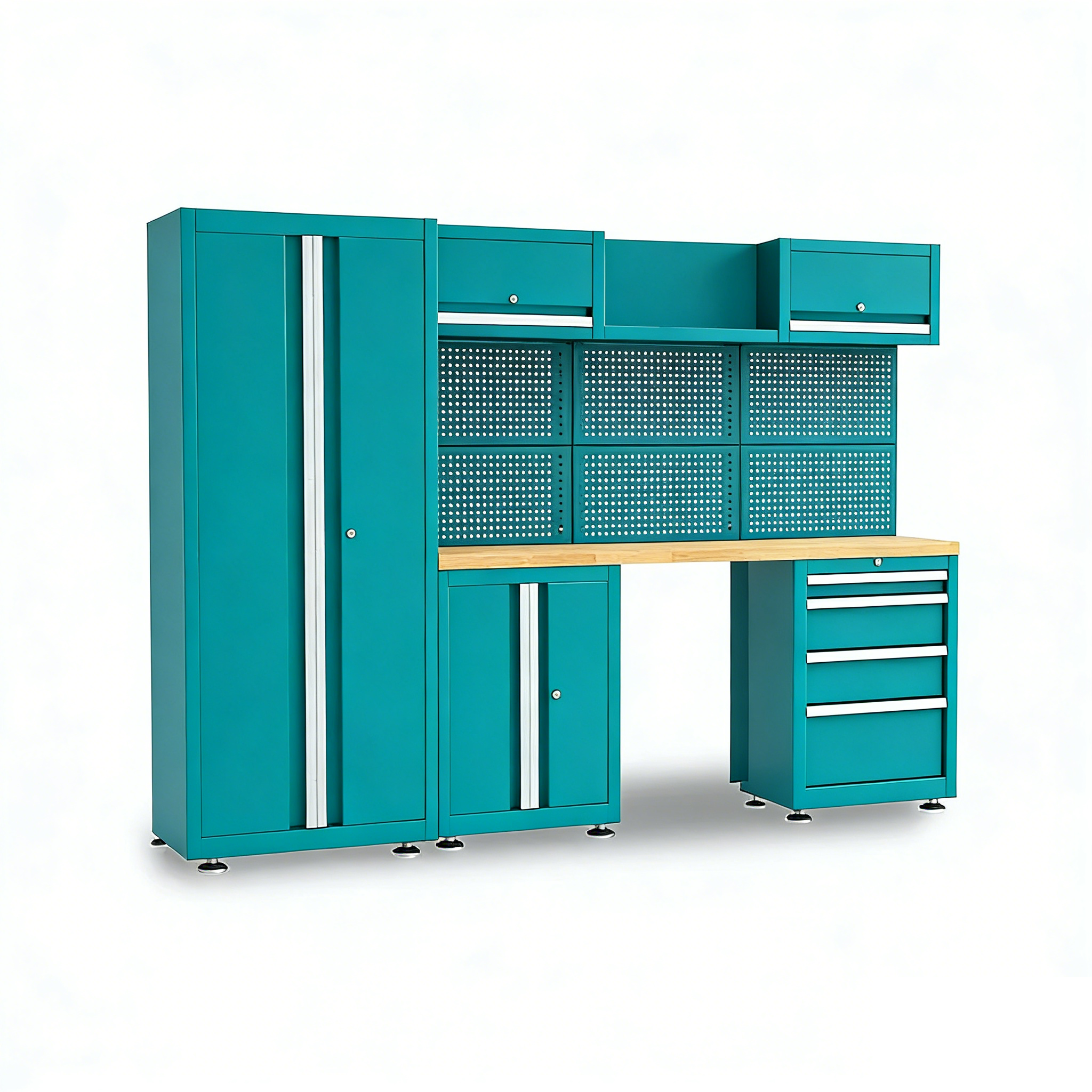
Multifunctional Tool Storage Combination Cabinet Material and appearance: Made of premium cold steel...
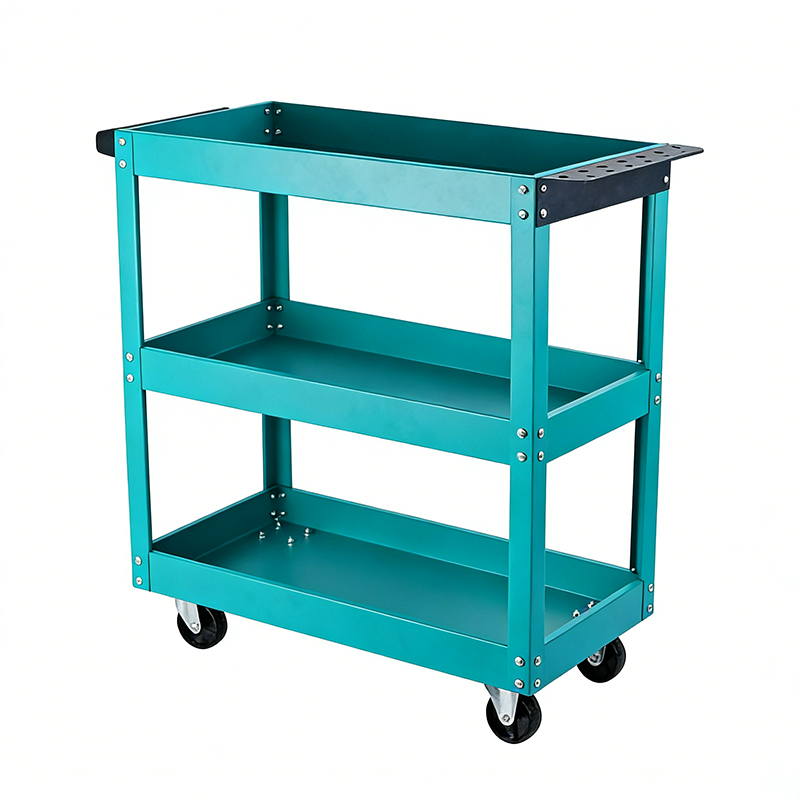
This is a **Three-Layer Auto Repair Tool Cart**, a multifunctional mobile maintenance storage device...
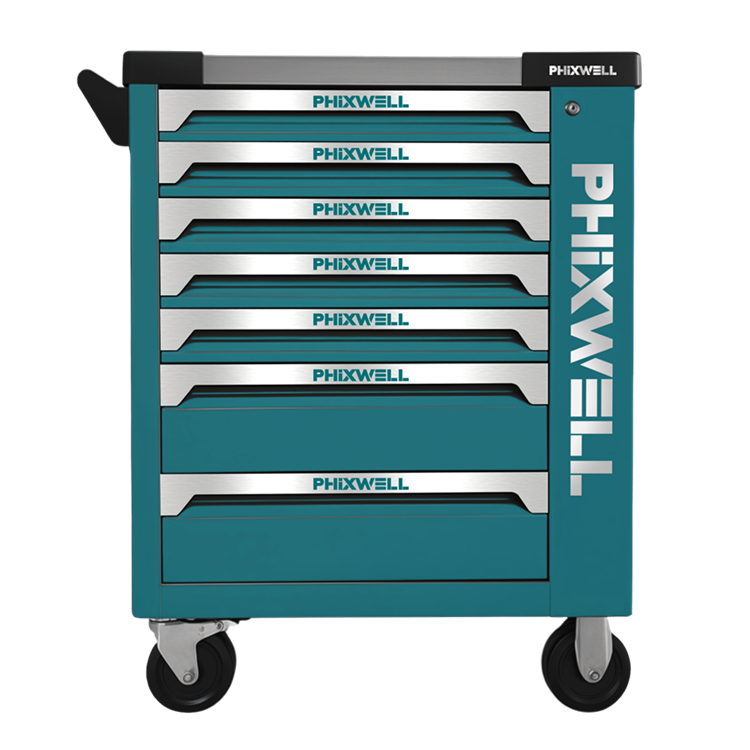
The tool cart group provides a set of tools to solve the problem of tool confusion and difficulty in...
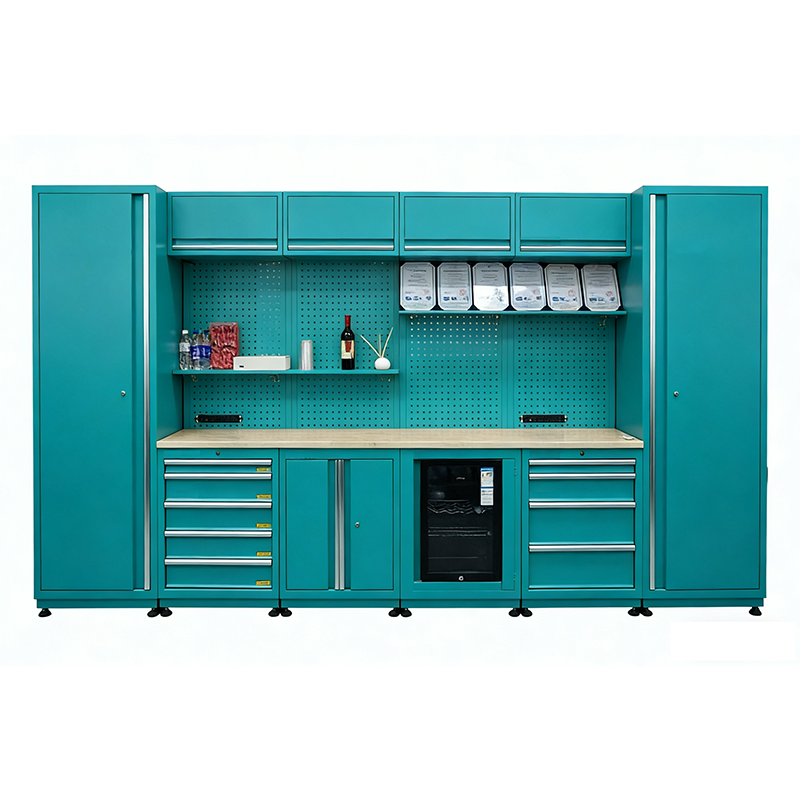
# Workshop Modular Storage Combination Cabinet (Model 719610) Product Introduction This workshop sto...
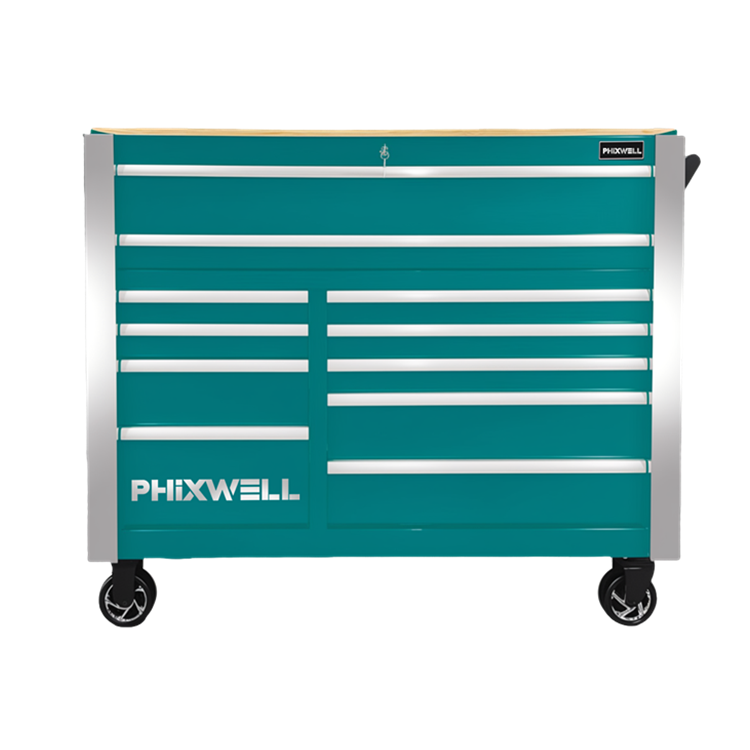
Prevent insufficient tool protection: Avoid rusting, collision or calibration failure caused by long...
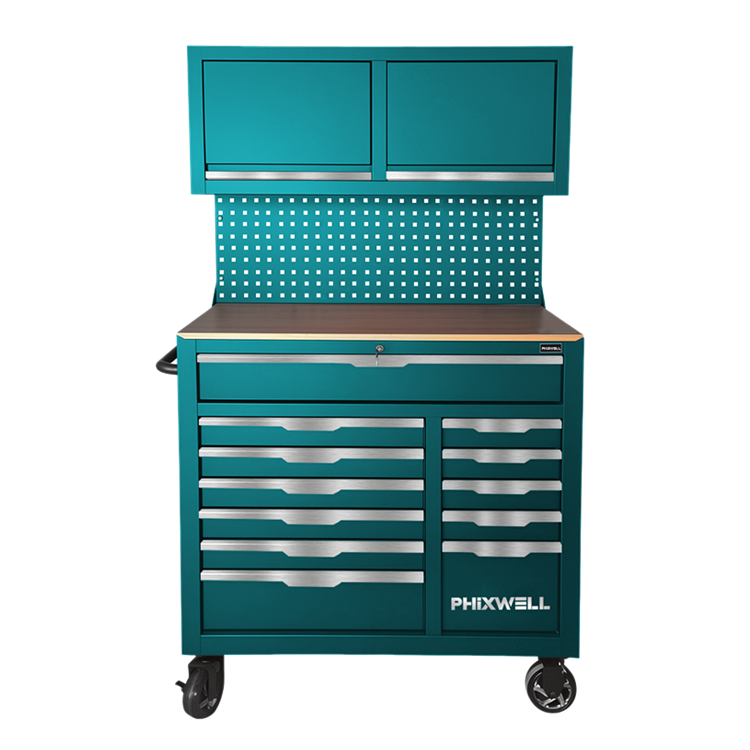
This is a heavy-duty multifunctional tool cabinet workbench set launched by the **PHIXWELL** brand, ...
Our annual output of more than 100,000 tool cabinet can meet the needs of customers with different purchase volumes.

+86-18658800788
+86-0512-58499000

New City Industrial Park, No. 108 Sizha Road, Yangshe Town, Suzhou, Jiangsu, China

