 en
 English
 Deutsch
Workshop Modular Storage Combination Cabinet
# Workshop Modular Storage Combination Cabinet (Model 719610) Product Introduction This workshop sto...

You have spent eleven minutes hunting for a 10 mm socket that you know you bought last month. The wrenches live in three different boxes, the impact driver is buried under a pile of rags, and the drill balances on a shelf above the workbench. This is the moment most workshop owners start searching for a tool cabinet. Choosing the right tool cabinet for your workshop is not about picking the biggest box in the catalog. It is a sequence of measurable decisions: inventory size, steel gauge, slide rating, mobility, lock security, and supplier reliability. Every one of these can be evaluated with a number or a test method before you spend a single dollar.
This guide is written for garage hobbyists, professional mechanics, and workshop managers buying their first serious storage unit. We focus on measurable specifications rather than marketing copy, and we reference real production data from Phixwell, the tool storage brand of SUZHOU XINGWOTAI HARDWARE CO.,LTD, whose cabinets are manufactured in the Shentai factory in Zhangjiagang, China.
Count and measure your tools before you compare any cabinet models, because the cabinet must fit the inventory, not the other way around.
A cabinet that is too small fills up in three months. A cabinet that is too large consumes floor space a working shop cannot spare. A typical professional mechanic owns between 150 and 400 hand tools; a serious home workshop holds 50 to 150. Sockets alone can occupy three full drawers when the set exceeds 200 pieces. Before you open any product page, run this checklist.
Drawer count is a useful shorthand, but drawer depth and width matter more. A 7-drawer cabinet with deep bottom drawers can store more than a 13-drawer unit with shallow ones. The Phixwell 719513 8-drawer tool cabinet, for example, pairs two full-width deep drawers for power tools with six medium drawers for sockets and hand tools. That layout matches the real shape of most workshop inventories.
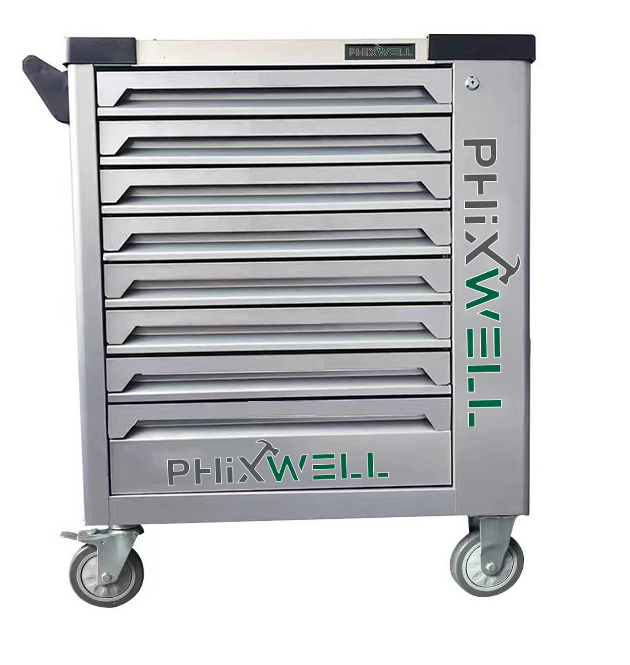 Phixwell 719513 8-Drawer Tool Cabinet for Workshop StorageWith two full-width deep drawers for power tools and six medium drawers for hand tools, this cabinet's layout matches the real shape of most workshop inventories.View Product →
A tool cabinet is a steel box, and the steel gauge determines how many years that box will survive. Thin sheet metal flexes under load, welds crack, and drawers begin to bind after two or three years of daily use.
Steel thickness in the storage industry is expressed in gauge numbers, and the scale is counterintuitive: lower gauge means thicker steel. A 22-gauge sheet is about 0.8 mm, while a 16-gauge sheet is about 1.5 mm. Industrial-grade cabinets use 16 to 20 gauge steel for the body and frame; consumer-grade units often drop to 22 or 24 gauge. Check the specification sheet for body thickness, drawer floor thickness, and frame construction separately, because a cabinet can have a thick outer shell but thin drawer floors. The drawer floor is the first place failure appears under a heavy socket set.
| Cabinet Grade | Gauge | Thickness | Typical Application |
| Consumer / light DIY | 22-24 gauge | 0.6-0.8 mm | Home toolboxes, light storage |
| Prosumer / semi-professional | 20 gauge | 0.9-1.0 mm | Garage cabinets, weekend mechanics |
| Industrial / professional | 16-18 gauge | 1.2-1.5 mm | Auto repair shops, daily professional use |
Phixwell industrial cabinets are fabricated in the Shentai factory in Zhangjiagang, which operates more than 50 forming and welding machines and targets a monthly output above 10,000 cabinet units. Production volume matters for quality: when a factory runs at scale, weld quality and paint adhesion are tested continuously rather than once per batch.
Steel gauge is the single most reliable predictor of cabinet longevity. If a spec sheet omits the gauge number, assume the manufacturer has a reason.
Drawer slides are the only moving parts you touch every day, so their load rating and cycle life matter more than any other component specification.
Cheap rollers fail at 20 to 30 kg of load. Quality ball-bearing slides carry 45 to 100 kg per drawer and survive tens of thousands of open-close cycles. Three slide specifications matter: per-drawer capacity, extension type, and cycle rating. Full-extension slides pull the drawer completely out, so tools stored at the back remain visible and reachable. Professional-grade slides are typically rated at 50,000 to 100,000 cycles.
Drawer capacity numbers are only comparable when the test method matches. The Phixwell 719518 13-drawer large tool cabinet uses reinforced welded drawer bottoms to prevent sagging under sustained load from heavy socket sets and power tools.
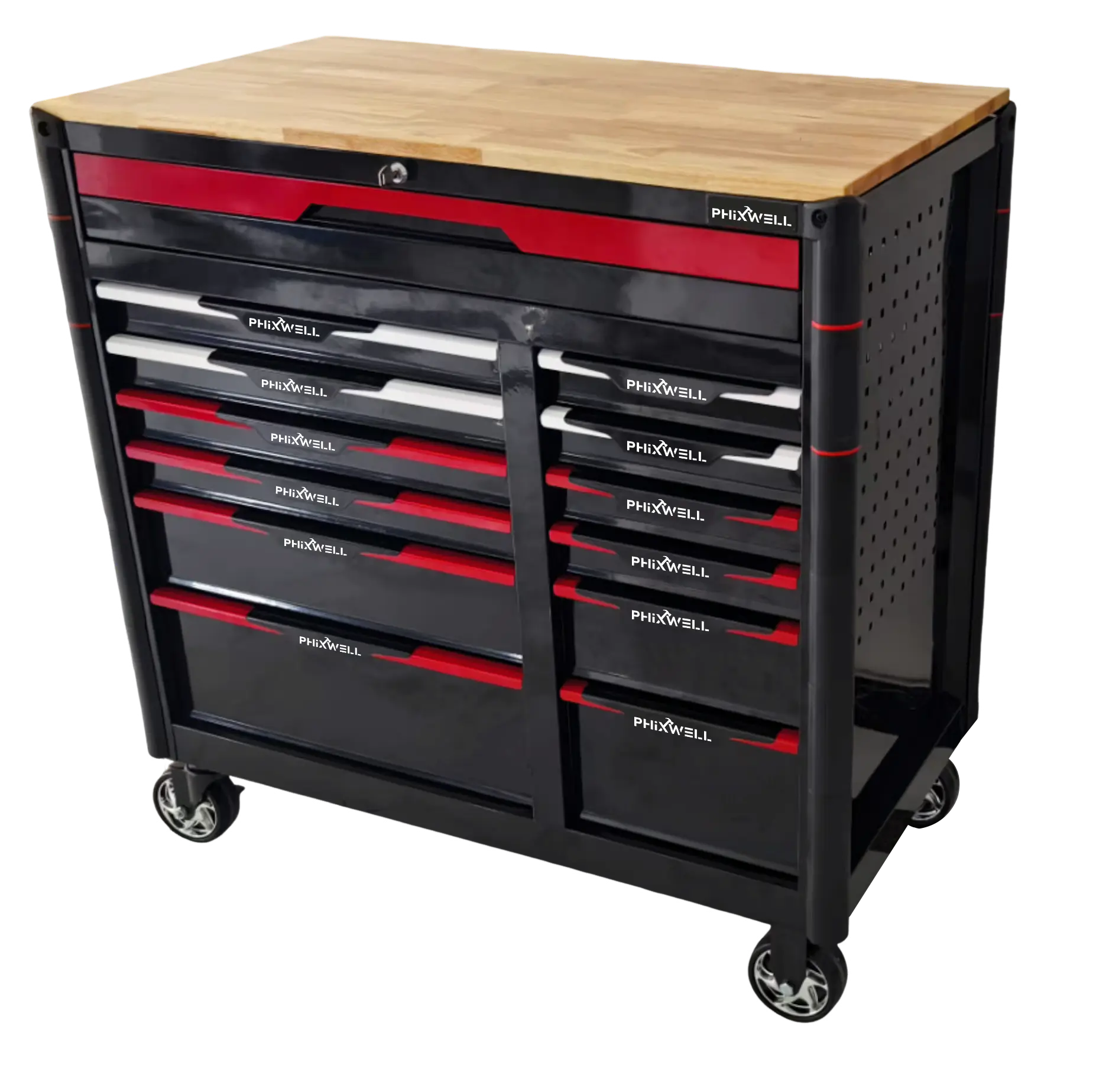 Phixwell 719518 Large 13-Drawer Tool Cabinet with Welded Drawer BottomsReinforced welded drawer bottoms prevent sagging under sustained loads from heavy socket sets and power tools, making this large 13-drawer unit a dependable storage solution.View Product →
Typical per-drawer load ratings by cabinet grade, in kilograms
Decide whether your tools travel to the work or the work travels to the tools; this single question determines whether you need a mobile cart or a stationary cabinet.
In an auto repair shop, a drawer cart follows the technician from bay to bay. In a woodworking shop, a stationary combination cabinet holds long tools and heavy accessories that never need to move. If your workshop has multiple workstations, mobility wins. If you have one fixed bench, a stationary unit gives you more depth and capacity for the same money.
The Phixwell 719702 4-drawer tool cart pairs 4-inch casters with the same reinforced drawer construction used in the stationary line, making it a practical bridge between the two categories. Many shops run one stationary cabinet for heavy tools and one mobile cart for the daily-use set. For a full range of mobile and stationary options, browse the Phixwell product catalog.
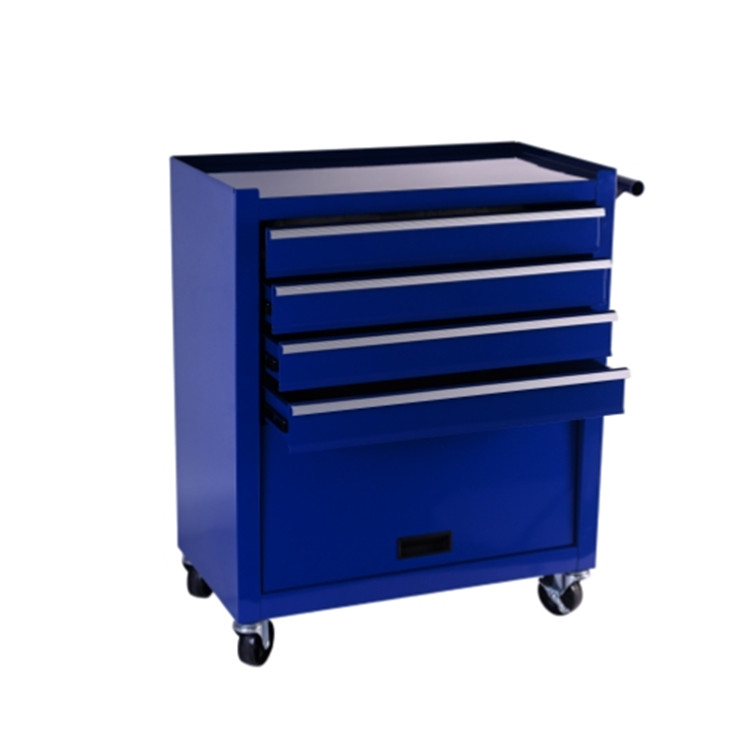 Phixwell 719702 4-Drawer Tool Cart with Reinforced DrawersThis mobile tool cart combines 4-inch casters with the same reinforced drawer construction as stationary cabinets, offering a practical bridge between mobility and durable storage.View Product →
A central locking system that secures every drawer with a single key turn is the minimum standard for a professional workshop, and multi-point locks add genuine resistance to prying.
Single-point locks secure one point per drawer, while multi-point locks engage two or more points along the drawer frame. Multi-point locking also keeps drawers aligned when the cabinet sits on an uneven floor. Cylinder quality matters more than the lock brand: a hardened steel cylinder with a reversible key is the entry point for workshop use.
Check that spare keys and replacement cylinders are available from the manufacturer. Phixwell cabinets such as the 7-drawer model with plastic corner protectors use a central lock that secures all drawers simultaneously, a practical design for shared workshops where only the lead technician carries the key.
The cheapest cabinet in a catalog becomes the most expensive one when the manufacturer cannot hold tolerances, honor warranty claims, or supply replacement slides five years later.
Ask three questions before you commit to a supplier.
SUZHOU XINGWOTAI HARDWARE CO.,LTD, operating under the Phixwell brand, runs a dedicated tool cabinet factory called Shentai with a 10,000-square-meter plant and more than 50 production machines. The company also operates in-house tool production, hardware processing, and injection molding workshops. For a buyer, this means drawer slides, steel frames, and plastic accessories come from the same production system, which shortens the supply chain and gives the factory direct control over quality. The company's stated annual output is 2 million tool sets across its automatic production lines.
Production scale is a proxy for process maturity. A factory that ships tens of thousands of cabinets per year has already solved problems that a small workshop producing a few hundred units has never encountered.
Buy from a manufacturer, not an assembler. In-house fabrication, a dedicated factory building, and published production volume are the three signals that a supplier can deliver consistent quality at scale.
For professional workshop use, choose a cabinet with 16 to 18 gauge steel for the body and frame and at least 20 gauge for drawer floors. For home garage use, 20 gauge body steel is usually adequate.
Consumer-grade drawers are rated at 20 to 30 kg. Prosumer drawers handle 40 to 50 kg. Industrial drawers carry 60 to 100 kg. Always distribute heavy tools across the bottom drawers to prevent sagging.
A mobile tool cart with drawers is better for a small workshop because it doubles as a storage unit and a portable work surface, and it can be pushed against a wall when floor space is needed.
An industrial-grade cabinet with ball-bearing slides rated at 50,000 to 100,000 cycles should last 15 to 25 years under daily professional use. The frame and lock system typically outlast the slides.
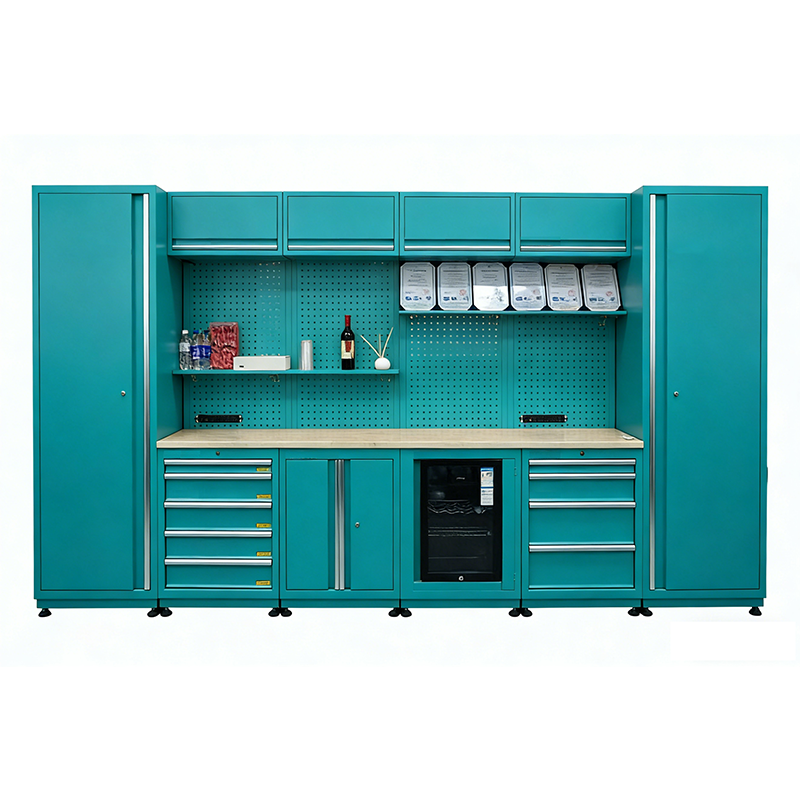
# Workshop Modular Storage Combination Cabinet (Model 719610) Product Introduction This workshop sto...
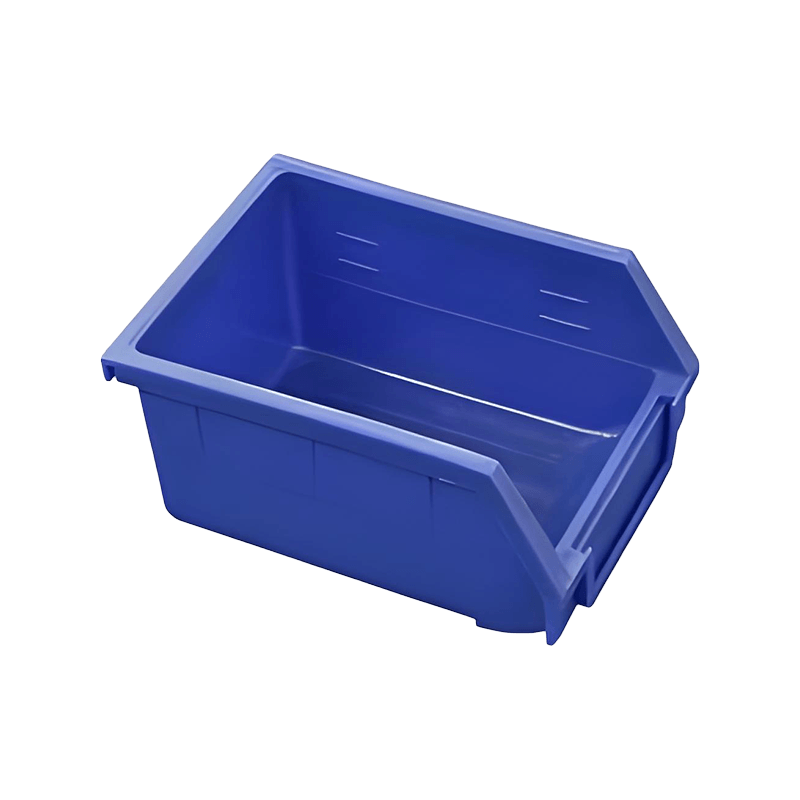
Storage of scattered items: Specifically designed to store small components such as screws, nuts, wa...
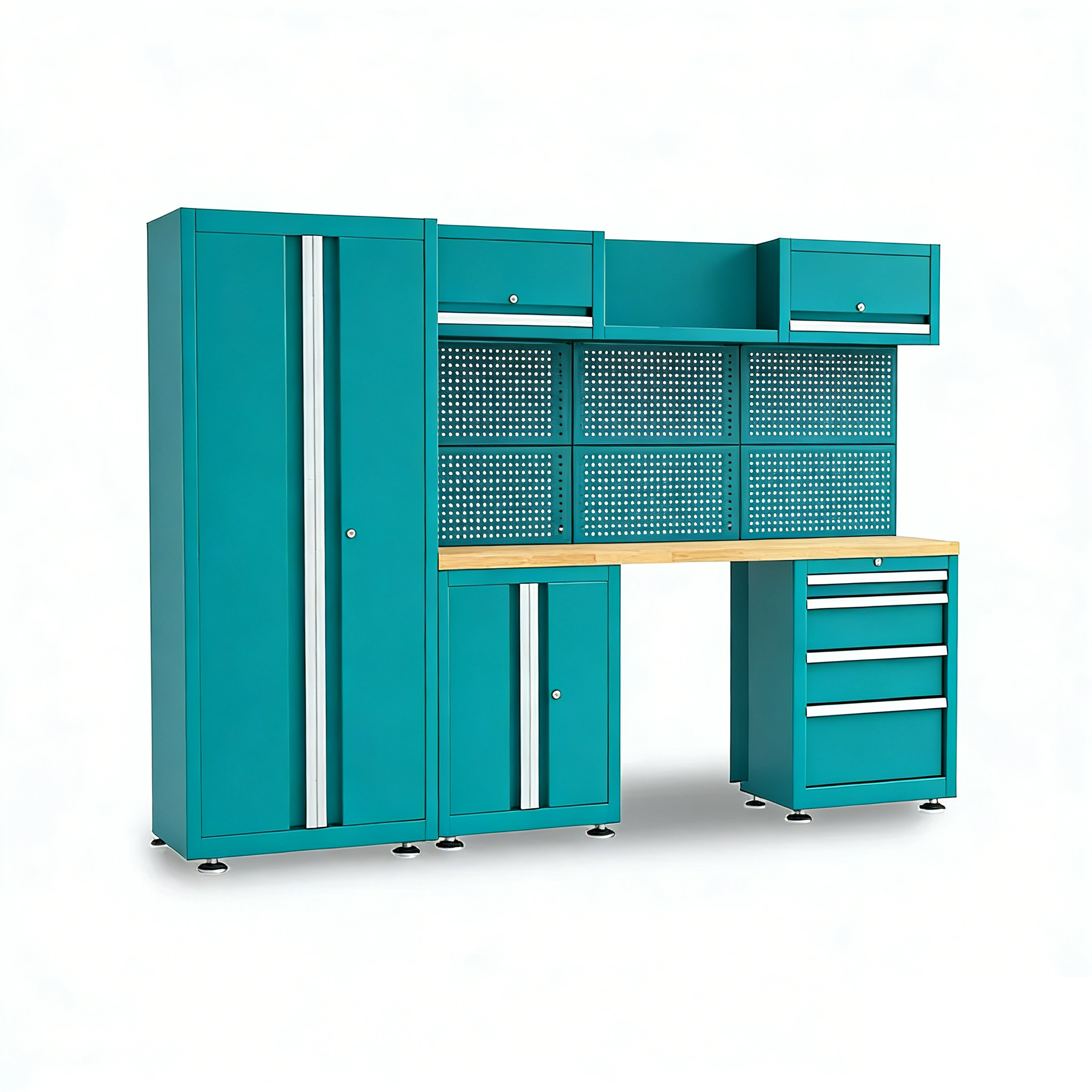
Multifunctional Tool Storage Combination Cabinet Material and appearance: Made of premium cold steel...
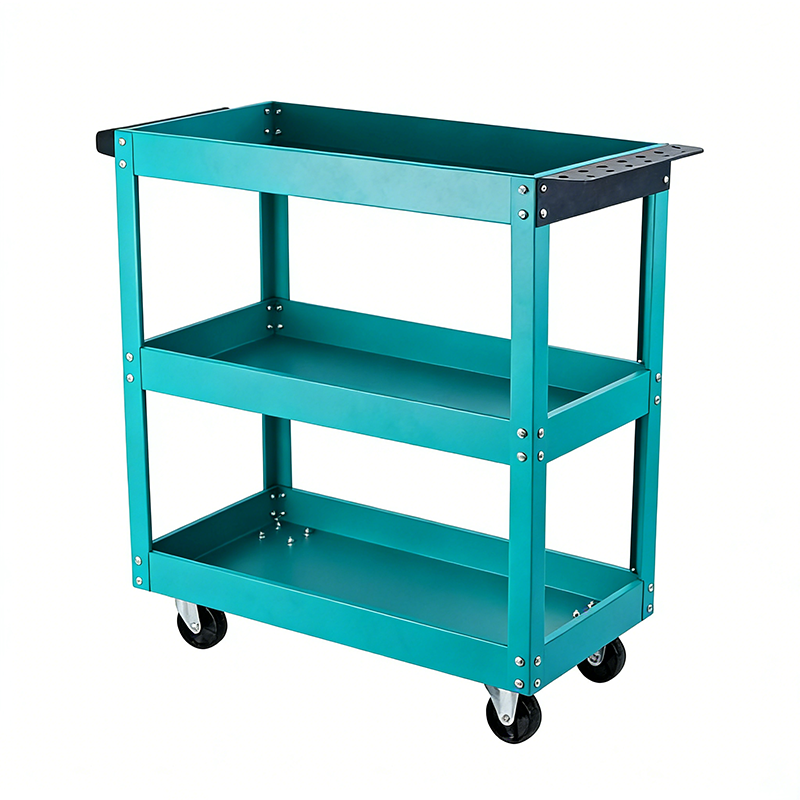
This is a **Three-Layer Auto Repair Tool Cart**, a multifunctional mobile maintenance storage device...
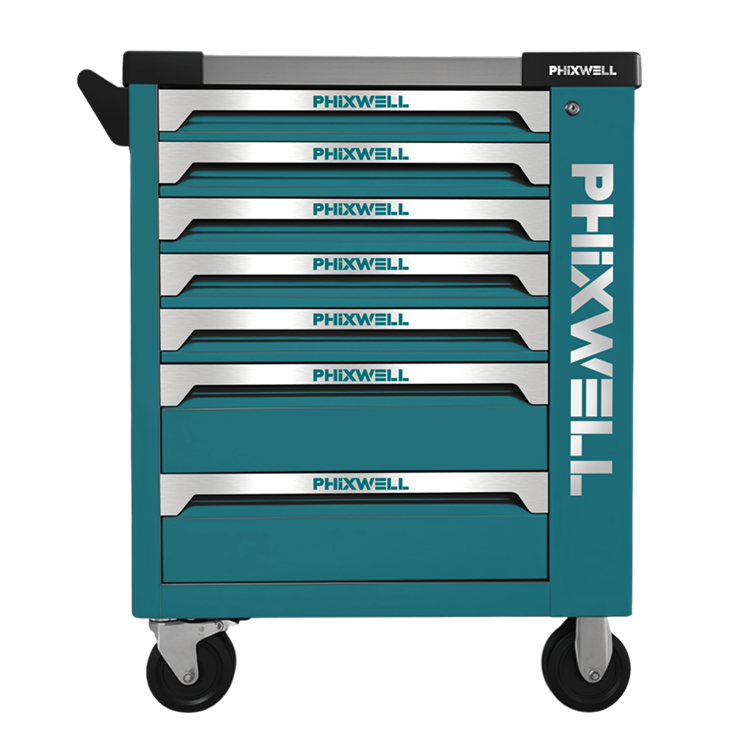
The tool cart group provides a set of tools to solve the problem of tool confusion and difficulty in...
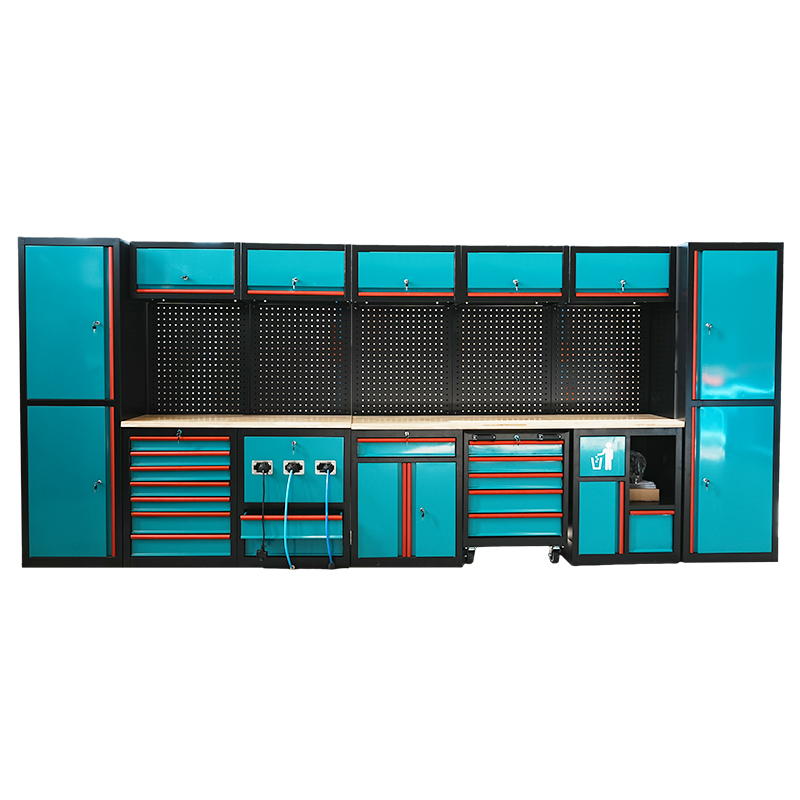
# Multifunctional Workshop Combination Cabinet: Professional Tool Storage and Work Integrated Soluti...
Content
Our annual output of more than 100,000 tool cabinet can meet the needs of customers with different purchase volumes.

+86-18658800788
+86-0512-58499000

New City Industrial Park, No. 108 Sizha Road, Yangshe Town, Suzhou, Jiangsu, China

