 en
 English
 Deutsch
719520PHIXWELL 11 drawers Tool Cabinet with 377pcs Tool Set
Prevent insufficient tool protection: Avoid rusting, collision or calibration failure caused by long...

A tool trolley is a mobile storage and work unit mounted on heavy-duty casters, combining a top work surface with drawers that carry tools directly to the task point. In a six-bay auto repair shop, a technician using only a wall cabinet can easily walk over four kilometers in one shift just to collect sockets, wrenches, and pullers from different drawers.
Tool retrieval is the invisible cost of stationary storage. When a single job requires twenty different tools and the nearest cabinet is ten meters away, the round trips add serious minutes to every repair. A tool trolley removes this distance by keeping the most-used tools within arm's reach, no matter where the work stops in the bay.
A well-specified trolley also protects tools from scratches and contaminants, reduces lost items, and makes a workstation easy to reset between tasks. The rest of this article explains what separates a good trolley from a weak one, where it fits against a static cabinet, and how to organize it for real working conditions.
A tool trolley is defined by three structural elements: a rolling base, drawer storage, and a top surface that doubles as a workbench or a landing zone for the active tool set.
The rolling base is usually built from welded steel with a powder-coat finish. Caster diameter and brake design determine how easily the trolley moves across concrete, epoxy-coated floors, or uneven garage slabs. Typical mobile tool trolleys use 100 mm to 125 mm casters; the larger the diameter, the better the trolley rolls over threshold strips, extension cords, and small debris.
Drawer slides are the most quality-sensitive component. Ball-bearing slides handle cyclical loading of 20 kg to 45 kg per drawer and still run smoothly after tens of thousands of open-close cycles. Painted or zinc-plated steel bodies prevent corrosion in humid shops. The work surface can be a steel top, a wood composite top, or a laminated bench top, and each option changes the trolley's role from a simple tool carrier to a small mobile workbench.
For lighter duty work, a four-drawer tool trolley with a composite top is enough to hold a complete socket set, screwdrivers, pliers, and electrical testers while keeping the total weight low enough for daily movement between benches.
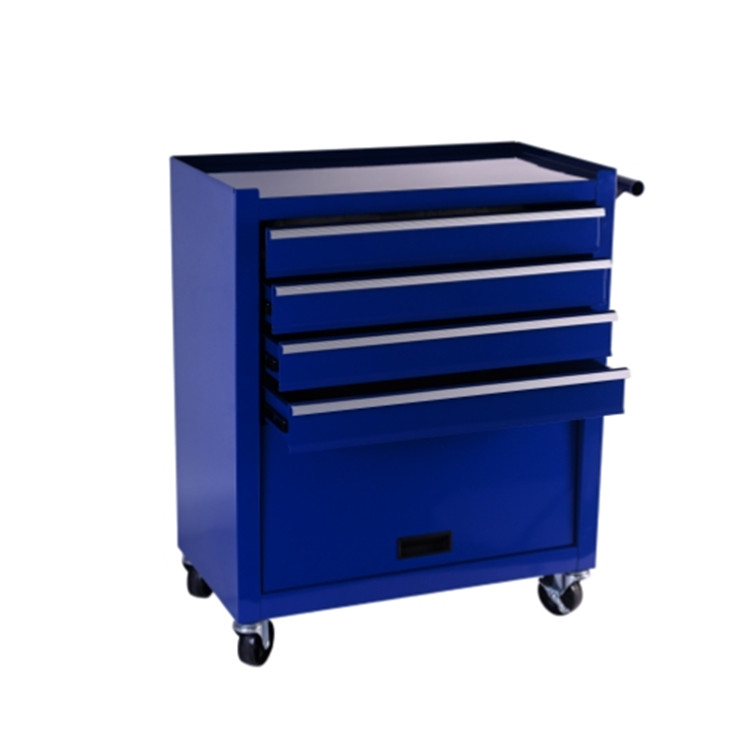 PHIXWELL 4-Drawer Tool Cart with Composite Top for Light-Duty Workshop UseThis compact four-drawer cart suits lighter workshop tasks, holding socket sets, screwdrivers, pliers, and testers while staying light enough for daily movement between benches.View Product →
A tool trolley is essential for mobile workstations because it converts tool storage from a fixed point into a mobile inventory that follows the operator, eliminating the most repeated waste in shop-floor work.
In automotive repair, the work position changes every time a vehicle moves to another lift, alignment station, or diagnostic bench. In facility maintenance, the task can shift from a pump room to a rooftop AHU within the same hour. In assembly lines, production cells are reorganized for new product runs. A static cabinet was designed for a world where the task stays in one place; a trolley was designed for the world where the task moves.
The productivity gap is easiest to visualize when daily tool access time is measured against the same set of wrenches in different storage setups. A technician standing next to a fixed wall cabinet, a locked chest, and a mobile trolley will spend very different amounts of time on the exact same repair task.
A tool trolley wins whenever the work position changes, because it moves the entire toolbox to the job; a tool cabinet wins only when every task happens at one fixed station.
Stationary cabinets still offer advantages: a taller frame, more drawer space, and a higher total load capacity. But those benefits disappear when the operator has to keep returning to the same spot. For mechanics, maintenance crews, and assembly work, the trolley's mobility outweighs the cabinet's extra volume.
| Attribute | Tool Trolley | Tool Cabinet |
| Footprint | Compact, about 600 x 800 mm | Larger, about 1000 x 400 mm |
| Typical load | 150-400 kg | 300-1000 kg |
| Mobility | Four swivel casters with brakes | Usually fixed; casters optional |
| Top work surface | Steel, wood, or resin | Steel, wood, or bench top |
| Best role | Job moves around the facility | Fixed bench or wall storage |
Multifunctional tool trolleys add shelves, side hooks, and sliding trays on top of the drawer core, which matches tools, consumables, and measuring instruments in one mobile unit. This suits shops that switch between repair, fabrication, and inspection work during the same day.
 Multifunctional Tool Cart with Shelves, Side Hooks, and Sliding TraysDesigned for shops that switch between repair, fabrication, and inspection, this cart combines drawers with extra storage surfaces to keep tools, consumables, and instruments within reach.View Product →
The right tool trolley is selected by matching drawer count and load capacity to your heaviest tools, then checking the casters and locking system.
Three specifications control the long-term performance of a mobile trolley: total load capacity, per-drawer rating, and wheel quality. If any one of these is undersized, the trolley will feel unstable, the drawers will sag, or the unit will become hard to push across a normal shop floor.
| Application | Drawer count | Load capacity | Slide type |
| DIY and home workshop | 3-4 | 120-160 kg | Roller slides |
| Automotive repair shop | 4-7 | 200-300 kg | Ball-bearing slides |
| Industrial maintenance | 6-13 | 300-500 kg | Heavy-duty ball-bearing slides |
Before purchasing, check how the trolley behaves when the top drawer is loaded. The whole unit should stay stable when the drawer is pulled out, and the brakes should hold firmly on a slight slope. A model with a flat steel top is easier to clean than a wooden top with open grain.
 PHIXWELL New Model Tool Cart with Flat Steel Work Surface and Stable DrawersThis new-model cart offers a cleanable flat steel top and stable drawer behavior when loaded, with reliable brakes—practical for users who value durability and easy maintenance.View Product →
A tool trolley stays productive only when the drawer layout matches your task sequence; the fastest system is to group by frequency, not by tool name.
Users often arrange drawers by tool type, which forces them to open several drawers during every task. Arranging by frequency means the most-used items stay in the top drawer, while specialty tools and backups live near the bottom. This small change shortens the distance between the tool and the work surface without any new equipment.
First-time buyers usually ask the same specification questions, so the following answers cover the most important boundaries before you place an order.
Typical mobile tool trolleys range from 150 kg for light-duty household units to 400 kg or more for industrial models. The practical limit is controlled by the floor surface, caster diameter, and the load rating of the drawer slides, not by the total frame capacity alone.
Yes. Most trolleys use a central locking cylinder that engages all drawers at once, plus two locking casters. This combination keeps tools secure on rough floors and reduces the risk of movement during work.
Yes for professional use. Ball-bearing slides handle more weight and survive more open-close cycles than roller slides. In hot or dusty environments, sealed ball-bearing slides keep working without frequent cleaning.
Tool trolley is the standard term for a wheeled work unit with a top surface and multiple drawers. Tool cart is often used for lighter open-shelf units used for transport. In practice, the naming overlaps; the essential thing is to compare drawer count, load, and caster size rather than relying on the name alone.
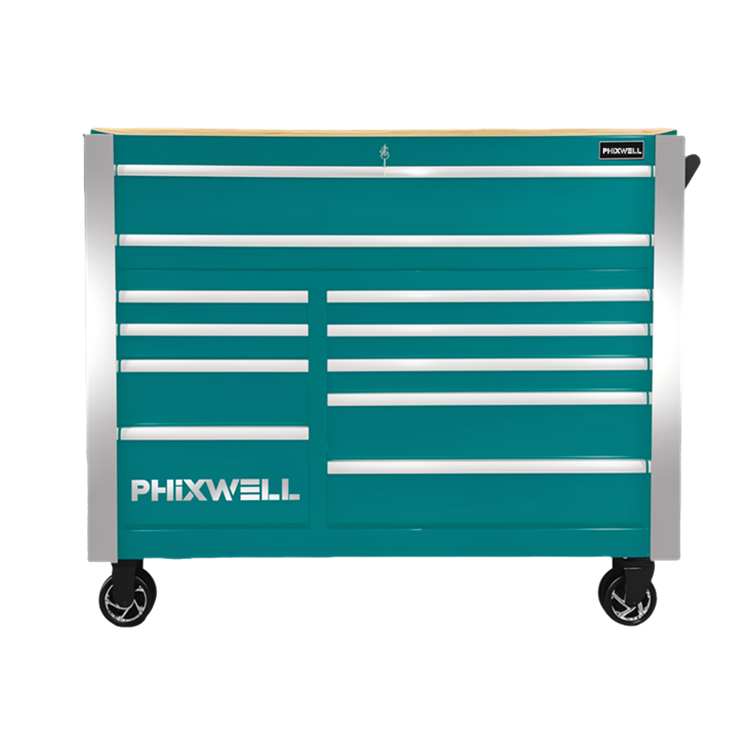
Prevent insufficient tool protection: Avoid rusting, collision or calibration failure caused by long...

This household tool set is the ideal companion for your home repairs and DIY projects. It includes a...
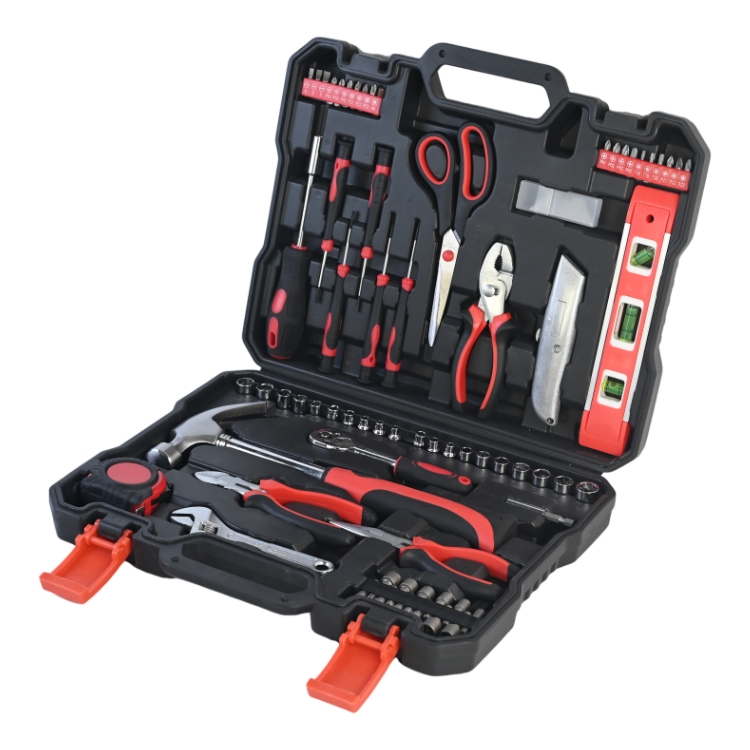
This household tool set is the ideal companion for your home repairs and DIY projects. It includes a...
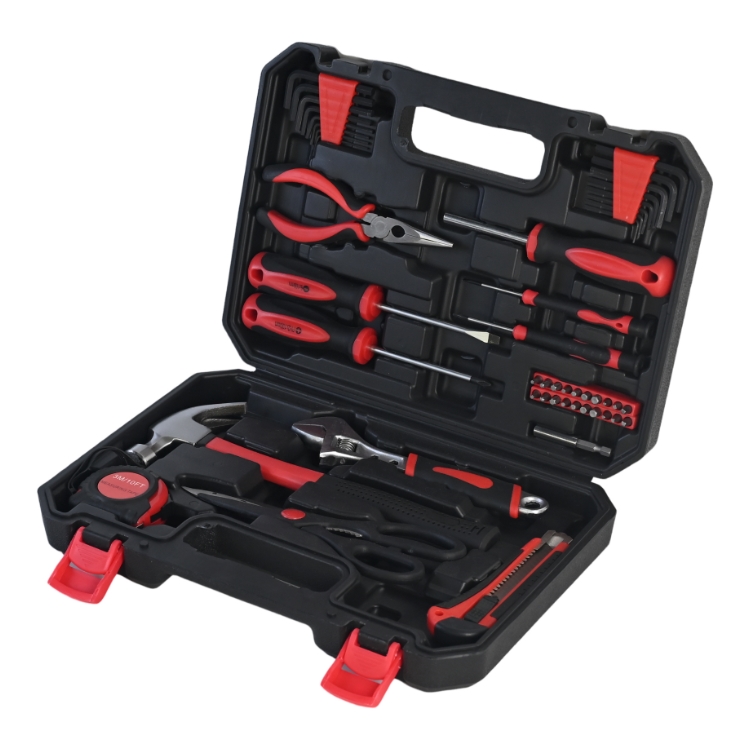
This household tool set is the ideal companion for your home repairs and DIY projects. It includes a...
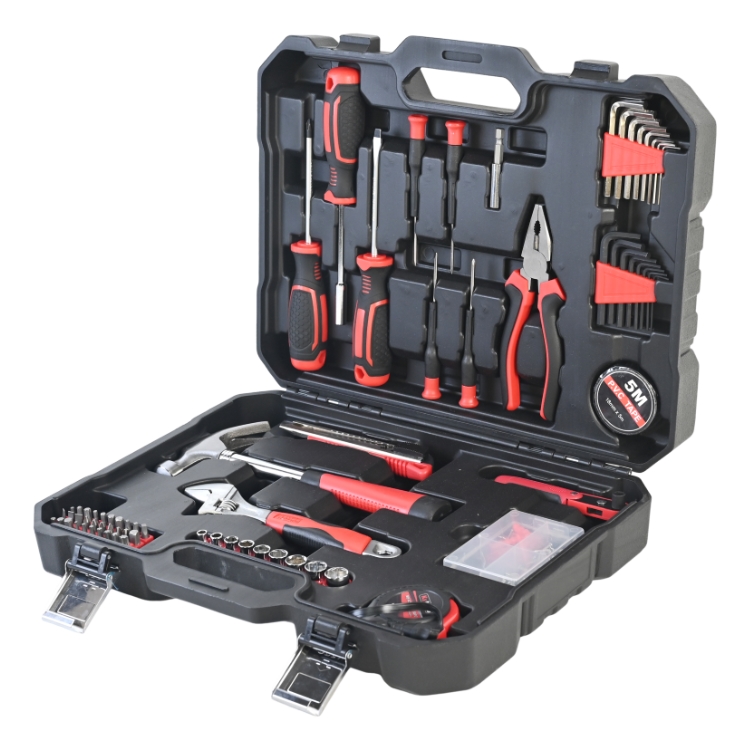
This household tool set is the ideal companion for your home repairs and DIY projects. It includes a...
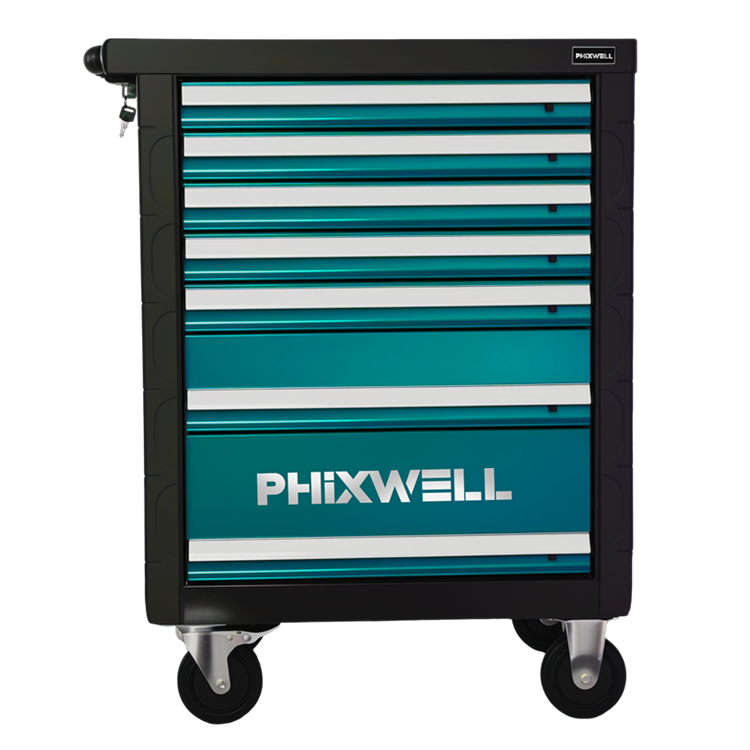
The PHIXWELL 7-Drawer Tool Cabinet (Model 719511) is a premium, versatile mobile storage solution de...
Content
Our annual output of more than 100,000 tool cabinet can meet the needs of customers with different purchase volumes.

+86-18658800788
+86-0512-58499000

New City Industrial Park, No. 108 Sizha Road, Yangshe Town, Suzhou, Jiangsu, China

