 en
en  English
 Deutsch
Multifunctional Tool Storage Combination Cabinet
Multifunctional Tool Storage Combination Cabinet Material and appearance: Made of premium cold steel...

A rolling tool cart is a compact, wheeled storage unit — usually with a handle, one or more drawers, and an open top tray — designed to move tools and small parts around a garage, shop floor, or job site. A mobile tool cabinet is its larger cousin: a taller, heavier-duty rolling unit with multiple lockable drawers, typically built to hold a full set of hand tools or serve as a work-in-progress station on casters.
The line between the two is mostly size and drawer count. Carts tend to top out around 3–5 drawers and a few hundred pounds of load capacity, while mobile cabinets can carry 8+ drawers and several thousand pounds when built on a steel frame with ball-bearing slides. Both share the same core advantage over fixed storage: tools travel to the work instead of the worker walking back and forth to a wall-mounted rack.
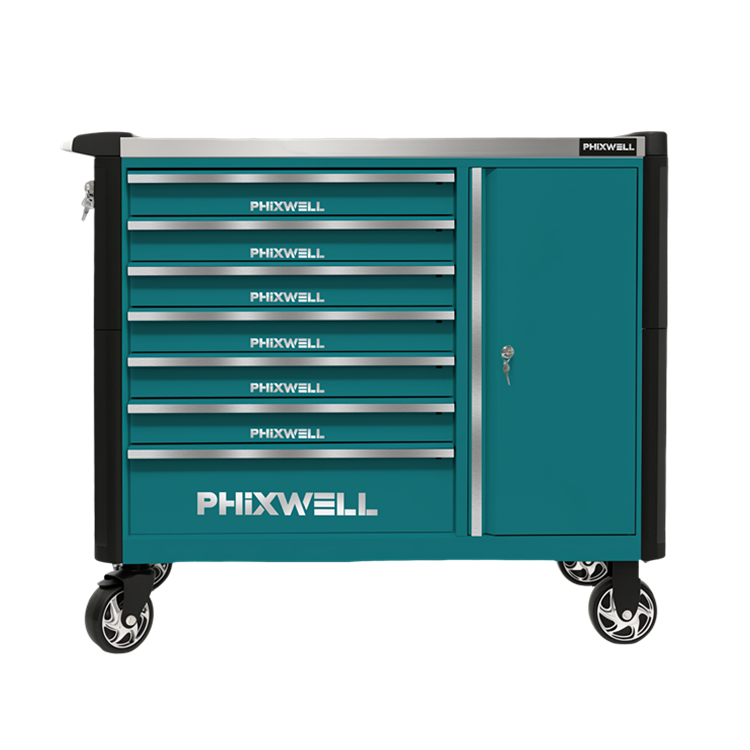
A tool chest sits on top of a workbench or a rolling cabinet and provides shallow drawer storage for smaller, frequently used items. A tool cabinet is the base unit — taller, with deeper drawers for bulkier tools, power tools, and stock parts — and is almost always mounted on locking casters for mobility. Many workshops combine the two: a mobile tool cabinet as the rolling base, topped with a tool chest for quick access to daily-use hand tools.
| Feature | Tool Chest | Tool Cabinet |
|---|---|---|
| Typical position | Top unit, sits on a bench or cabinet | Base unit, floor-standing |
| Mobility | Stationary unless placed on a cabinet | Usually on locking casters |
| Drawer depth | Shallow, for small hand tools | Deep, for power tools and bulk items |
| Best use | Daily-use tool access | Bulk storage plus mobility |
Key differences between a tool chest and a tool cabinet.
Weight capacity is the first spec to check on any heavy duty tool cart. Light-duty carts made from thin sheet steel or plastic typically hold 100–300 lbs across all drawers combined, while heavy duty steel-frame carts with ball-bearing slides can support 1,000–3,000 lbs, enough for power tools, dense metal stock, or engine parts. A cart rated below the actual load will sag, bind on the drawer slides, or crack at the welds over time.
A mobile tool storage system usually refers to a coordinated set — a rolling cabinet, a matching top chest, and sometimes a side locker or riser — designed to stack and lock together so the whole assembly moves as one unit. This modular approach lets a shop scale storage capacity without losing mobility, since each module keeps its own casters or locks onto the base cabinet's frame.
Effective tool cart organization starts with grouping by frequency of use, not by tool type alone. Items reached for constantly belong in the top drawer or tray; specialty tools used occasionally go in lower drawers.
In a garage or small workshop, a rolling tool cart works best paired with wall storage rather than replacing it. Wall-mounted pegboards or slat panels keep frequently grabbed hand tools visible and off the cart's limited drawer space, while the cart handles bulkier items, power tools, and anything that needs to move to a workbench or vehicle.
Workshop tool organization at scale — multiple carts or cabinets serving several workstations — benefits from color-coding or numbering carts by station so tools return to the correct location even when several people share the same shop.
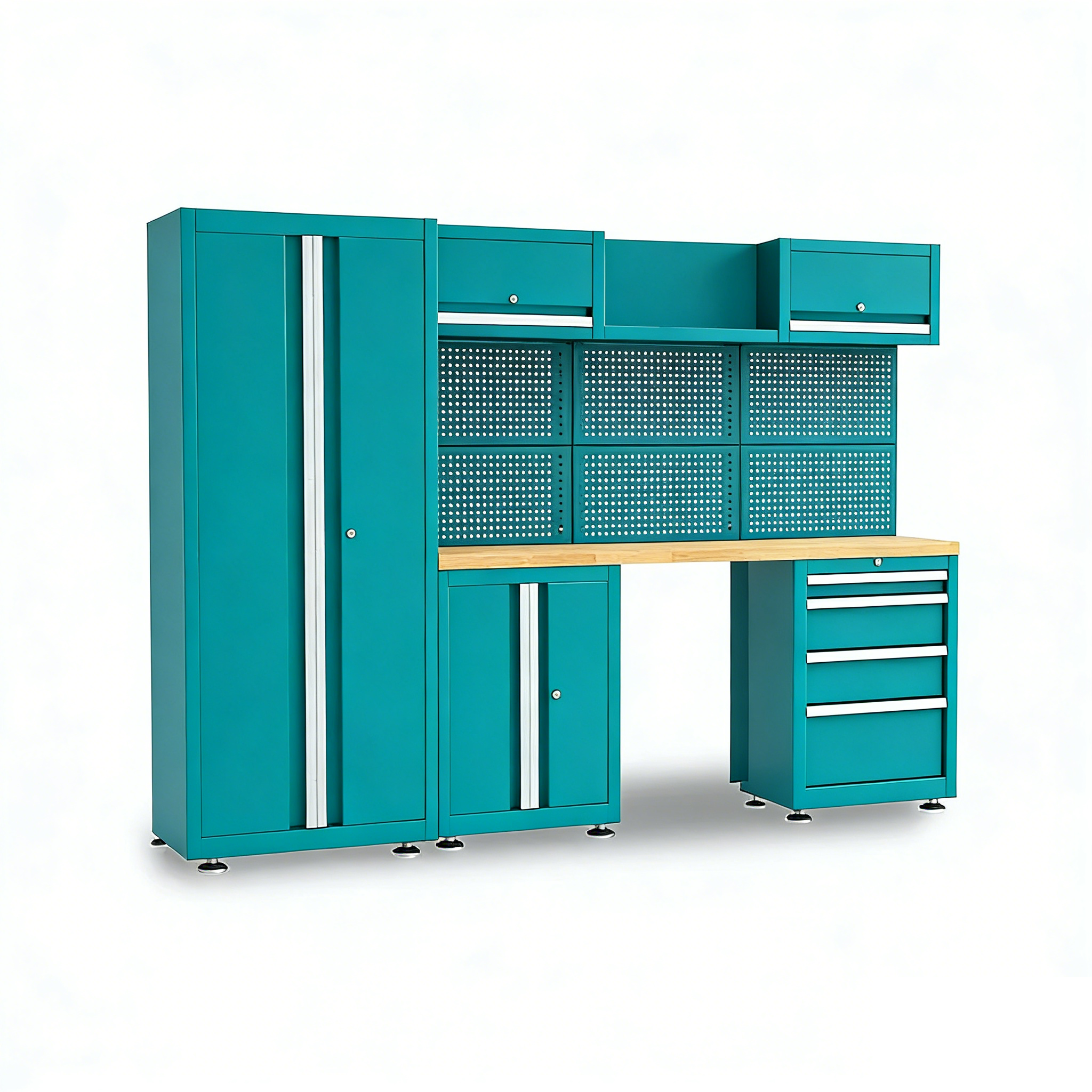
Multifunctional Tool Storage Combination Cabinet Material and appearance: Made of premium cold steel...
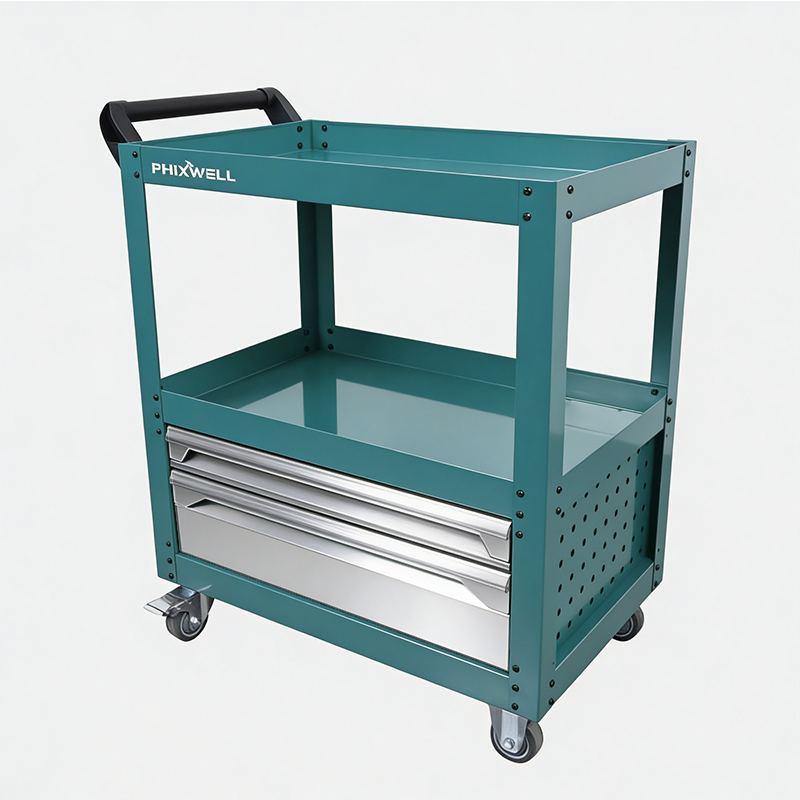
This is a multifunctional tool cart designed specifically for auto repair, maintenance, or industria...
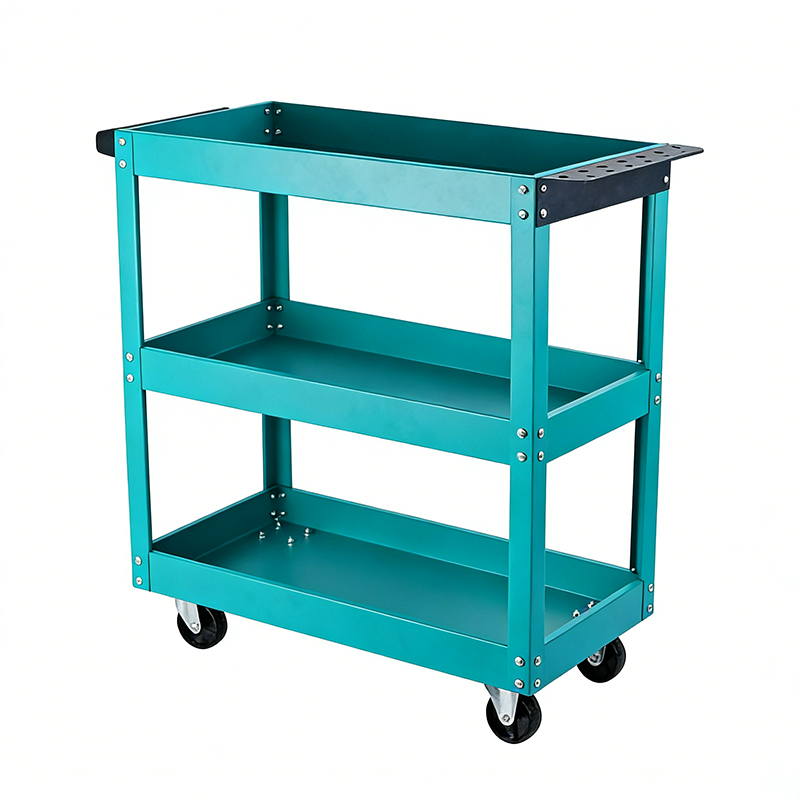
This is a **Three-Layer Auto Repair Tool Cart**, a multifunctional mobile maintenance storage device...
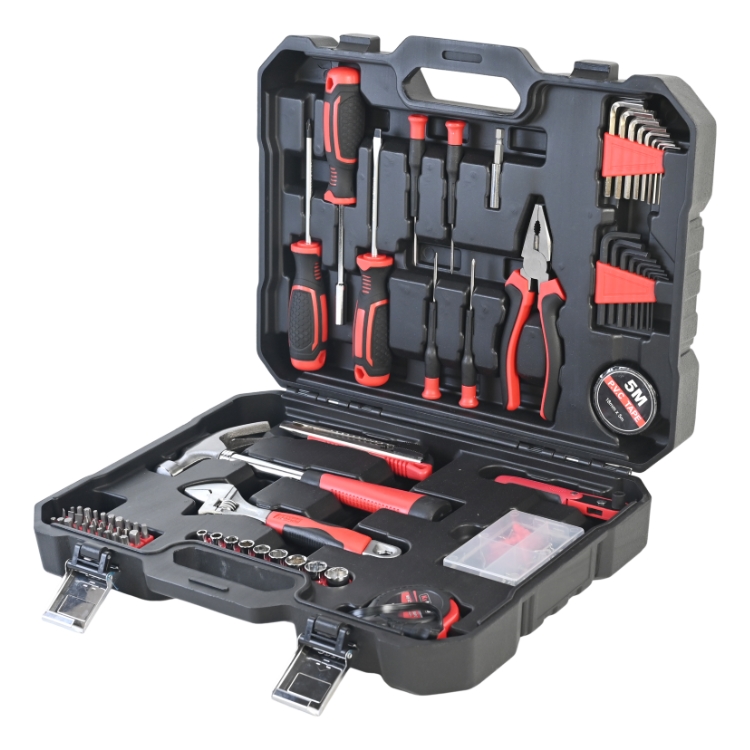
This household tool set is the ideal companion for your home repairs and DIY projects. It includes a...
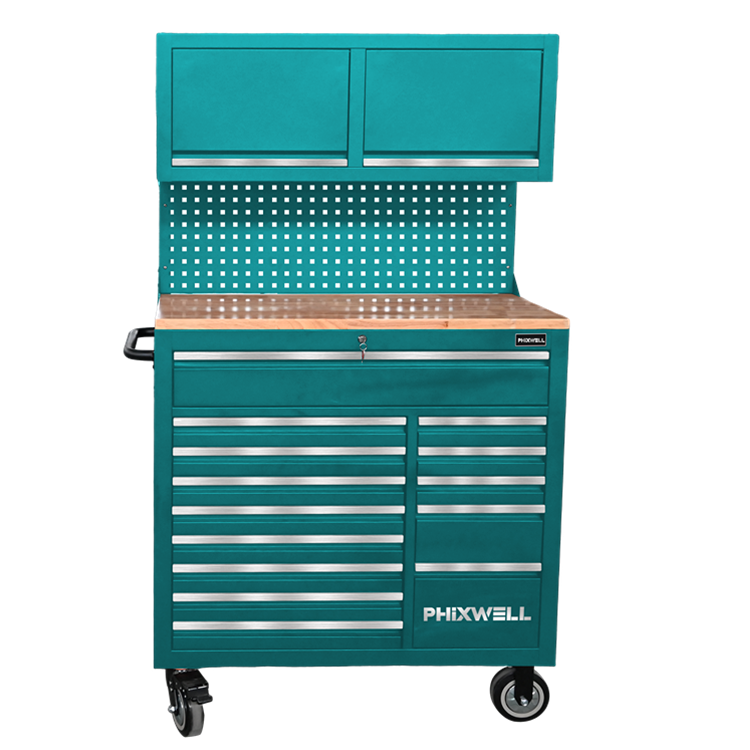
PHIXWELL Multifunctional Tool Workstation: Professional Grade Storage and Operation Integrated Solut...
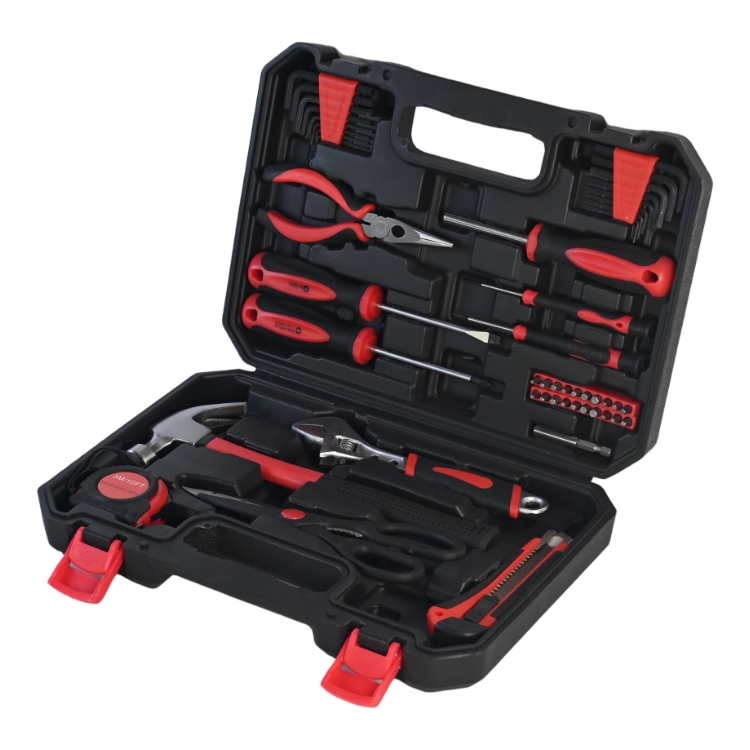
This household tool set is the ideal companion for your home repairs and DIY projects. It includes a...
Our annual output of more than 100,000 tool cabinet can meet the needs of customers with different purchase volumes.

+86-18658800788
+86-0512-58499000

New City Industrial Park, No. 108 Sizha Road, Yangshe Town, Suzhou, Jiangsu, China

