 en
 English
 Deutsch
Workshop Modular Storage Combination Cabinet
# Workshop Modular Storage Combination Cabinet (Model 719610) Product Introduction This workshop sto...

A two-car garage that still functions as a workshop loses about one-third of its usable floor area to misplaced tools, stacked bins, and parking-lot clutter. If you spend just ten minutes twice a week hunting for a torque wrench or a garden sprayer, that is more than seventeen hours of your year gone. Organizing your garage with modular storage cabinets fixes the problem at the source: every category of gear gets a dedicated, load-rated position instead of a memory-based spot that shifts every time something new arrives.
This guide follows the planning sequence used by professional tool-storage buyers: zone the floor by access frequency, select cabinet types by load, configure drawers by tool weight, calculate the weight budget, and lay out the units so the car still fits. Each step includes the numbers that matter on a concrete garage floor rather than generic styling advice.
Zone planning comes first, because cabinet selection depends on access frequency. By definition, modular storage cabinets are steel units built from interchangeable drawer, shelf, and door modules that can be combined in one footprint and extended later. Walk the garage and tag every item as daily, weekly, or seasonal: if a tool is used more than three times a week, it belongs within one step of the entry door; if it comes out only during lawn season or winter sports, it belongs in an upper drawer or the rear of a deep cabinet.
A realistic household split is roughly 20% daily items, 30% weekly-use tools and car-care supplies, and 50% seasonal gear. That ratio drives the number of drawers you need. Too many small drawers fails when your mix is mostly bulky seasonal items; too few fails when half your contents are hand tools.
A heavy-duty modular systems guide from a steel cabinet manufacturer helps at this point, because it translates cabinet height and depth into real drawer capacity. The goal is to know what fits before you buy, not after you unpack.
Most garage clutter is a location problem, not a space problem. Households typically store 2,500 to 3,500 items in the garage, yet only about a third are used more than once a month. Zoning eliminates most of the searching.
Match each zone to a cabinet type before you measure anything. A steel modular cabinet outperforms wire shelving and resin units for mixed tool storage because it combines a rated load, dust protection, and lockable drawers in a single footprint. Most garages need at least one tall combination cabinet for upright items, one drawer-style cabinet for hand and power tools, and one workbench-height module for heavy parts.
The classic entry point is the 3+1 garage storage cabinet: three smaller drawers for hand tools, fasteners, and measuring instruments, plus one large lower drawer for power tools or spare parts. It fits the daily zone of most households and pairs cleanly with later additions.
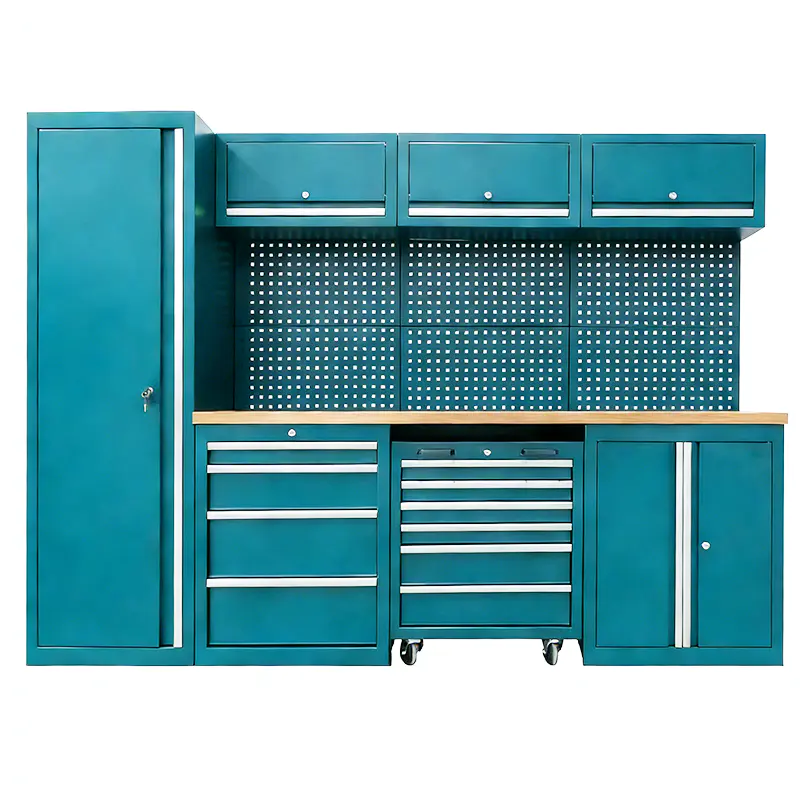 PHIXWELL 3+1 Classic Garage Storage Cabinet with DrawersA practical entry-level cabinet offering three small drawers and one large lower drawer, ideal for organizing hand tools, fasteners, and power tools in a home garage.View Product →
| Configuration | Best zone | Drawer / door mix | Typical total load | Anchoring |
| 3+1 classic | Daily tools and parts | 3 drawers + 1 large drawer | 120-180 kg | Freestanding |
| 6+2 combination | Seasonal and tall items | 6 mid drawers + 2 full-height lockers | 250-350 kg | Wall-braced recommended |
| Workshop modular | Workbench zone | Wide drawers + open shelf | 300-450 kg | Freestanding or bench-mounted |
These load figures reflect typical heavy-duty steel cabinets with ball-bearing slides. Always confirm the per-drawer rating on your chosen model: a cabinet can be rated 350 kg total while its top drawer is limited to 25 kg.
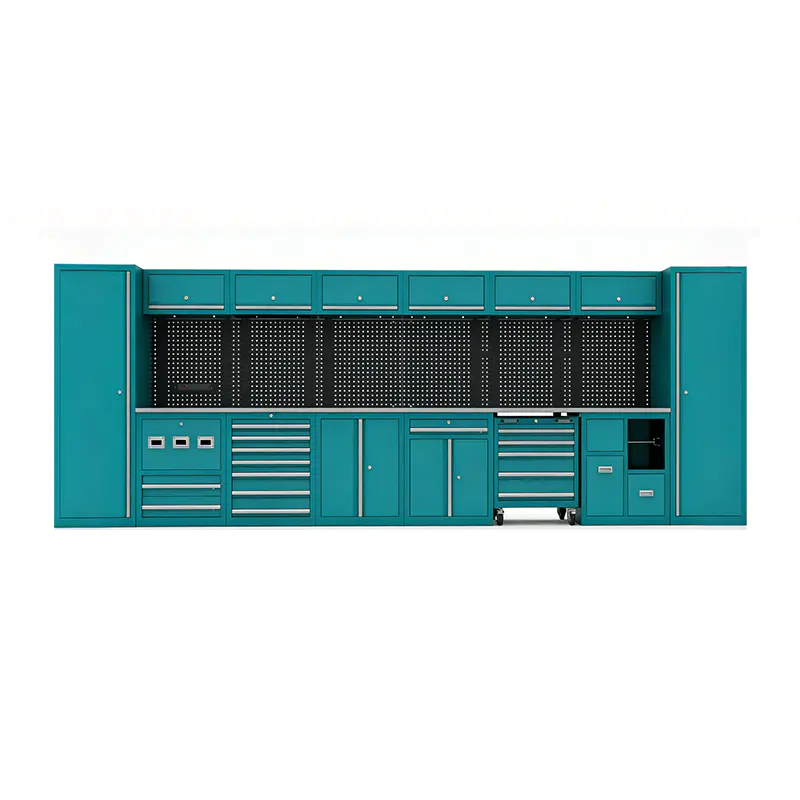 PHIXWELL 6+2 Garage Storage Combination Cabinet with LockersThis mid-size drawer and tall locker combination suits seasonal gear and upright power tools, helping you distribute tool weight correctly to extend drawer slide life.View Product →
Buy for the heaviest category, not the most common one. A cabinet sized around your angle grinder and battery packs will handle screwdrivers and sockets easily; the reverse is not true.
Configure drawers by tool weight and access frequency, not by habit. The most common cause of premature drawer-slide failure is storing heavy objects in upper drawers. Anything over 5 kg - angle grinders, battery packs, bench vises, brake rotors - belongs in the lower third of the cabinet. Mid-weight tools from 1 to 5 kg sit in the middle, and light accessories go on top.
Drawer depth matters as much as width. The 6+2 combination cabinet pairs mid-size drawers with tall lockers, which suits seasonal gear and upright power tools. If your mix is dominated by large power tools, choose wide, shallow drawers over many narrow ones - tools longer than 30 cm waste a narrow drawer's usable depth.
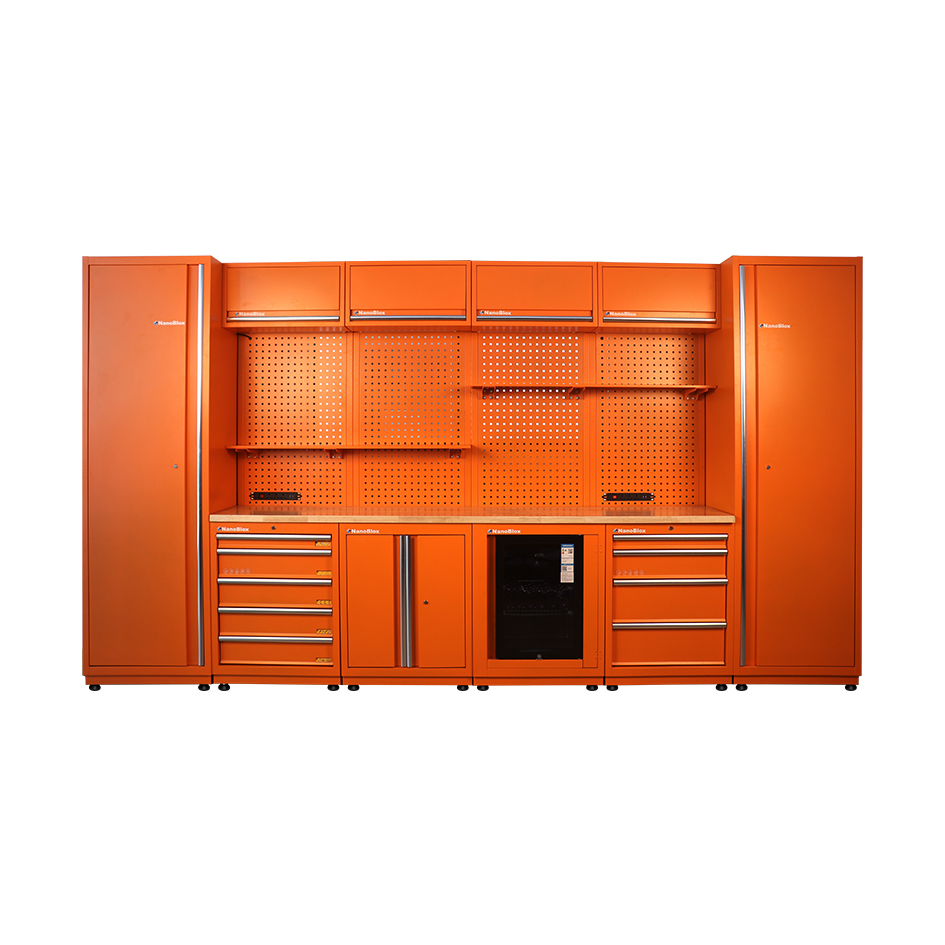 Workshop Modular Storage Combination Cabinet (4600mm Wide)A large modular cabinet for professional workshops, with deep drawers and lockers suitable for bulky power tools and seasonal storage when organized with dividers.View Product →
Use dividers and liners instead of loose stacking. A drawer without dividers loses roughly a quarter of its usable volume to contents shifting during opening and closing.
Rule of thirds for drawers: the bottom third carries heavy tools, the middle third carries daily-use power tools, and the top third carries light parts. This pattern extends slide life and keeps drawer fronts aligned over years of service.
Calculate the weight budget before loading anything. Every drawer slide has a rated static load; exceeding it causes sag, jamming, and eventual collapse. Sum the heaviest realistic combination that could land in one drawer, multiply by 1.25 as a safety margin, and compare it against the per-drawer rating.
A realistic example: a weekend mechanic's top drawer might hold a 12 V impact driver (1.8 kg), a full socket set (4.5 kg), combination wrenches (2.2 kg), and a digital multimeter (0.4 kg) - roughly 9 kg, safely inside a standard 20-40 kg slide rating. The lower drawer, with an angle grinder (2.5 kg), two battery packs (1.6 kg), a bench vise (7 kg), and a spare brake parts box (6 kg), totals 17.1 kg. Still safe, but if the vise grows to 12 kg, that drawer is at its practical limit.
Notice that the 6+2 combination and workshop modular units carry more than double the load of the 3+1 classic. That is why the 3+1 works best as a daily-access module rather than a bulk-storage solution.
Position modular storage cabinets in a fixed sequence: tall and lateral units against the side wall, workbench along the back wall, and at least one mobile cart in the floor lane. Keep a 90 cm walkway between the car door arc and the cabinet fronts. If the garage is under 3 m wide, choose 45-50 cm deep cabinets instead of 60 cm.
Freestanding cabinets under 120 cm with a stable footprint can work without anchoring, but full-height combination units should always be braced. Concrete anchors take about ten minutes per cabinet and remove the most common safety failure.
The door-arc rule prevents the most common error in garage layout: measuring floor area without measuring the car's door swing. A typical SUV door arc needs 60 to 80 cm of side clearance. Reducing the walkway to fit a wider cabinet guarantees frustration at every entry and exit.
A heavy-duty steel modular cabinet typically rates between 150 and 450 kg total, depending on drawer count, steel gauge, and slide type. Check the per-drawer rating rather than the total, because an overloaded top drawer can fail before the frame shows any sign of stress.
Yes - that is their main advantage over welded shelving. Drawers and shelf inserts can be repositioned within the same footprint, and additional modules can be added beside or on top of existing units as long as the floor load and wall anchoring are respected.
Cabinets shorter than 120 cm with a stable footprint can work without anchoring. Full-height or combination cabinets should always be braced, especially in garages with smooth concrete floors or when children use the space.
For a standard two-car garage of about 18-20 m2 of usable floor, plan on one 3+1 cabinet for daily tools, one 6+2 combination for seasonal and tall items, and one workshop module for power tools and workbench duty. That combination covers roughly 80-90% of household tool storage needs.
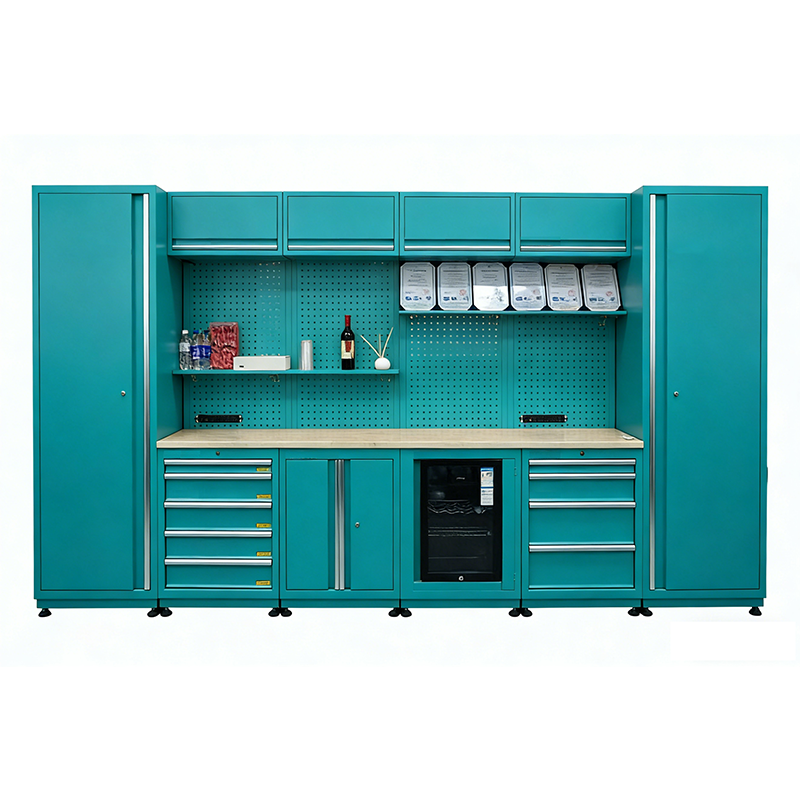
# Workshop Modular Storage Combination Cabinet (Model 719610) Product Introduction This workshop sto...
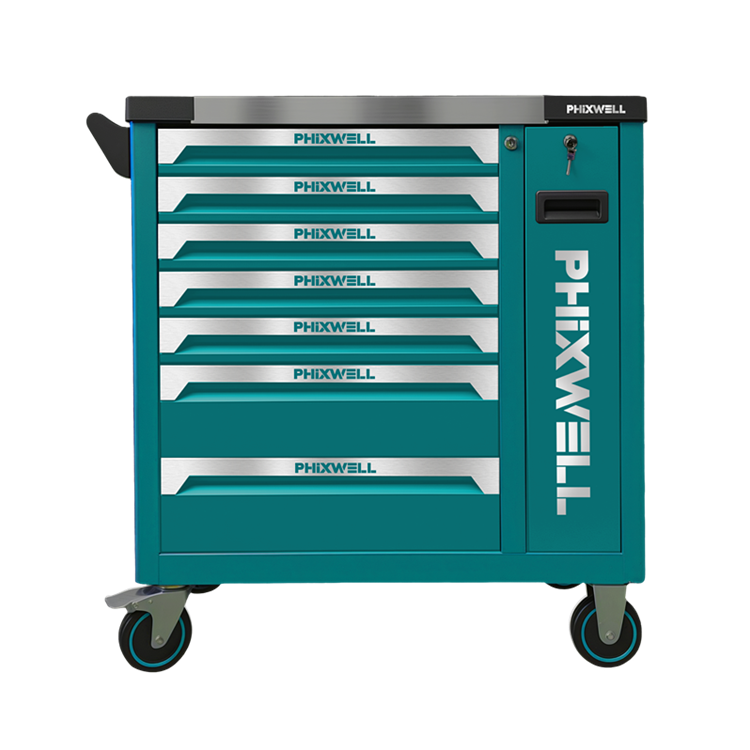
Solve the problem of disordered and missing tool parts, bid farewell to the chaos of wrenches, screw...

The PHIXWELL 719506 7-Drawer Storage Cabinet with Wooden Countertop is a versatile storage solution ...
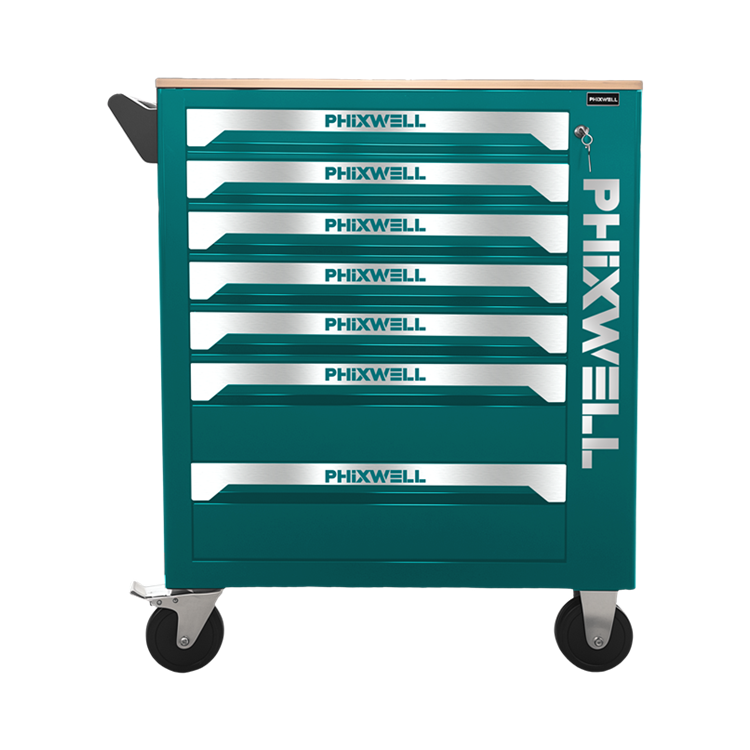
The PHIXWELL 719507 7-drawer tool cabinet with countertop is a heavy-duty and practical storage solu...
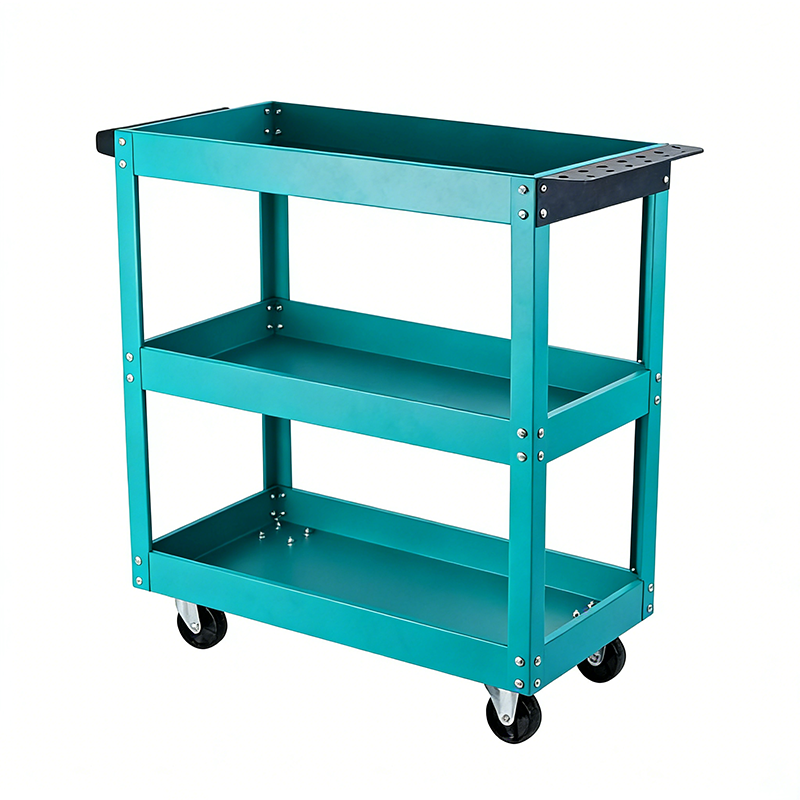
This is a **Three-Layer Auto Repair Tool Cart**, a multifunctional mobile maintenance storage device...

The PHIXWELL 719514 7-Drawer Tool Cabinet with Side Door is a heavy-duty workshop storage solution d...
Content
Our annual output of more than 100,000 tool cabinet can meet the needs of customers with different purchase volumes.

+86-18658800788
+86-0512-58499000

New City Industrial Park, No. 108 Sizha Road, Yangshe Town, Suzhou, Jiangsu, China

