 en
 English
 Deutsch
719520PHIXWELL 11 drawers Tool Cabinet with 377pcs Tool Set
Prevent insufficient tool protection: Avoid rusting, collision or calibration failure caused by long...

Two 7-drawer tool cabinets can look almost identical on a showroom floor, yet one weighs 46 kg and the other 61 kg. The difference is not branding or paint; it is the gauge of cold-rolled steel used in the body, drawer fronts, and load-bearing frames. When you need to know how to select the right steel gauge for your tool cabinet, the gauge number on a spec sheet translates directly into drawer load capacity, frame deflection under weight, and how many years the cabinet survives in a working environment.
Phixwell, the tool storage brand of Suzhou Xingwotai Hardware Co., Ltd., publishes steel thickness specifications for every model in its line, from compact 7-drawer cabinets to 13-drawer heavy-duty units. The company's cabinet factory in Zhangjiagang runs more than 50 production machines and targets a monthly output above 10,000 tool cabinets, so gauge decisions are made at production scale.
Steel gauge is a standardized number that represents sheet thickness, and the rule is simple: the higher the gauge number, the thinner the steel. A 22-gauge sheet is about 0.8 mm thick, while a 16-gauge sheet is roughly 1.2 to 1.5 mm thick depending on the standard used. In practical terms, moving from 22-gauge to 16-gauge nearly doubles the amount of steel in the panel.
Most well-designed tool cabinets do not use one single gauge. Manufacturers such as Phixwell build side panels from 0.8 mm steel to control weight and cost, then switch to 1.0 mm or 1.2 mm steel for drawer bodies, drawer floors, and the rear frame, because those components carry the real load. Reading a spec sheet correctly means asking which part uses which gauge.
| Gauge No. | Thickness range (mm) | Typical cabinet use | Relative cost |
| 22 | 0.7 - 0.8 | Economy side and back panels | Low |
| 20 | 0.9 | Budget drawer fronts, light-duty models | Low-mid |
| 18 | 1.0 - 1.2 | Drawer bodies, professional cabinet frames | Mid |
| 16 | 1.2 - 1.5 | Heavy-duty frames, drawer floors, work surfaces | High |
| 14 | 1.5 - 1.9 | Industrial fixed cabinets, workbench tops | Highest |
Thicker steel extends load capacity and slows structural fatigue, but the relationship is not linear and heavier panels add weight. Upgrading a drawer floor from 0.8 mm to 1.2 mm can raise single-drawer capacity from roughly 40 kg to about 100 kg, while adding only a few kilograms to the empty weight of the cabinet.
Deflection is the real enemy in daily service. A thin drawer bottom bows under concentrated loads such as a boxed socket set or an impact wrench case; that bow jams the drawer slides and eventually bends the side walls. Once a cabinet frame racks, meaning it skews into a parallelogram when heavy drawers are pulled out, the slides lose alignment and the cabinet is permanently compromised.
The correct gauge is defined by the job, not by a universal rule. For home DIY storage, 0.8 to 0.9 mm steel is usually adequate. For professional automotive work, 1.0 mm is the practical minimum. For continuous industrial use, 1.2 mm or thicker is the safer choice.
If you store hand tools, hardware, and an occasional power drill, a cabinet built with 0.8 to 0.9 mm steel performs well for years. Drawers rarely approach their capacity limits, and the lower weight makes the cabinet easier to relocate.
The Phixwell 8-drawer tool cabinet fits this segment, using thinner outer panels balanced by ribbed drawer bottoms to keep stiffness where it matters.
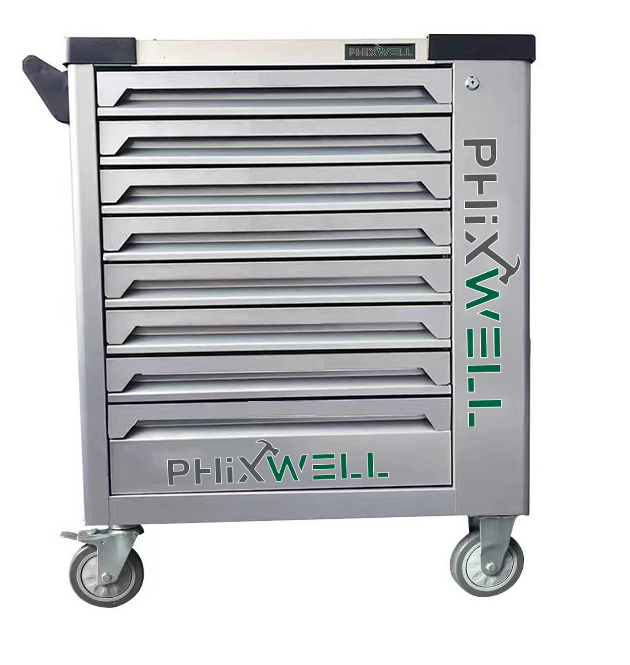 Phixwell 8-Drawer Tool Cabinet for Heavy-Duty Professional ShopsThis 8-drawer cabinet suits shops storing tools weighing up to 60 kg per drawer, using ribbed drawer bottoms for stiffness. Its compact design fits tight workspaces while maintaining structural integrity.View Product →
A professional shop loads drawers with socket sets, impact wrenches, brake parts, and tool kits that routinely push 30 to 60 kg per drawer. At this level, 1.0 to 1.2 mm steel is the working standard, and the frame needs full-height back reinforcement to prevent racking.
The Phixwell 12-drawer tool cabinet follows this specification and is a common choice for auto repair and maintenance shops running eight-hour shifts.
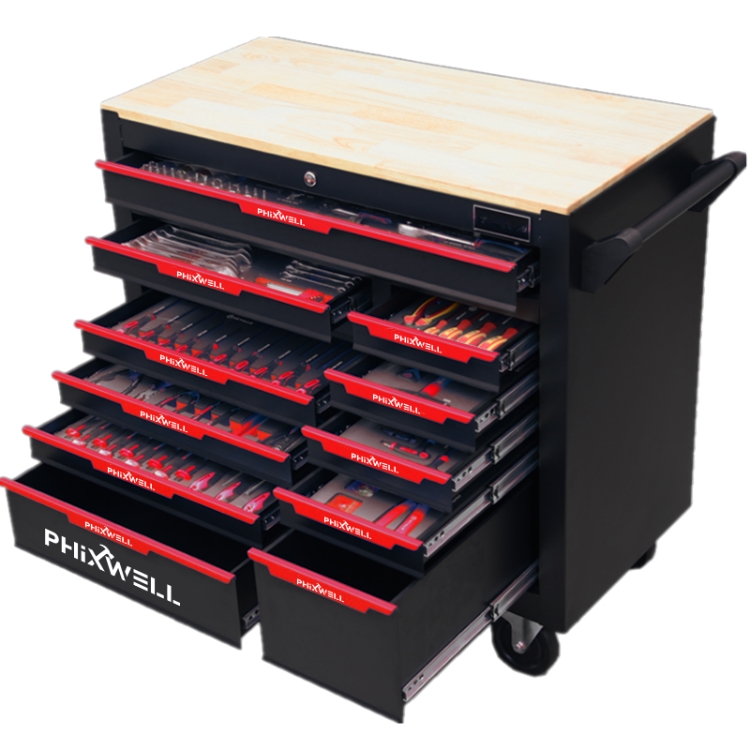 Phixwell 12-Drawer Tool Cabinet for Continuous-Duty WorkshopsBuilt with 1.2 mm steel and full-height frame reinforcement, this 12-drawer cabinet is suited for auto repair and maintenance shops where drawers open hundreds of times per shift without racking.View Product →
For production lines, assembly cells, and maintenance departments where drawers open hundreds of times per shift, 1.2 mm steel is the starting point. The frame, not just the drawers, must resist racking, and every slide needs a load rating equal to the drawer it supports.
The Phixwell 13-drawer large tool cabinet is built this way, with thicker side walls and reinforced drawer runners for continuous-duty cycles.
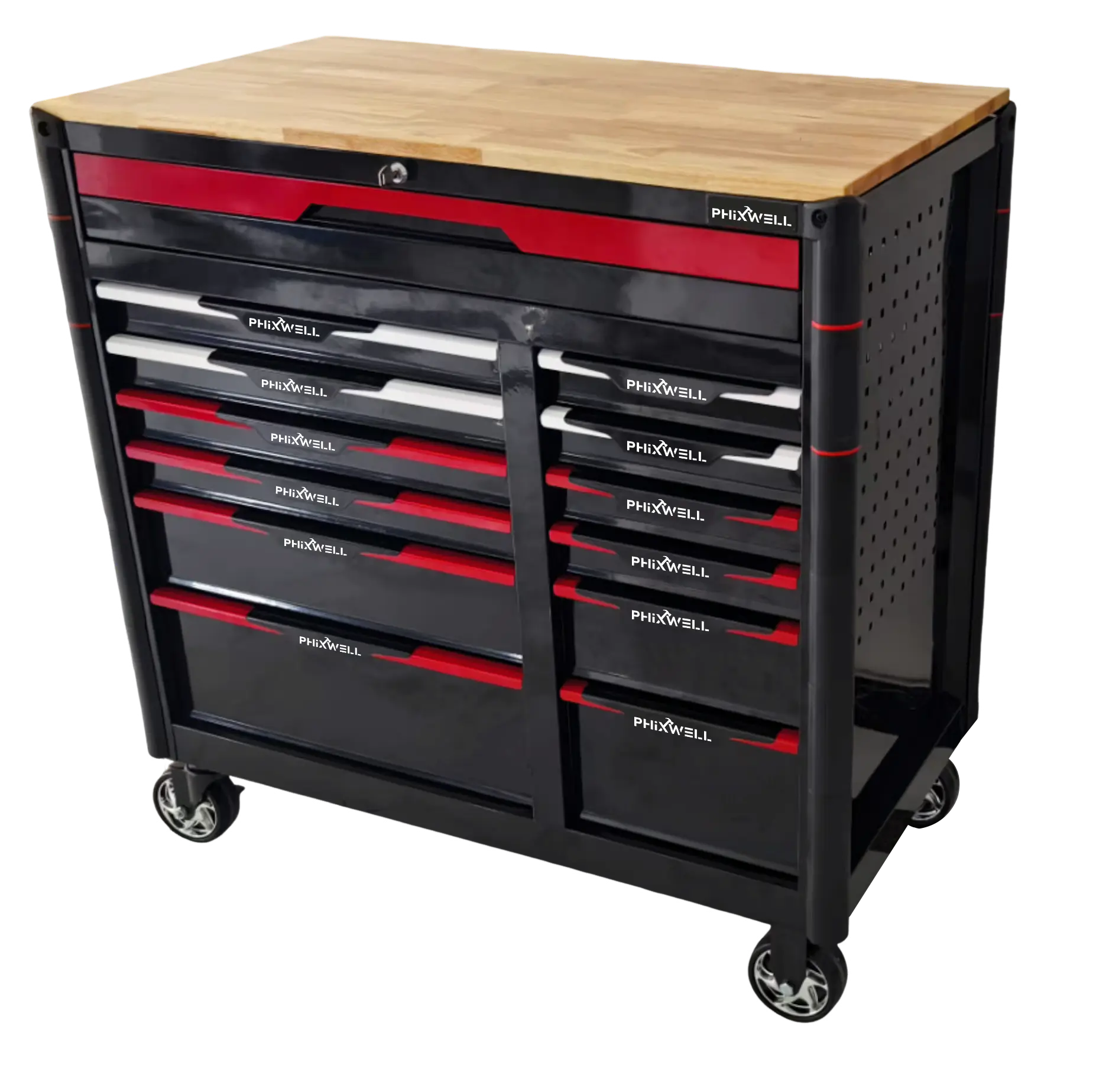 Phixwell 13-Drawer Large Tool Cabinet with Reinforced RunnersFeaturing thicker side walls and reinforced drawer runners, this large 13-drawer cabinet is designed for continuous-duty cycles, ensuring structural integrity through strong welds and bracing for demanding use.View Product →
A thick outer panel cannot save a cabinet with weak welds, thin slides, or poor bracing. Structural integrity comes from the combination of gauge, fabrication method, and reinforcement design.
Before you place an order, run through this checklist to confirm that the gauge decision matches the way you actually work.
If a specification sheet is unclear about gauge values, ask the supplier to state thickness in millimetres for every panel group. You can also compare models side by side in the 2026 Phixwell catalogue, which lists steel specifications across the full cabinet range.
For most professional workshops, 1.0 mm (18-gauge) steel in the drawer bodies and frame is the best balance of load capacity, weight, and cost. Home users can accept 0.8 to 0.9 mm, while heavy industrial use calls for 1.2 mm or more.
No. Steel gauge works in reverse: a higher number means a thinner sheet. A 22-gauge sheet at 0.8 mm is thinner than a 16-gauge sheet at 1.2 mm, even though the number 22 is larger.
For light hand-tool storage, yes. For daily loads above 50 kg per drawer, no. In that case, choose at least 1.0 mm steel for the drawer floors and make sure the frame has back reinforcement.
A 16-gauge (1.2 mm) drawer floor with standard rated slides is typically built for 80 to 100 kg per drawer in a properly braced cabinet. The exact limit depends on the slide rating, drawer width, and whether the load is spread or concentrated on one spot.
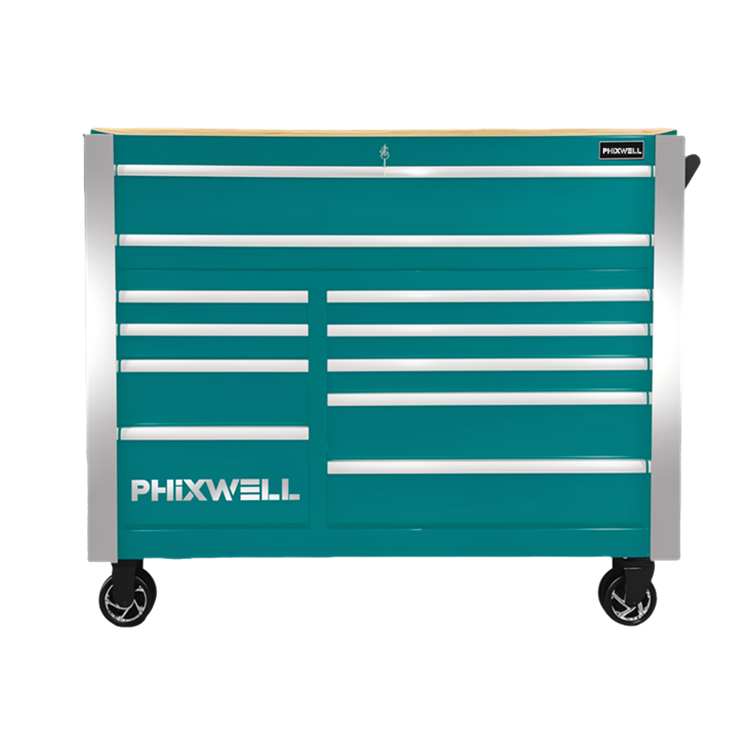
Prevent insufficient tool protection: Avoid rusting, collision or calibration failure caused by long...
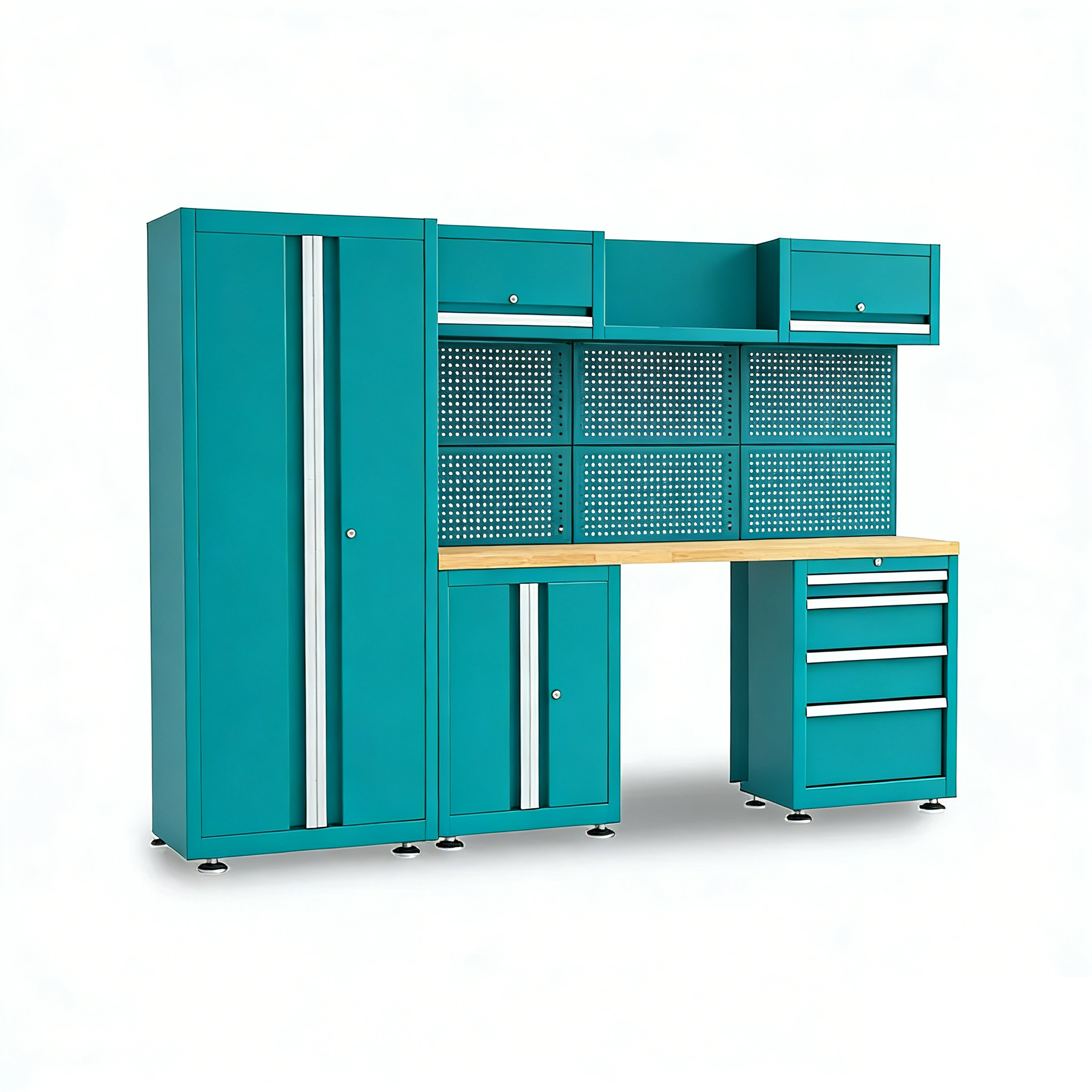
Multifunctional Tool Storage Combination Cabinet Material and appearance: Made of premium cold steel...
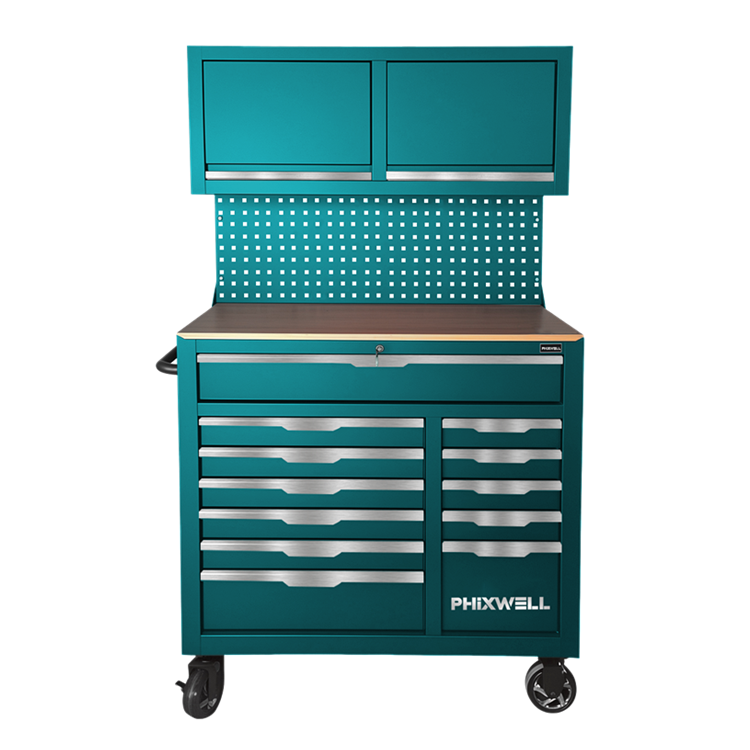
This is a heavy-duty multifunctional tool cabinet workbench set launched by the **PHIXWELL** brand, ...
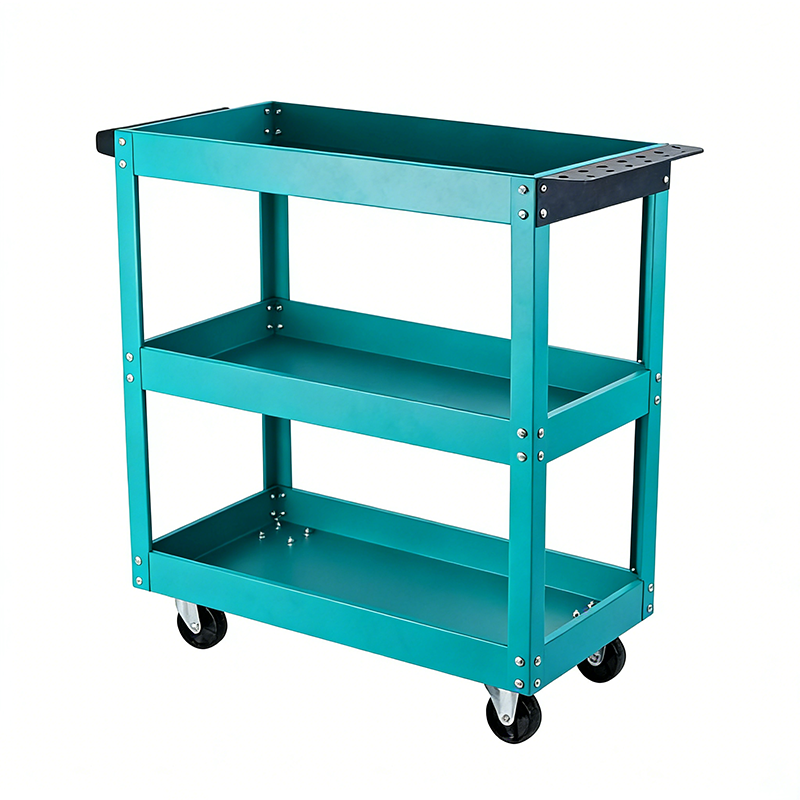
This is a **Three-Layer Auto Repair Tool Cart**, a multifunctional mobile maintenance storage device...
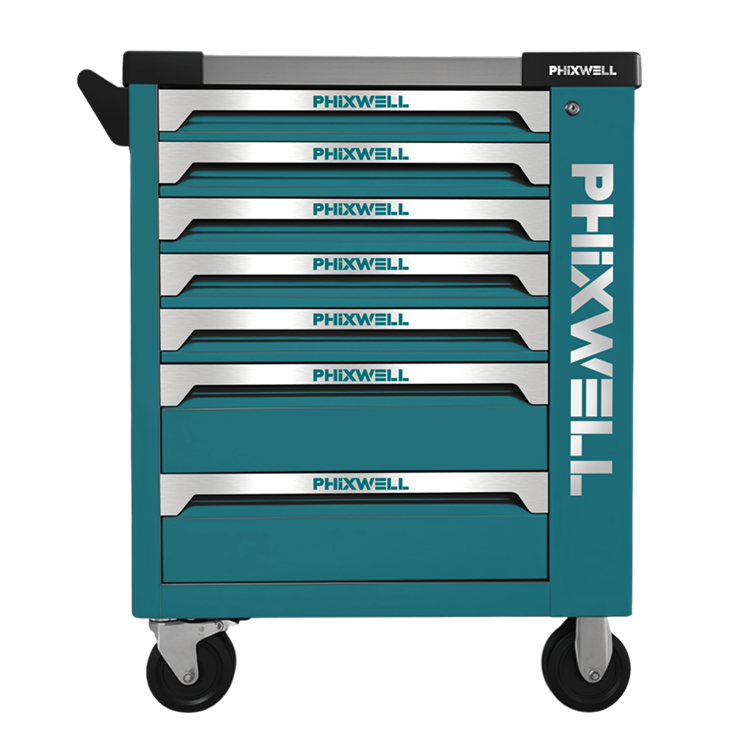
The tool cart group provides a set of tools to solve the problem of tool confusion and difficulty in...
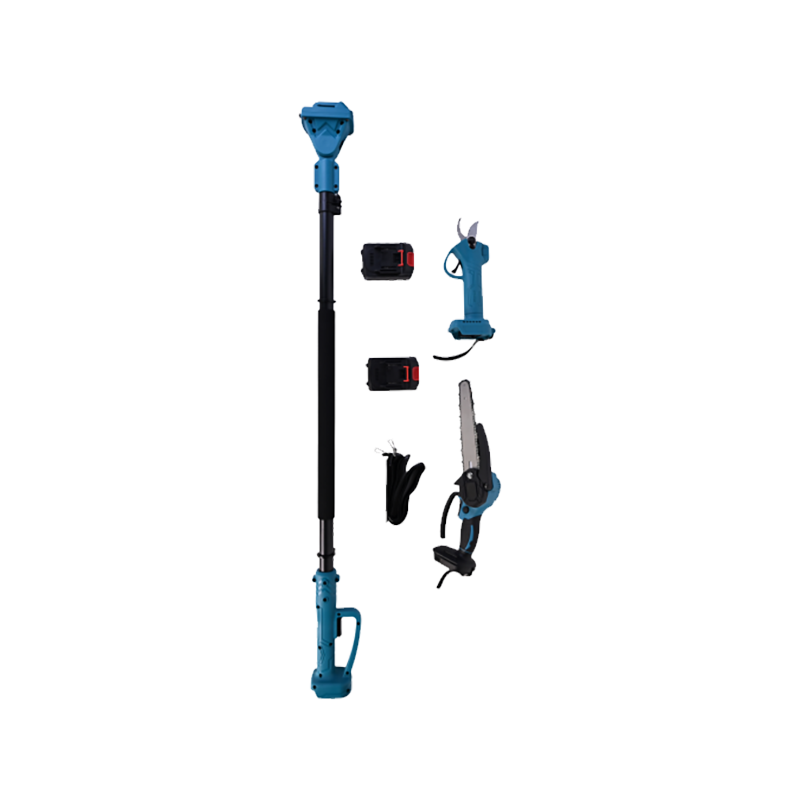
Easy to switch between handheld and high pole modes, suitable for trimming needs at different height...
Our annual output of more than 100,000 tool cabinet can meet the needs of customers with different purchase volumes.

+86-18658800788
+86-0512-58499000

New City Industrial Park, No. 108 Sizha Road, Yangshe Town, Suzhou, Jiangsu, China

