 en
 English
 Deutsch
717534 PHIXWELL 12 PCS Double-Headed Ribbed Wrench Set
The PHIXWELL 12 PCS Double-Headed Ribbed Wrench Set is crafted from high-quality alloy steel, offeri...

A 10 mm bolt on a lawn mower deck settles the socket set vs. combination wrench set argument faster than any spec sheet. A socket and ratchet spin that bolt off in seconds, yet the same bolt recessed into a cast aluminum housing refuses to accept a socket shell, and only a combination wrench reaches it sideways. Both situations occur on the same machine, which is why first-time buyers keep asking which set they truly need first.
The practical answer is not a single box. Socket sets and combination wrench sets overlap on hex fasteners, but each family covers positions the other cannot reach. The rule that works for most buyers: start with a socket set because it covers more tasks per dollar, then add an 8 to 19 mm combination wrench set before the second project begins. This guide explains why, with direct comparisons of torque, clearance, speed, and cost.
The functional difference is engagement geometry. A socket set pairs a ratchet handle with interchangeable six- or twelve-point sockets that fully encircle a hex nut or bolt head. A combination wrench set delivers matched wrenches, each with an open end on one side and a box end on the other, and it depends on your wrist for every swing.
Count your actual fastener positions before you count socket sizes. In a typical home garage, an 8 to 19 mm socket range covers roughly four out of five common automotive and equipment fasteners. The remaining fifth — threaded rods, flare nuts, recessed adjusters, and bolts squeezed against brackets — belongs to the combination wrench.
Sockets win every job where the fastener is reachable and the work involves repetition, specified torque, or recessed positions. The ratchet re-engages without removing the tool, the handle multiplies hand force, and extensions route torque around obstacles.
The re-engagement advantage is decisive with a drain plug: a twelve-thread plug forces a combination wrench to be lifted and repositioned twelve times, while a socket ratchet stays engaged for the whole job.
Combination wrenches own the positions sockets cannot enter. The open end slides sideways onto a nut on a threaded rod, reaches into recesses where a socket shell will not fit, and delivers the control needed for adjustable components and hydraulic fittings.
Plumbing is the clearest example. A compression fitting on a supply line tolerates only a thin wrench jaw, and the nut sits close to the wall with no room for a ratchet head. If your project list includes sinks or air tools, the combination wrench set moves to the top of the priority list.
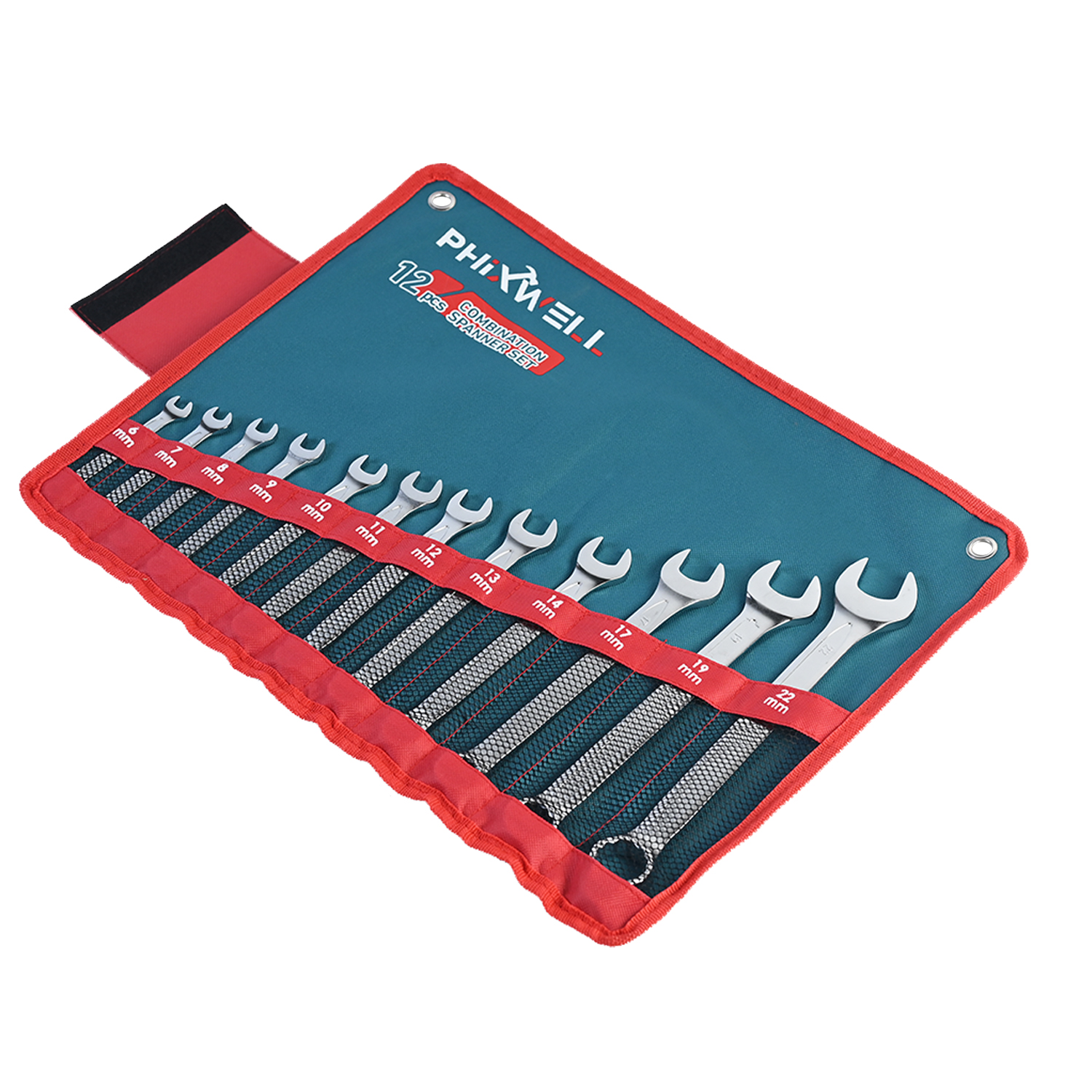 PHIXWELL 12-Piece Combination Wrench Set with Custom OptionsThis 12-piece combination wrench set suits tasks like plumbing where thin jaws and close-wall access matter. Check it here if you need a compact wrench set that complements a socket set for tight spaces.View Product →
Side by side, socket sets lead in torque, speed, and size coverage; combination wrench sets lead in clearance access, tactile control, and storage economy. The table below lists the seven factors that change purchase decisions.
| Factor | Socket Set | Combination Wrench Set |
| Fastener engagement | Six-point sockets wrap all six corners; strong against rounding on rusted bolts | Open end grabs two to three corners for speed; box end wraps all six |
| Torque capacity | High, from the long ratchet handle and full-head grip | Moderate, limited by open-jaw grip and shorter bar |
| Clearance access | Needs shell, ratchet, and swing space | Slim profile reaches recessed, rod-mounted, and wall-hugging fasteners |
| Speed on repeated fasteners | Ratchet re-engages without lifting the tool | Must lift, rotate, and re-index after each swing |
| Typical set coverage | 82 to 216 pieces including sockets, bits, and extensions | 8 to 12 wrenches spanning 8 to 19 mm |
| Entry cost | Higher per set | Lower per set and lighter to store |
| Most common failure | Worn ratchet pawl or cracked socket drive | Splayed open end after repeated over-torque |
Access patterns explain why the balance shifts by trade. The chart below shows the typical share of fastening tasks handled best by each tool family in five common work categories, based on clearance and repetition patterns seen in workshop practice.
Buy the socket set first, and pair it with a compact combination wrench set before the second project starts. A 108-piece socket set with 3/8-inch drive, 8 to 19 mm sockets, extensions, and a 72-tooth ratchet covers the widest range of home and automotive work per dollar. The wrench set covers the access gaps.
 108-Piece Socket Set with 3/8-Inch Drive and 72-Tooth RatchetThis 108-piece socket set covers 8–19 mm sockets, extensions, and a 72-tooth ratchet, making it a cost-effective choice for broad home and automotive work. Review it as the recommended first purchase for fastener coverage.View Product →
Quality rules apply to both families. Choose chrome-vanadium steel marked CR-V, six-point sockets for primary sizes, and a ratchet with at least 72 teeth. Production scale is a useful safety signal: SUZHOU XINGWOTAI HARDWARE CO.,LTD manufactures two million tool sets per year under the Phixwell brand, which keeps material grade and heat-treatment standards consistent across batches.
For a complete view of what a balanced first box should hold, read our ultimate guide to choosing a hand tool set, then compare kit sizes against your task list.
Budget reality: a quality 108-piece socket set costs roughly one and a half times a 12-piece combination wrench set, but covers three to four times the fastener positions. If the budget allows only one box, the socket set pulls further ahead.
 216-Piece Socket Set with 1/4, 3/8, and 1/2-Inch DrivesA larger 216-piece kit offering 1/4, 3/8, and 1/2-inch drives, plus wrenches and bit drivers, to handle nearly all household and vehicle fasteners. Consider this set when expanding beyond a basic socket collection.View Product →
Once the first set teaches you which sizes you actually turn, expand deliberately. A 216-piece kit with 1/4, 3/8, and 1/2-inch drives covers nearly every household and vehicle fastener, and it pairs well with a tool cabinet. Browse the Phixwell catalogue to compare socket and wrench set configurations before you commit.
A socket set is more versatile in coverage because extensions, universal joints, deep sockets, and multiple drive sizes adapt to far more fastener positions. A combination wrench set remains the necessary complement for clearance-limited access, so professional mechanics keep both within reach.
No. Wrenches cannot match the ratchet's speed on repeated fasteners or the torque leverage of a long handle, and they have no equivalent of a deep socket for recessed bolts. Sockets, in turn, cannot clear every tight position, which is why the two families coexist.
Start with 1/4-inch drive for 4 to 13 mm small fasteners and 3/8-inch drive for 8 to 19 mm general sizes. That combination handles most household furniture, bicycle, appliance, and automotive fasteners. Add 1/2-inch drive only when you move into suspension or engine work.
Only if they skip basic quality markers. Avoid sets without an alloy marking, look for CR-V steel, check that primary sizes are six-point, and confirm the ratchet has at least 72 teeth. A mid-priced set from a manufacturer with documented production volume is a safer bet than an unbranded kit with thin chromium plating.

The PHIXWELL 12 PCS Double-Headed Ribbed Wrench Set is crafted from high-quality alloy steel, offeri...
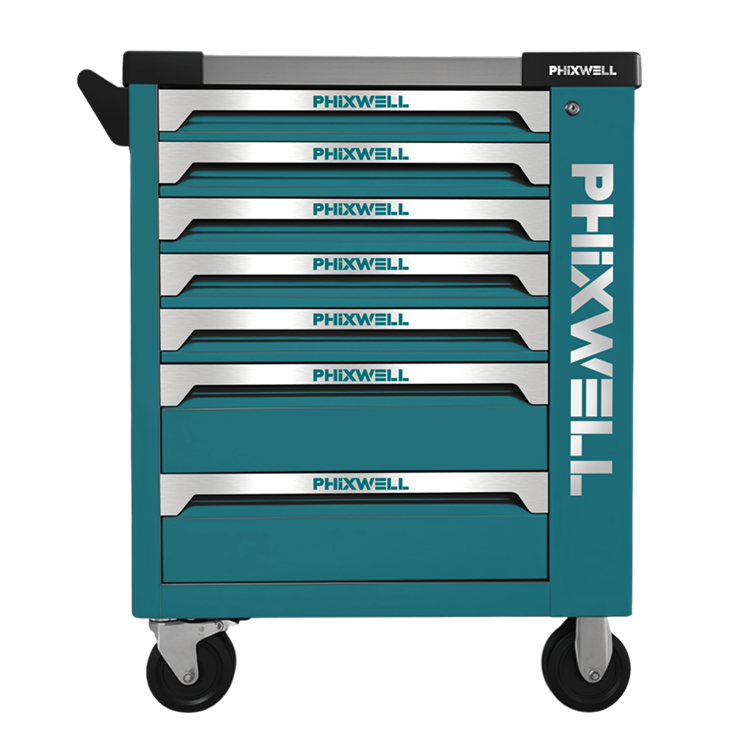
The tool cart group provides a set of tools to solve the problem of tool confusion and difficulty in...
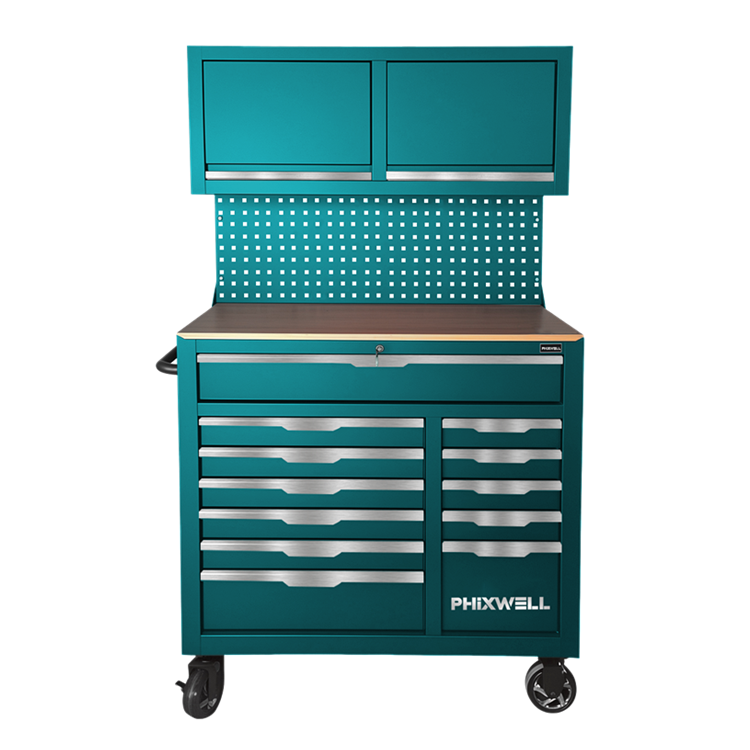
This is a heavy-duty multifunctional tool cabinet workbench set launched by the **PHIXWELL** brand, ...
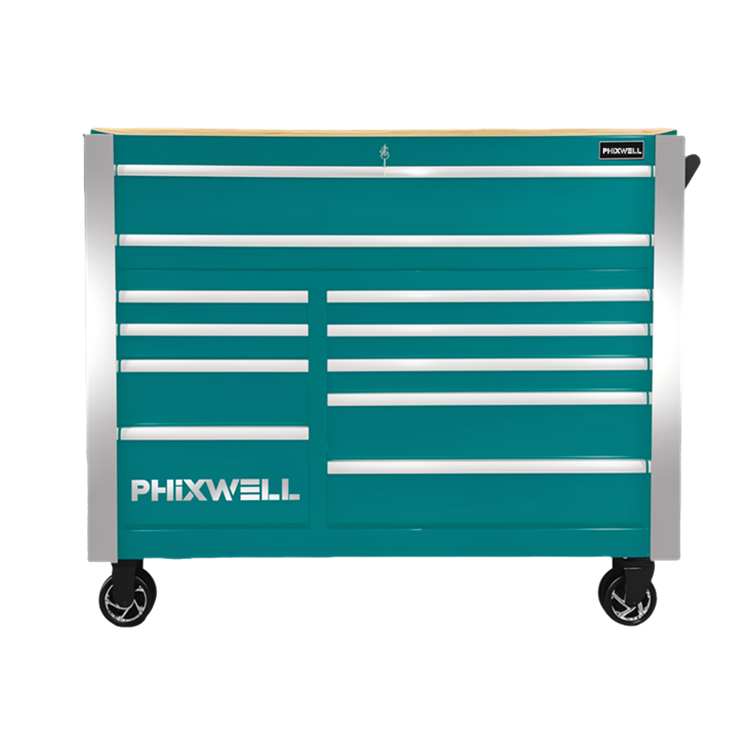
Prevent insufficient tool protection: Avoid rusting, collision or calibration failure caused by long...

1. 6pc Precision Insulated Screwdriver Set This 6-piece precision insulated screwdriver set is desi...
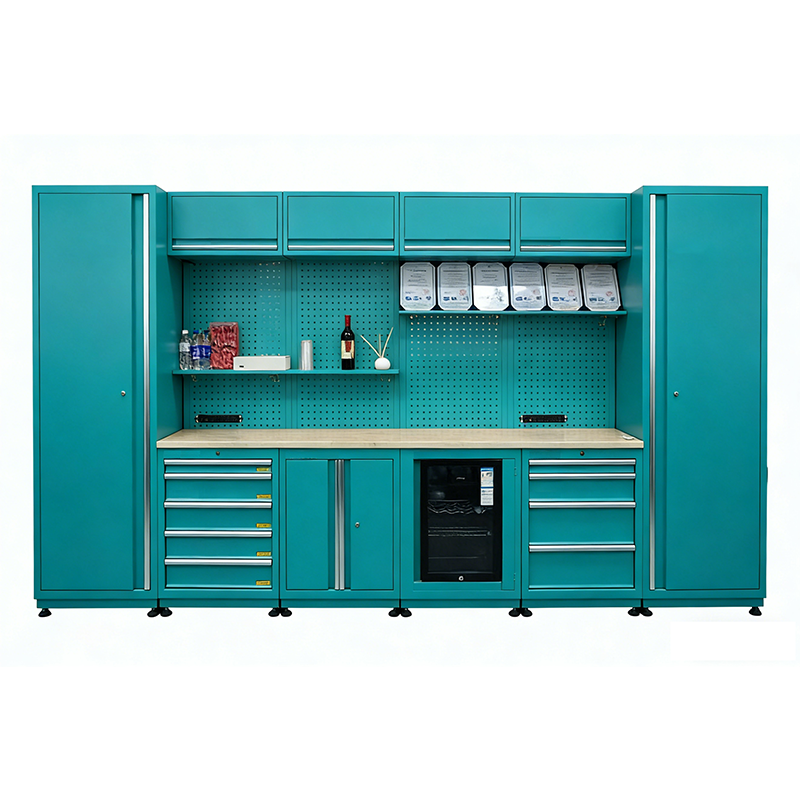
# Workshop Modular Storage Combination Cabinet (Model 719610) Product Introduction This workshop sto...
Content
Our annual output of more than 100,000 tool cabinet can meet the needs of customers with different purchase volumes.

+86-18658800788
+86-0512-58499000

New City Industrial Park, No. 108 Sizha Road, Yangshe Town, Suzhou, Jiangsu, China

