 en
 English
 Deutsch
Workshop Modular Storage Combination Cabinet
# Workshop Modular Storage Combination Cabinet (Model 719610) Product Introduction This workshop sto...

A 216-piece mechanic tool set can look like a complete workshop in a box, but when two-thirds of its sockets are 12-point shallow types and your week is full of rusted truck fasteners, half of that chrome-plated inventory becomes dead weight. The sets that earn a permanent place on a working bay are rarely the biggest ones. They are the ones matched to the vehicles, fastener sizes, torque levels, and storage logic the shop actually runs on.
The fastest way to narrow down mechanic tool sets is to score each candidate against the jobs your workshop completes in a typical week, not against the total piece count printed on the box.
A general auto repair bay, a heavy truck shop, a motorcycle garage, and a home workshop need different socket ranges, drive sizes, and durability levels. The table below summarizes the minimum coverage each profile should target.
| Workshop profile | Drive sizes needed | Essential socket range | Must-have features |
| General auto repair | 1/4 in + 3/8 in + 1/2 in | 8-24 mm | 6-point sockets, deep and shallow, flex joints |
| Heavy truck and equipment | 1/2 in, 3/4 in optional | 10-32 mm | Impact-rated sockets, long-handle ratchets |
| Motorcycle and powersports | 1/4 in + 3/8 in | 8-19 mm | Thin-wall sockets, compact ratchets |
| Home garage and DIY | 3/8 in | 10-19 mm | Organized case, quality over piece count |
Build a scorecard for each candidate: mark every socket, wrench, and bit that would see weekly use in your shop. A 200-piece set with 50 rarely used sizes loses to a 120-piece set with 90 daily-use tools. Also factor in fastener condition. Shops that see rusted or high-torque hardware need six-point sockets and stronger steel more often than shops working on clean, low-mileage vehicles.
Socket coverage across the three standard drive sizes is the strongest predictor of whether a mechanic tool set will keep you off the tool truck during its first year in service.
Six-point sockets grip the flat faces of the fastener and are the correct default for rusted, torqued, or soft bolts. Twelve-point sockets offer more entry angles but concentrate stress on the corners, which is why they round fasteners under load. Deep sockets are mandatory for studs; shallow sockets reach tight clearances. Balanced coverage in 10, 12, 13, 14, 17, and 19 mm resolves most passenger car jobs.
For a workshop that wants full metric coverage in one kit, a 187-piece socket set spans the three drive families without gaps.
 PHIXWELL 187-Piece Metric Socket and Bit Set with Ratchet HandleThis comprehensive socket set covers 1/4, 3/8, and 1/2 drive families with standard and deep sockets, plus bit sockets and accessories. The focus on socket steel and ratchet quality makes it a solid choice for full metric coverage.View Product →
A mechanic tool set fails at the ratchet mechanism and the socket steel, not at the decorative chrome finish.
Most mid-range sets use chrome vanadium steel, labeled Cr-V, which is a solid default for hand tools. Higher-tier sets move to hardened alloys measuring 48 to 52 HRC on the Rockwell scale because harder steel resists rounding on the fastener side and lasts longer on the drive side. The practical test is simpler: a socket that rings when dropped and shows a clean, even finish is usually fine; a socket that feels soft and deforms on the first stubborn bolt is not.
Check the ratchet before anything else. A 72-tooth ratchet delivers a 5-degree swing arc, which matters inside confined suspension areas, while a 24-tooth ratchet needs a much wider sweep. Rebuildable ratchets with a serviceable gear assembly are worth the premium because the gear is the first component to wear under heavy use.
The way a mechanic tool set is stored decides how often its tools actually get used during a repair.
A blow-molded case works in a home garage but slows a professional bay, because every socket has to return to its dedicated cutout before the case can close. A drawer-integrated set removes that friction: tools stay in labeled foam or drawer organizers and the bay keeps moving. If the set is supplied with a tool cabinet, check the drawer slides and the gauge of the steel housing, because a heavy socket rail defeats an underbuilt drawer fast.
 PHIXWELL 7-Drawer Tool Cabinet with 309-Piece Mechanic Tool SetPairing a 309-piece tool assortment with a seven-drawer cabinet, this integrated kit keeps sockets, wrenches, and bits organized in designated slots, reducing friction in professional bays. The cabinet is designed to match the tool layout and weight.View Product →
Combined kits, such as a 309-piece mechanic tool set with a seven-drawer cabinet, reduce the decision because the storage is engineered for the exact tool layout. The sockets, wrenches, and driver bits each have a designated position, and the drawer capacity is matched to the set's weight.
For slide types and steel-gauge details, our tool storage buying guide compares the cabinet options that matter.
If your workshop has more than two work positions, the mechanic tool set needs wheels.
A fixed cabinet suits a shop where every job happens in the same bay. A mobile tool cart is the better fit when the same set has to move between lifts, or when the layout changes with each job. Look for full-extension drawer slides, a load rating that matches the socket rails and wrench trays you plan to keep in it, and a handle that lets you position the cart without reaching over the working surface.
Three-layer auto repair carts keep the most-used tools at mid height and place heavy items low for stability, which makes them a common choice in busy service shops.
 PHIXWELL Three-Layer Auto Repair Tool Cart with Cold Rolled SteelBuilt with 0.8mm Q195 cold rolled steel, this three-layer cart positions frequently used tools at mid height and heavy items low for stability. It suits busy service shops that need efficient mobile tool organization.View Product →
For a general automotive workshop, 150 to 200 pieces is a practical range if the set includes 1/4-inch, 3/8-inch, and 1/2-inch drive families. Counts above that mostly add specialty sizes and duplicate bits that stay unused.
No. Six-point sockets grip the flats of the fastener and spread torque over a wider contact area. Twelve-point sockets offer more entry positions but put stress on the corners, so they are more likely to round a rusted or torqued bolt.
Chrome vanadium, or Cr-V, is the standard alloy for sockets and wrenches, balancing strength with cost. S2 steel is harder and is typically used for screwdriver bits and hex keys. A hardness range of 48 to 52 HRC is a good indicator that a socket will resist deformation.
Buying the set and cabinet together guarantees the layout fits, as with 309-piece kits supplied in seven-drawer cabinets. Buying separately gives more flexibility on cabinet size but creates the risk that the sockets outgrow the drawers or the drawers cannot handle the tool weight.
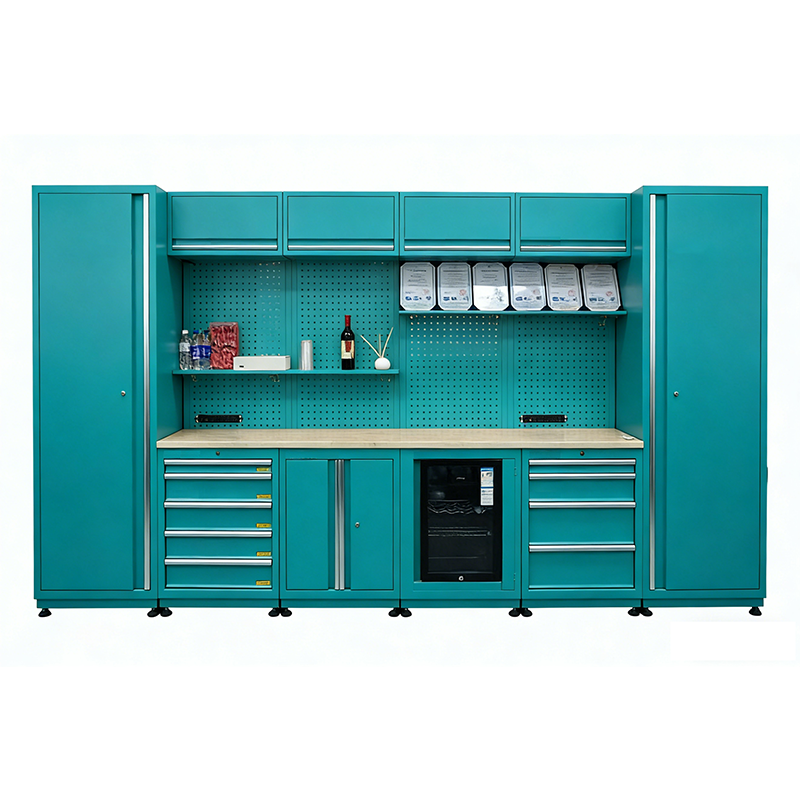
# Workshop Modular Storage Combination Cabinet (Model 719610) Product Introduction This workshop sto...
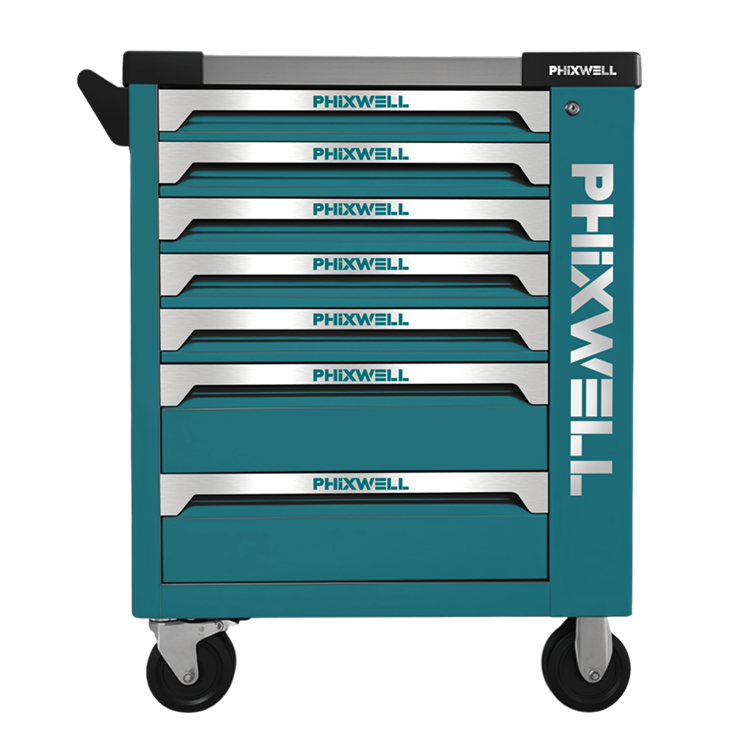
The tool cart group provides a set of tools to solve the problem of tool confusion and difficulty in...
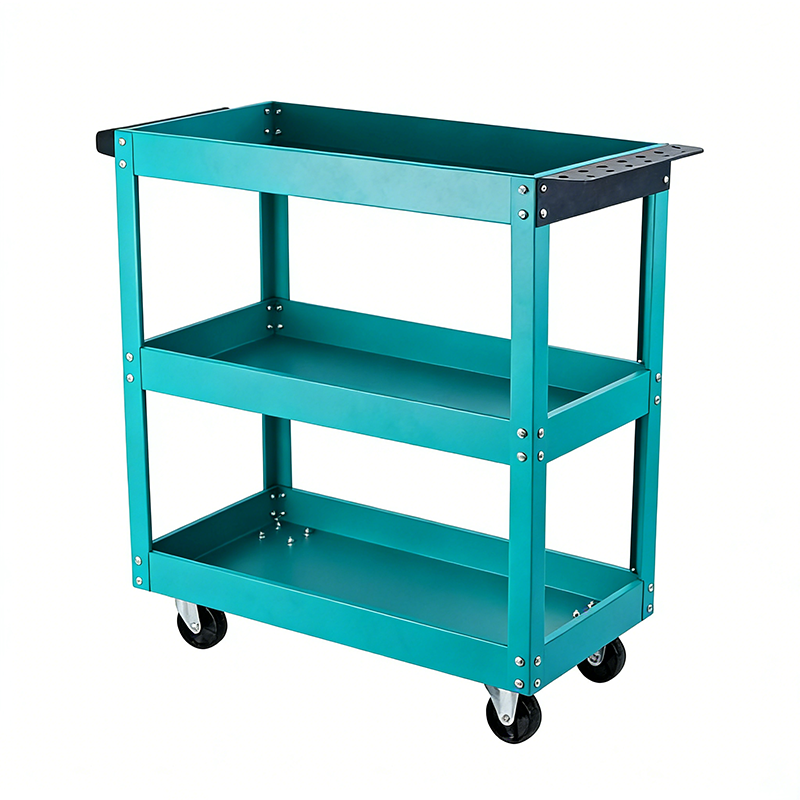
This is a **Three-Layer Auto Repair Tool Cart**, a multifunctional mobile maintenance storage device...
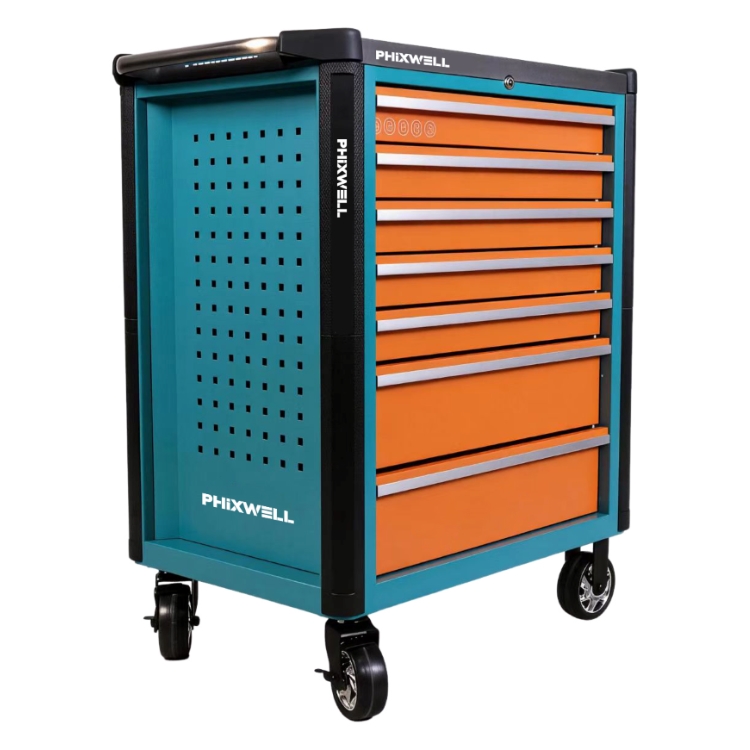
PHIXWELL Professional Rolling Tool Cabinet Product Overview The PHIXWELL rolling tool cabinet is a...
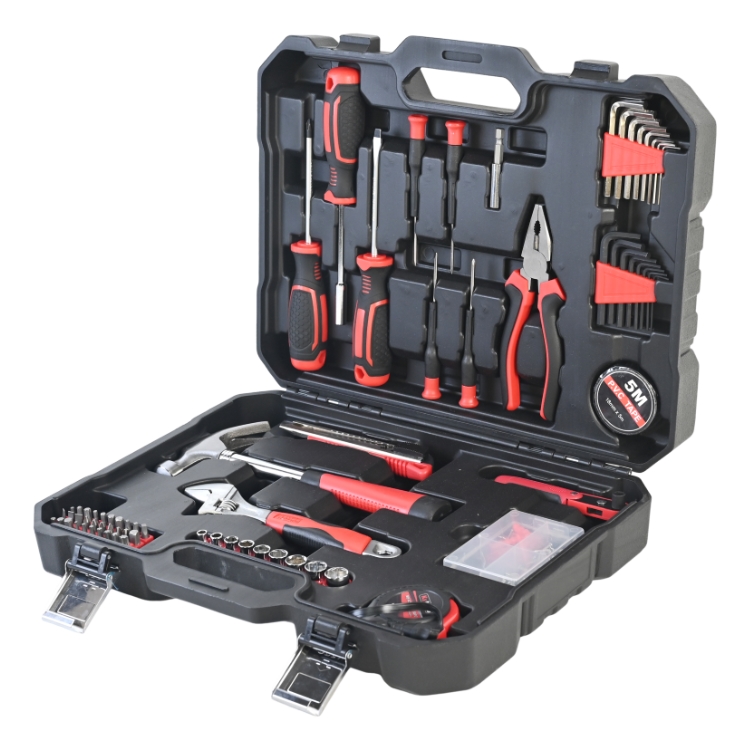
This household tool set is the ideal companion for your home repairs and DIY projects. It includes a...

This household tool set is the ideal companion for your home repairs and DIY projects. It includes a...
Content
Our annual output of more than 100,000 tool cabinet can meet the needs of customers with different purchase volumes.

+86-18658800788
+86-0512-58499000

New City Industrial Park, No. 108 Sizha Road, Yangshe Town, Suzhou, Jiangsu, China

