 en
en  English
 Deutsch
719520PHIXWELL 11 drawers Tool Cabinet with 377pcs Tool Set
Prevent insufficient tool protection: Avoid rusting, collision or calibration failure caused by long...

The most common mistake in choosing a tool cabinet is sizing it for the tools owned today instead of the tools that will accumulate over the next few years. A cabinet that's full on day one leaves no room for organized growth, and tools end up stacked loose on top — defeating the point of having a cabinet at all.
A practical rule: plan for roughly 1.5–2x current tool volume when sizing drawers. Home and hobby shops are typically well served by a 26–30 inch wide, 4–7 drawer cabinet, while professional or multi-trade shops generally need 41–56 inch widths with 8 or more drawers, often paired with a separate top chest or hutch for frequently used hand tools.
Drawer height variety matters as much as overall width — a cabinet with uniform 4-inch drawers wastes space on small items and can't fit a power drill or large wrench set without going to the next size up.
Tool cabinet listings advertise weight capacity, but the more reliable durability indicator is steel gauge — and lower numbers mean thicker, stronger steel. 18-gauge steel (about 1.2mm) is common in entry-level cabinets and holds up fine for hand tools and light hardware. 16-gauge (about 1.5mm) is the realistic minimum for cabinets that will see regular drawer slamming, heavy sockets, or shop use. 14-gauge (about 2mm) shows up in premium and commercial-duty cabinets designed for decades of daily abuse.
Gauge also affects how the cabinet resists racking — the side-to-side flex that develops when drawers are repeatedly loaded unevenly. A thin-gauge cabinet can develop drawer misalignment within a year or two of heavy use, while thicker-gauge steel keeps drawers running smoothly far longer.
Don't rely on stated weight capacity alone to judge build quality — a cabinet can claim a high capacity number while still using thin-gauge steel that flexes noticeably under real-world loading.
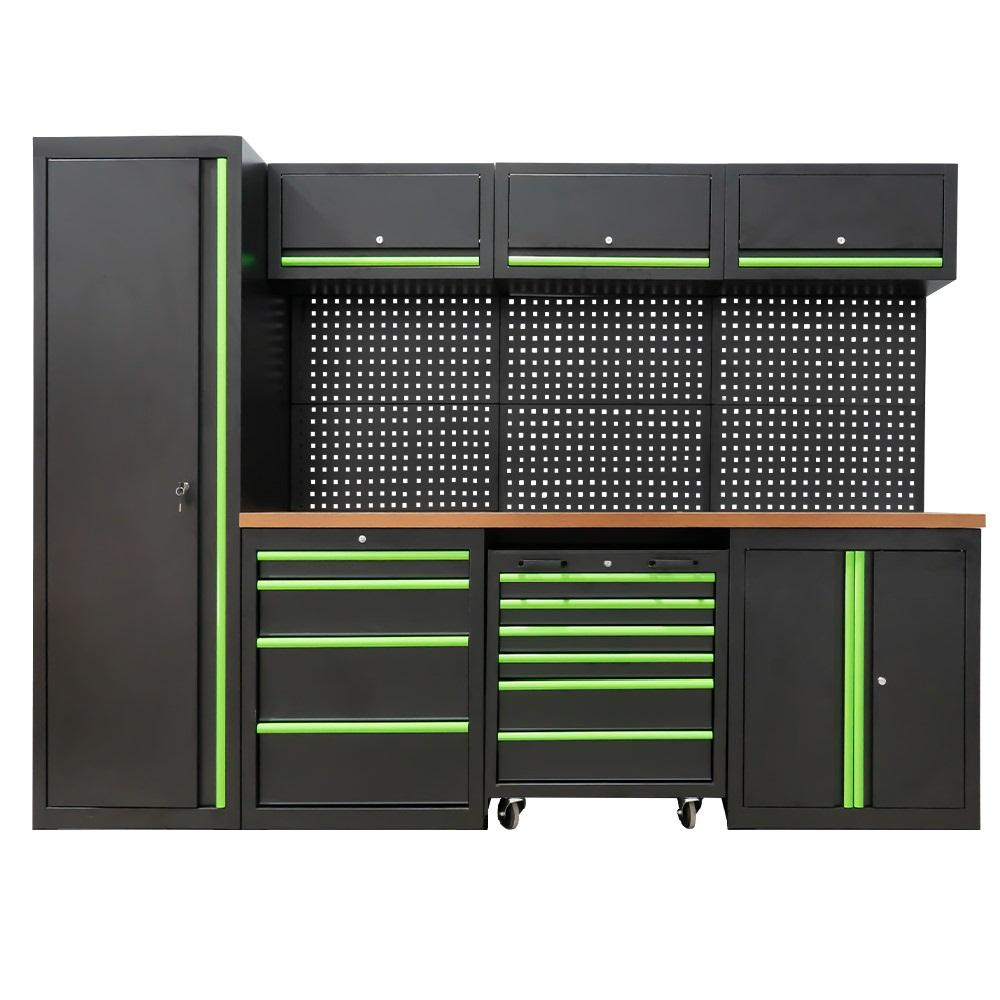
Two cabinets can look nearly identical and still differ enormously in how they feel after a year of use, and the slide mechanism is usually why. Ball-bearing slides — full-extension, smooth, and rated for repeated heavy loading — are the standard on mid-range and professional cabinets. Roller slides, found on budget units, work fine for light loads but bind or sag once drawers carry dense items like socket sets or power tool batteries.
| Slide Type | Typical Load Rating | Best Use |
|---|---|---|
| Roller slide | 25–50 lb per drawer | Light hand tools, hobby use |
| Ball-bearing slide | 75–150 lb per drawer | Regular shop and garage use |
| Heavy-duty ball-bearing | 200+ lb per drawer | Commercial and industrial shops |
Full-extension slides — which let a drawer pull out completely rather than stopping at 70–80% — are worth prioritizing in deep cabinets, since partial-extension drawers hide items at the back where they're easy to forget.
For shared shops, shops with apprentices, or any garage that sees foot traffic, a centralized locking bar — which locks every drawer simultaneously from a single point — is far more practical than individual drawer locks. It also acts as a safety feature, preventing drawers from sliding open and creating a tip hazard if the cabinet is moved or bumped.
Casters matter more than they look. Locking casters rated for the cabinet's full loaded weight (not just empty weight) keep a rolling cabinet from drifting during use, and swivel-front/fixed-rear caster configurations make a heavy, fully loaded cabinet far easier to steer than four swivel casters alone.
16-gauge steel is the practical minimum for a garage shop seeing regular use. 14-gauge is worth the extra cost for shops running power tools, heavy sockets, or daily commercial use.
For any cabinet storing more than light hand tools, yes. Ball-bearing slides hold their smooth action under heavier, denser loads for far longer than roller slides, which tend to bind or sag within a year or two of heavy use.
Most home and hobby shops are well covered by 4–7 drawers in a 26–30 inch wide cabinet, with drawer height variety mattering more than raw drawer count.
Not on its own. Weight capacity can be achieved with thinner steel under certain test conditions, so it's worth checking steel gauge and slide type alongside the capacity number rather than relying on capacity alone.
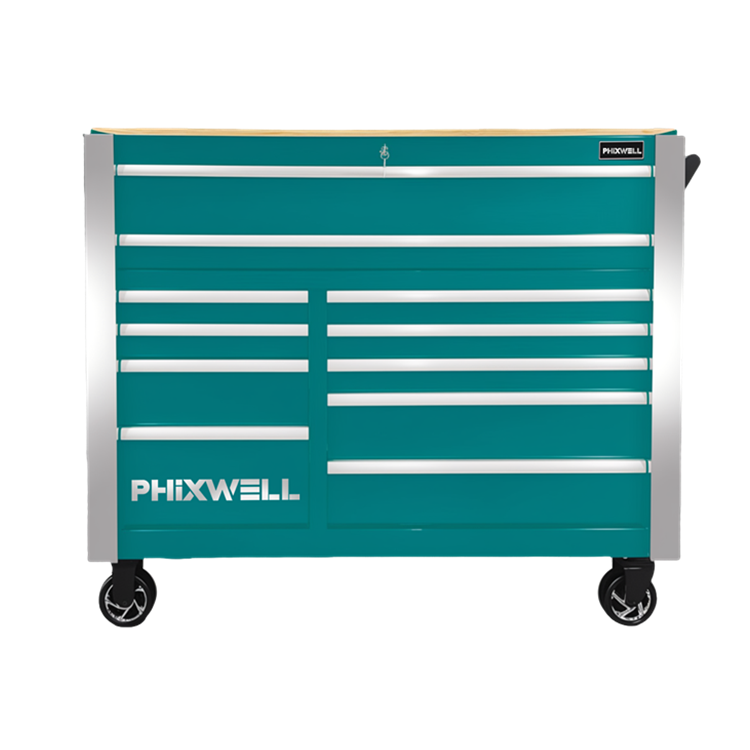
Prevent insufficient tool protection: Avoid rusting, collision or calibration failure caused by long...
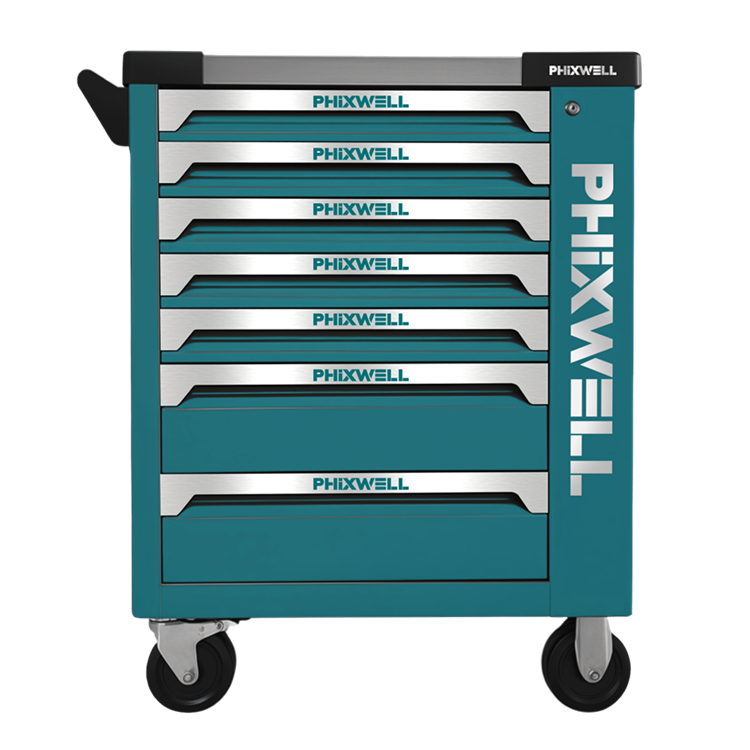
The tool cart group provides a set of tools to solve the problem of tool confusion and difficulty in...
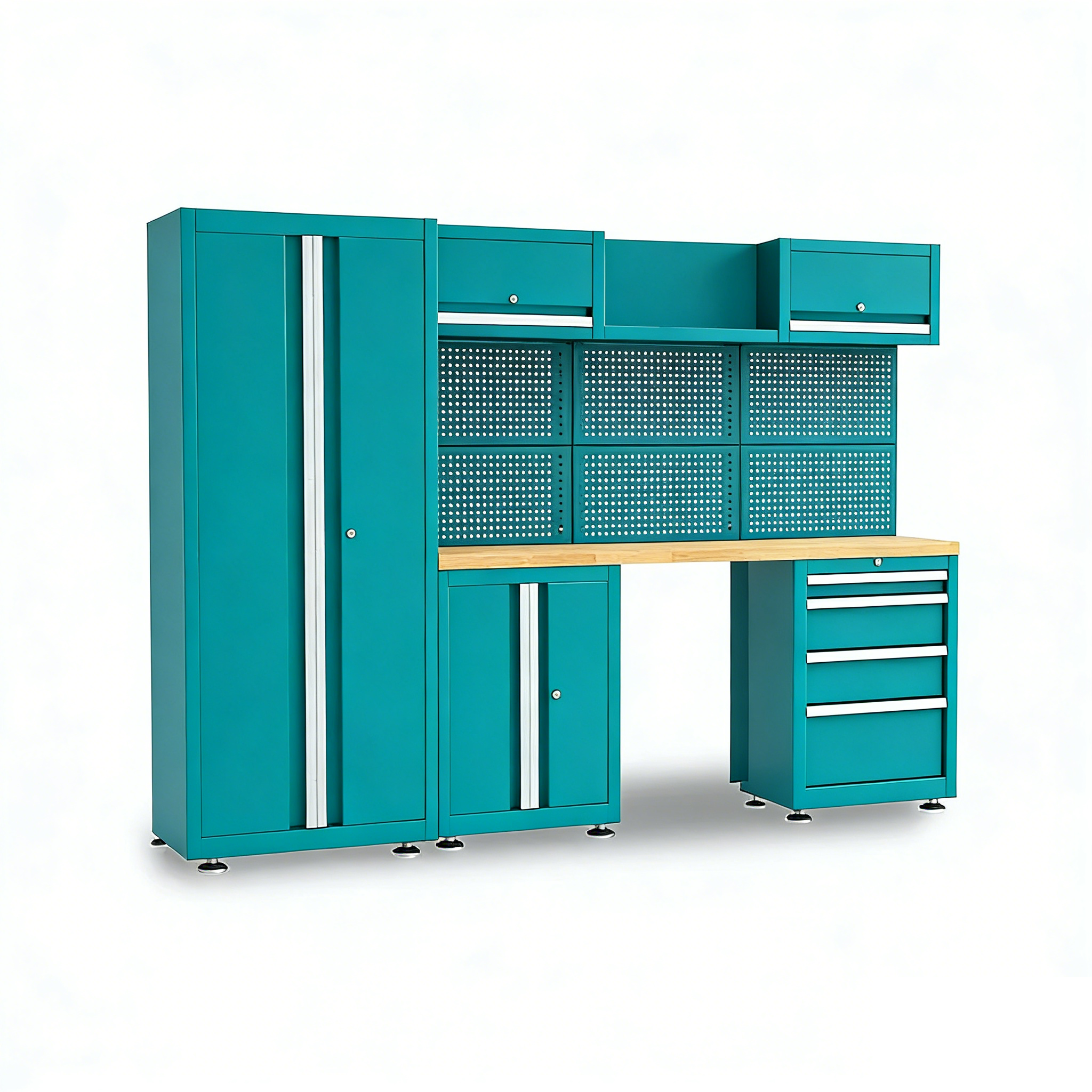
Multifunctional Tool Storage Combination Cabinet Material and appearance: Made of premium cold steel...
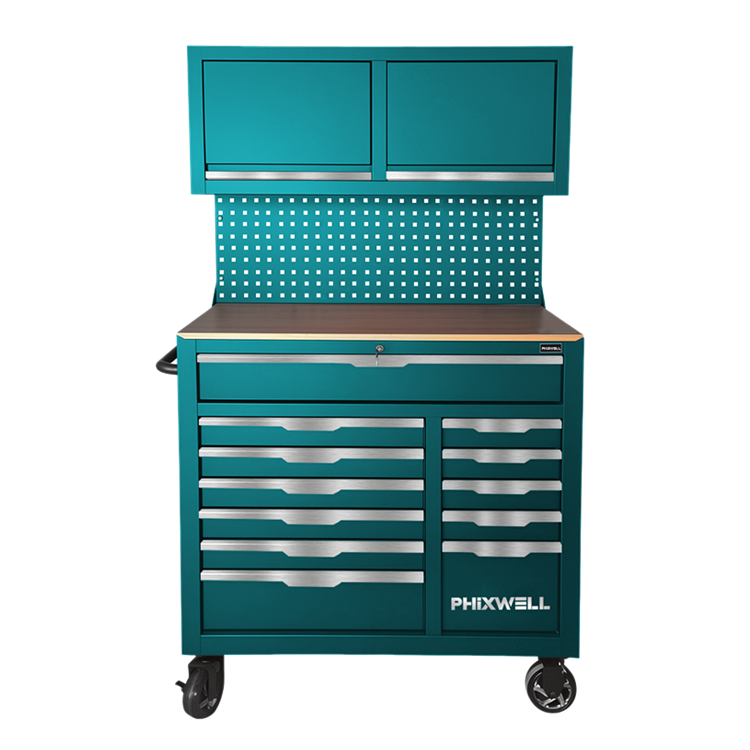
This is a heavy-duty multifunctional tool cabinet workbench set launched by the **PHIXWELL** brand, ...
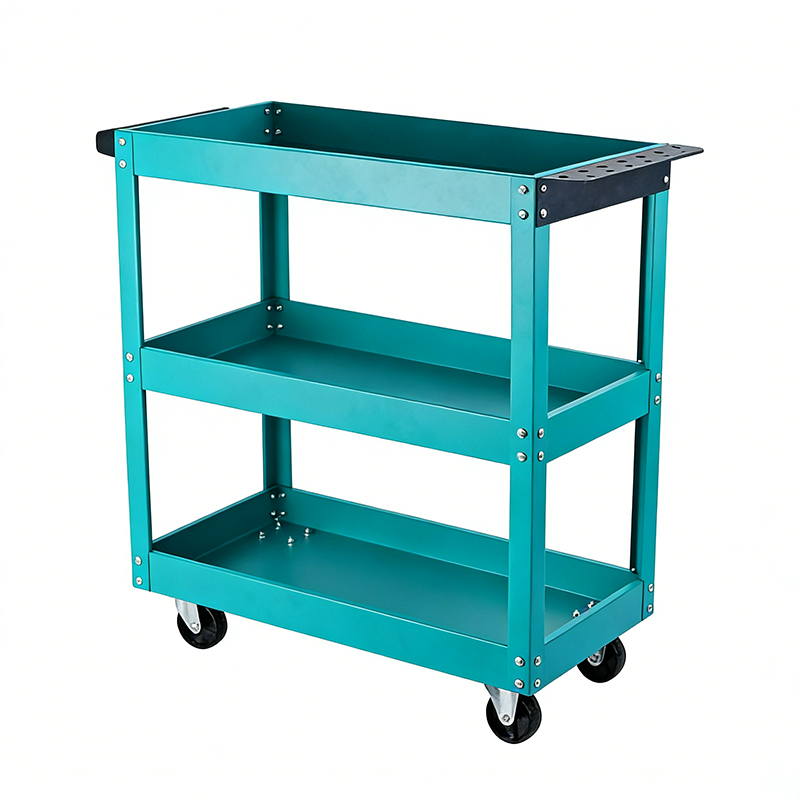
This is a **Three-Layer Auto Repair Tool Cart**, a multifunctional mobile maintenance storage device...
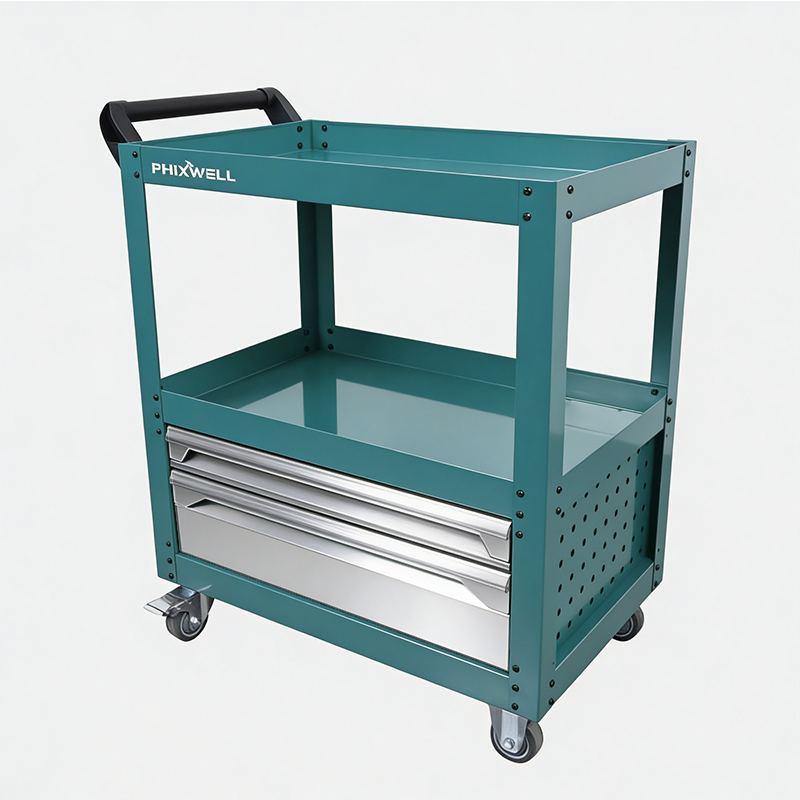
This is a multifunctional tool cart designed specifically for auto repair, maintenance, or industria...
Our annual output of more than 100,000 tool cabinet can meet the needs of customers with different purchase volumes.

+86-18658800788
+86-0512-58499000

New City Industrial Park, No. 108 Sizha Road, Yangshe Town, Suzhou, Jiangsu, China

