 en
en  English
 Deutsch
Multifunctional Tool Storage Combination Cabinet
Multifunctional Tool Storage Combination Cabinet Material and appearance: Made of premium cold steel...

Steel gauge is the single biggest factor separating a tool storage cabinet that holds up for decades from one that dents and sags within a couple of years. Cabinets built from 18 to 20-gauge steel resist denting from dropped tools and won't visibly flex when fully loaded, while 22-gauge or thinner steel — common on budget models — can bow under the weight of dense tools like sockets and wrenches stacked in a single drawer. Lower gauge numbers mean thicker steel, so an 18-gauge cabinet is meaningfully sturdier than a 22-gauge one even though the numbers look close.
Weld quality at the corners and drawer frame joints matters just as much as the steel thickness itself. Fully welded seams hold their shape under repeated racking stress from opening and closing drawers thousands of times, while spot-welded or riveted joints on cheaper cabinets can loosen over years of daily shop use, leading to drawers that no longer sit flush or seal properly against dust.
Powder coating thickness and cure quality affect long-term corrosion resistance more than most buyers realize. A properly cured powder coat resists chipping from tool impacts and won't show bare metal after years of use, while a thin or poorly cured finish chips easily at drawer edges and corners, exposing raw steel that can rust in humid garage or shop environments. Textured finishes also tend to hide scratches better over time than smooth gloss finishes, which show wear marks more visibly.
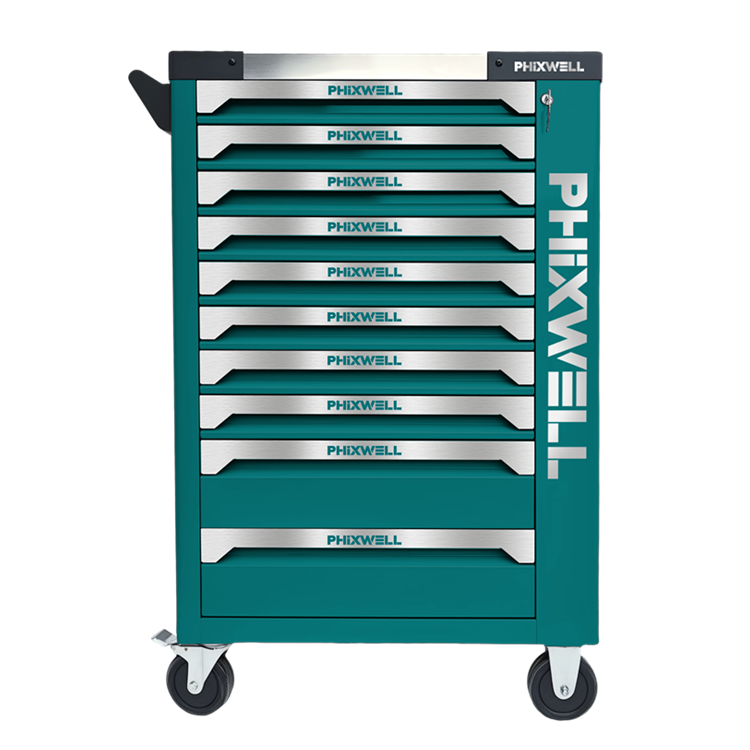
Ball-bearing drawer slides are the clearest upgrade over roller slides in any tool storage cabinet carrying real weight. Roller slides work fine for lightly loaded drawers but bind and feel gritty once a drawer holds 50 lbs or more of tools, since the rollers concentrate load at a few contact points. Ball-bearing slides distribute weight across many bearing points, which keeps drawer action smooth even at rated capacities of 100 to 200 lbs per drawer on heavier-duty cabinets.
Full-extension slides, which allow the drawer to pull completely out of the cabinet body, make a real difference for accessing tools stored at the back of deep drawers. Partial-extension slides are cheaper but leave a portion of the drawer permanently inaccessible without lifting contents out, which becomes a daily annoyance in a cabinet used constantly rather than for occasional storage.
Drawer stops and interlock systems are safety features worth checking before buying a taller, multi-drawer cabinet. An interlock mechanism prevents more than one drawer from opening at a time, which stops the cabinet from tipping forward under the combined weight of several fully extended, fully loaded drawers — a real risk with tall cabinets that aren't anchored to a wall or workbench.
Cabinet configuration should follow how tools are actually used day to day, not just how much total storage volume a unit offers. A cabinet optimized for hand tool organization looks very different from one built for bulky power tool storage.
| Type | Best For | Limitation |
|---|---|---|
| Rolling tool chest | Mobile use across a shop or garage | Lower total capacity than stationary units |
| Stationary base cabinet | Fixed workstations, high weight capacity | No mobility once installed |
| Wall-mounted cabinet | Small shops, floor space conservation | Limited depth and weight capacity |
| Modular stacking system | Growing tool collections, custom configurations | Higher long-term cost as units are added |
Comparison of common tool storage cabinet configurations by use case and limitation.
Foam drawer liners, cut to hold specific tool shapes, do more for daily efficiency than most people expect from what looks like a simple add-on. A shadow-foam system makes it immediately obvious when a tool is missing, since the empty cutout stands out visually, which cuts down on lost tools and speeds up the process of putting things away correctly after a job. Standard rubber or vinyl liners still protect tools from sliding and scratching but don't offer that same at-a-glance inventory check.
Drawer dividers and small-parts bins matter most in the top one or two drawers of a tool storage cabinet, where fasteners, drill bits, and other small items tend to accumulate loosely if left unorganized. Adjustable dividers let the layout change as tool collections grow, which is more practical long-term than fixed compartments sized for one specific set of tools.
A worktop surface on top of the cabinet, if included, should be rated for direct impact from dropped tools and resistant to solvents and oils. Stainless steel or hardwood tops handle this kind of daily abuse far better than laminate surfaces, which can chip or delaminate at the edges within a year or two of heavy shop use.
A single-point locking system, where one lock secures every drawer simultaneously through an internal locking bar, is standard on most mid-range and higher cabinets and offers reasonable security against casual access. Cabinets storing higher-value tools, or those placed in shared or semi-public shop spaces, sometimes justify the added cost of individually keyed drawers or an upgraded tubular lock, which resists picking far better than the basic cam locks found on entry-level units.
Caster selection on rolling cabinets affects both mobility and stability. Larger-diameter casters, especially those with polyurethane treads, roll more easily over uneven concrete and small debris than small hard-plastic casters, which can catch and stall under a heavy loaded cabinet. Locking casters on at least two corners keep the cabinet stationary once positioned, preventing drift during use even on a slightly sloped shop floor.
For taller stationary cabinets, anchoring to a wall stud or floor bracket isn't just a precaution — it's a real tip-over safeguard once several heavy drawers are extended at once. This matters most with cabinets over about 40 inches tall carrying dense tools like sockets or metal stock, where the combined weight of open drawers can shift the center of gravity enough to tip an unanchored unit forward.
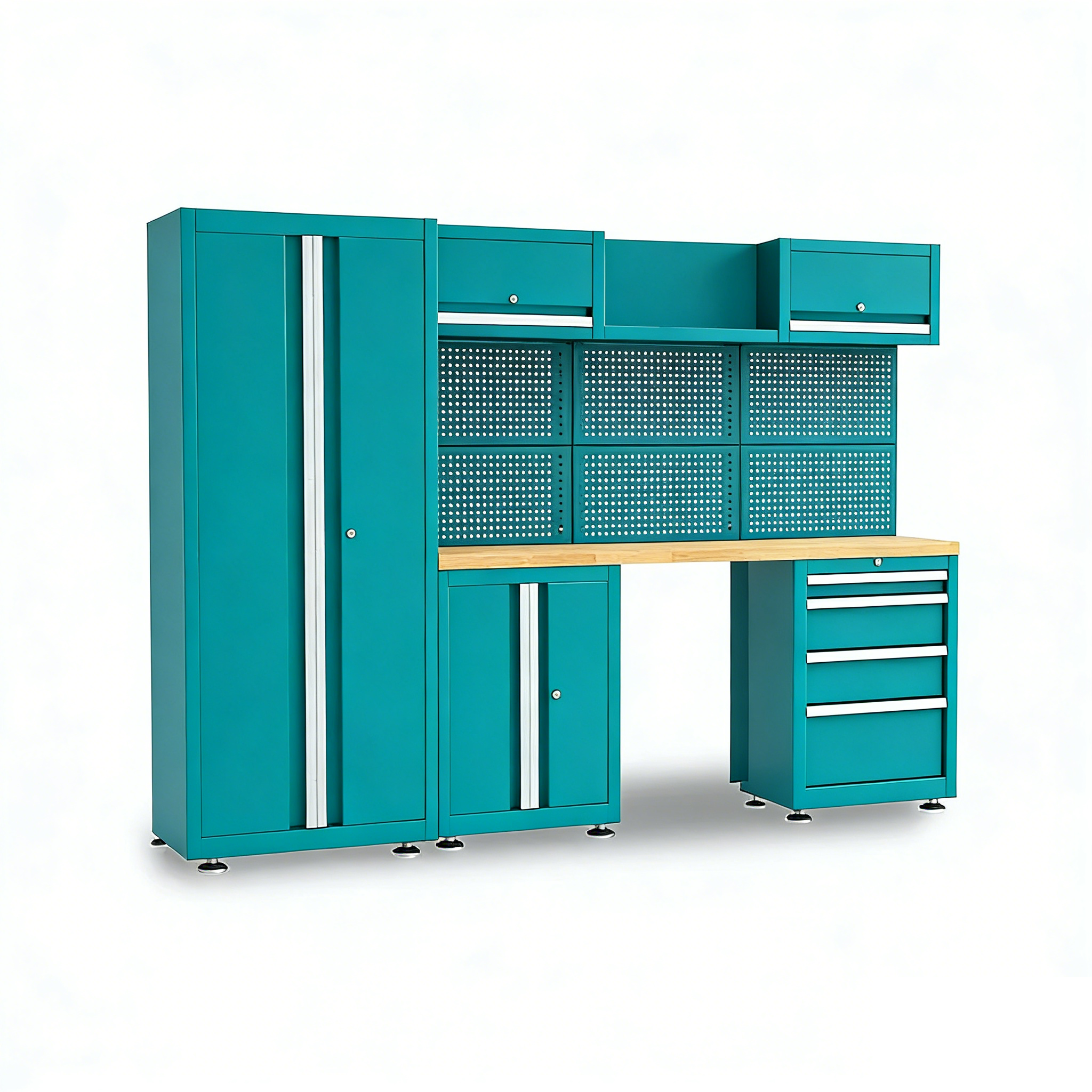
Multifunctional Tool Storage Combination Cabinet Material and appearance: Made of premium cold steel...
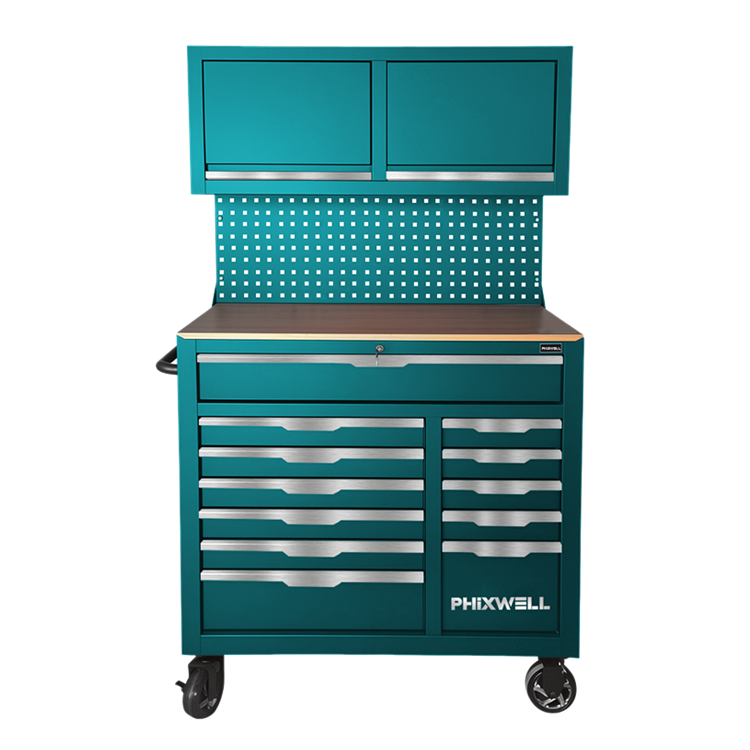
This is a heavy-duty multifunctional tool cabinet workbench set launched by the **PHIXWELL** brand, ...
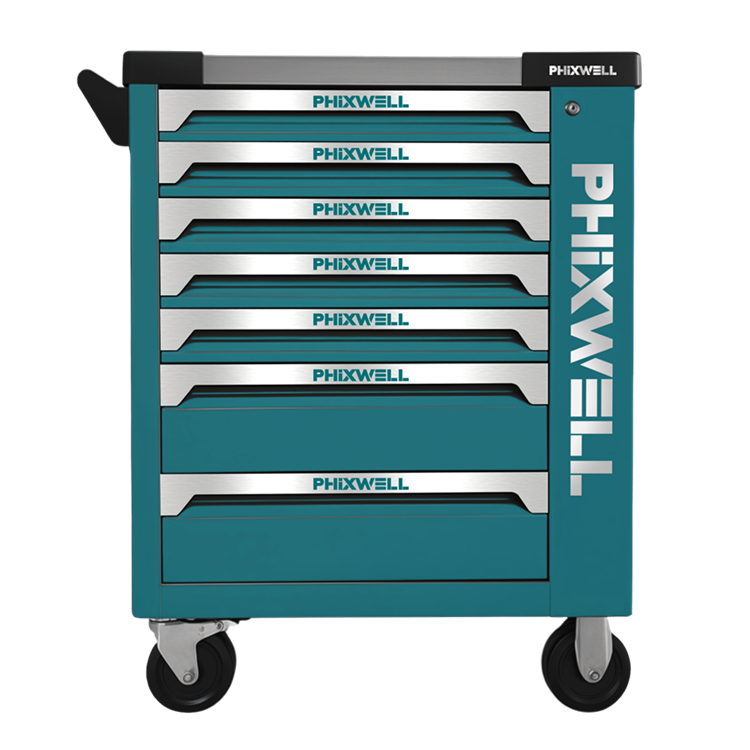
The tool cart group provides a set of tools to solve the problem of tool confusion and difficulty in...
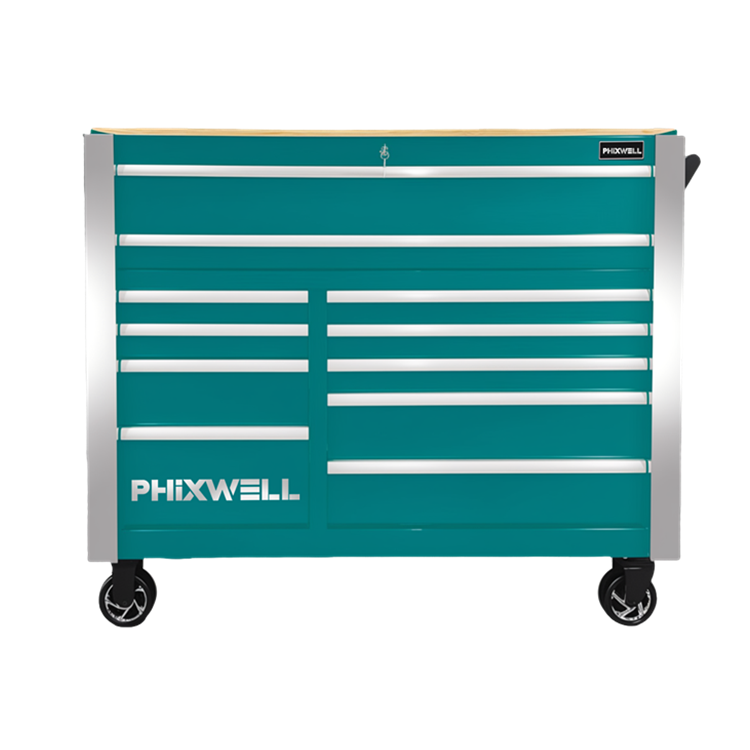
Prevent insufficient tool protection: Avoid rusting, collision or calibration failure caused by long...
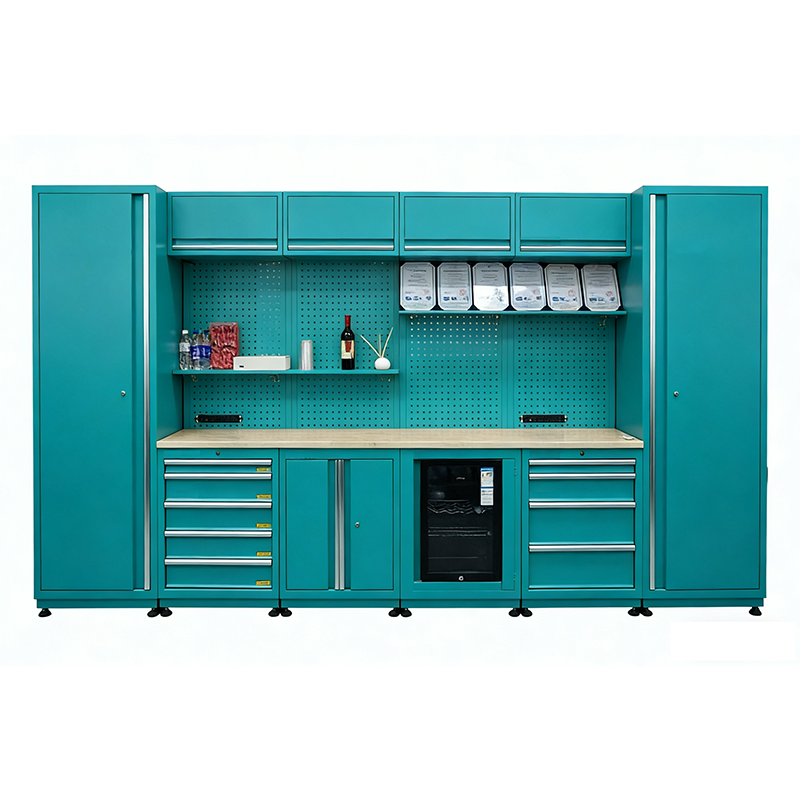
# Workshop Modular Storage Combination Cabinet (Model 719610) Product Introduction This workshop sto...
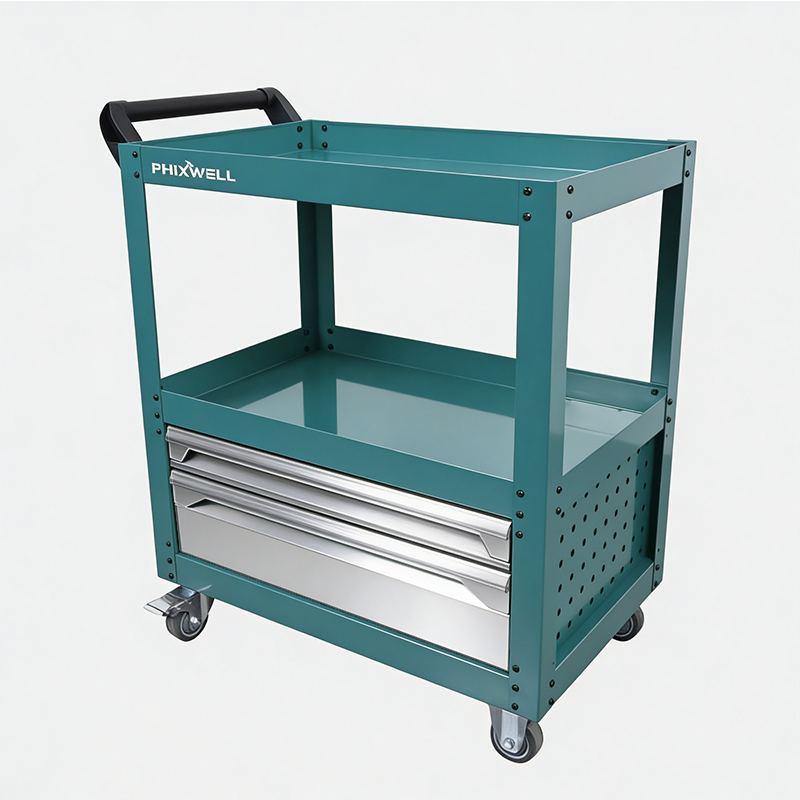
This is a multifunctional tool cart designed specifically for auto repair, maintenance, or industria...
Our annual output of more than 100,000 tool cabinet can meet the needs of customers with different purchase volumes.

+86-18658800788
+86-0512-58499000

New City Industrial Park, No. 108 Sizha Road, Yangshe Town, Suzhou, Jiangsu, China

