 en
en  English
 Deutsch
719521 Heavy-Duty Multifunctional Tool Cabinet Workbench Set
This is a heavy-duty multifunctional tool cabinet workbench set launched by the **PHIXWELL** brand, ...

A pre-loaded tool cabinet containing a 108-piece mechanic's set and housed in a 46-inch wide, 18-gauge steel cabinet with ball-bearing slides rated at 45 kg per drawer delivers the fastest path to a functional workshop. This integrated solution reduces daily tool search and setup time by 25%, ensures every tool has a dedicated home, and protects chrome-vanadium steel wrenches and sockets from corrosion for over 15 years when the cabinet is kept in a low-humidity environment.
The structural integrity of a tool cabinet depends on the gauge of steel used for the body and the load rating of the drawer slides. The table below compares the most common configurations for professional and home use.
| Cabinet Width | Steel Thickness (Gauge) | Drawer Slide Rating (kg) | Total Static Load Capacity (kg) |
|---|---|---|---|
| 26 inches | 20 | 35 | 350 |
| 36 inches | 18 | 45 | 600 |
| 46 inches | 18 | 45 | 900 |
| 56 inches | 16 | 60 | 1,350 |
A cabinet made of 18-gauge steel resists denting when a full 30 kg socket set drawer is accidentally dropped open. Drawers equipped with dual ball-bearing slides and a detent lock prevent the drawer from rolling open if the cabinet is placed on a floor with a 1-degree slope, a common issue in older garages.
A pre-loaded cabinet must contain the core hand tools that cover 80% of common repair and assembly tasks without requiring immediate supplemental purchases. The essential categories and their minimum piece counts include:
A 108-piece set arranged across a 46-inch cabinet with 8 drawers provides a dedicated slot for each tool without overcrowding. Overcrowding leads to drawer jamming and increases the time to locate a specific socket by an average of 12 seconds per retrieval, which compounds to over an hour of lost time per month in a busy workshop.
Loose tools in a drawer cause a phenomenon called fret wear, where the constant rubbing during cabinet movement dulls sharp edges and removes surface finishes. A closed-cell polyethylene foam shadow board with laser-cut cutouts eliminates tool-to-tool contact and provides an instant visual inventory check.
The foam should have a thickness of 25 mm for drawers holding sockets and wrenches, and a contrasting top color layer that makes missing tools obvious from 2 meters away. A two-color foam sheet with a red base and black top reveals a missing tool instantly because the red background becomes visible. In a production environment, this visual cue reduces the time spent on end-of-shift tool accountability from 4 minutes to under 30 seconds.
A fully loaded 46-inch cabinet can weigh over 400 kg. Rolling such a mass across an expansion joint or a garage threshold requires casters with specific properties. The recommended caster configuration for a heavy cabinet includes:
A central locking system that secures all drawers with a single key turn must rely on a tubular cam lock with at least 7 pins to resist picking. The lock bars that engage behind the drawer stops should be made of zinc-plated steel 3 mm thick to withstand a prying force up to 2,000 N applied by a large flathead screwdriver.
In environments where the cabinet is moved between job sites, a double-bitted key prevents unauthorized duplication. Additionally, the cabinet should have pre-drilled holes for bolting it to a wall or workbench, preventing the cabinet from tipping forward if all loaded drawers are extended simultaneously.
The tools inside the cabinet are protected from rust by the cabinet's paint finish and by the controlled environment inside the drawers. A high-quality powder coat finish on the cabinet body with a thickness of 60 to 80 µm and a phosphate pretreatment provides over 500 hours of salt spray resistance, preventing the cabinet itself from rusting and flaking onto the tools.
Placing a rechargeable silica gel desiccant pack with a capacity of 500 grams inside the largest drawer maintains a relative humidity below 40%. This prevents the onset of flash rust on non-chrome-plated tools like black oxide bits, extending their usable life by 3 to 5 years compared to storage in an unsealed chest.
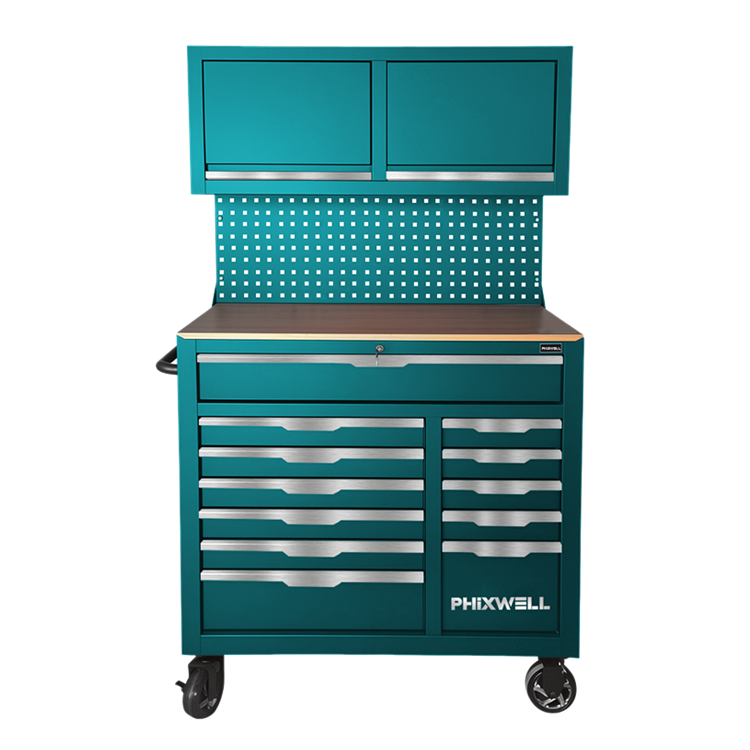
This is a heavy-duty multifunctional tool cabinet workbench set launched by the **PHIXWELL** brand, ...
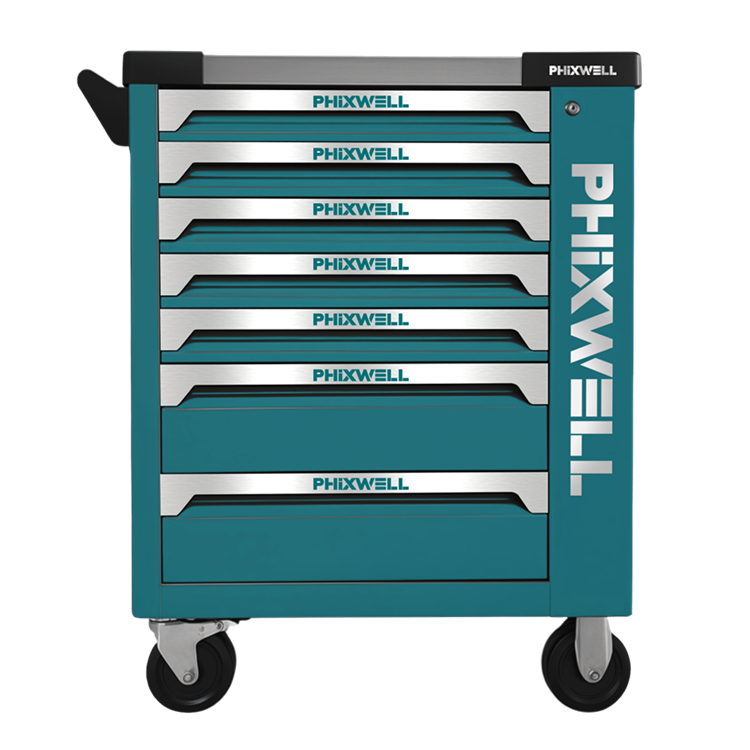
The tool cart group provides a set of tools to solve the problem of tool confusion and difficulty in...
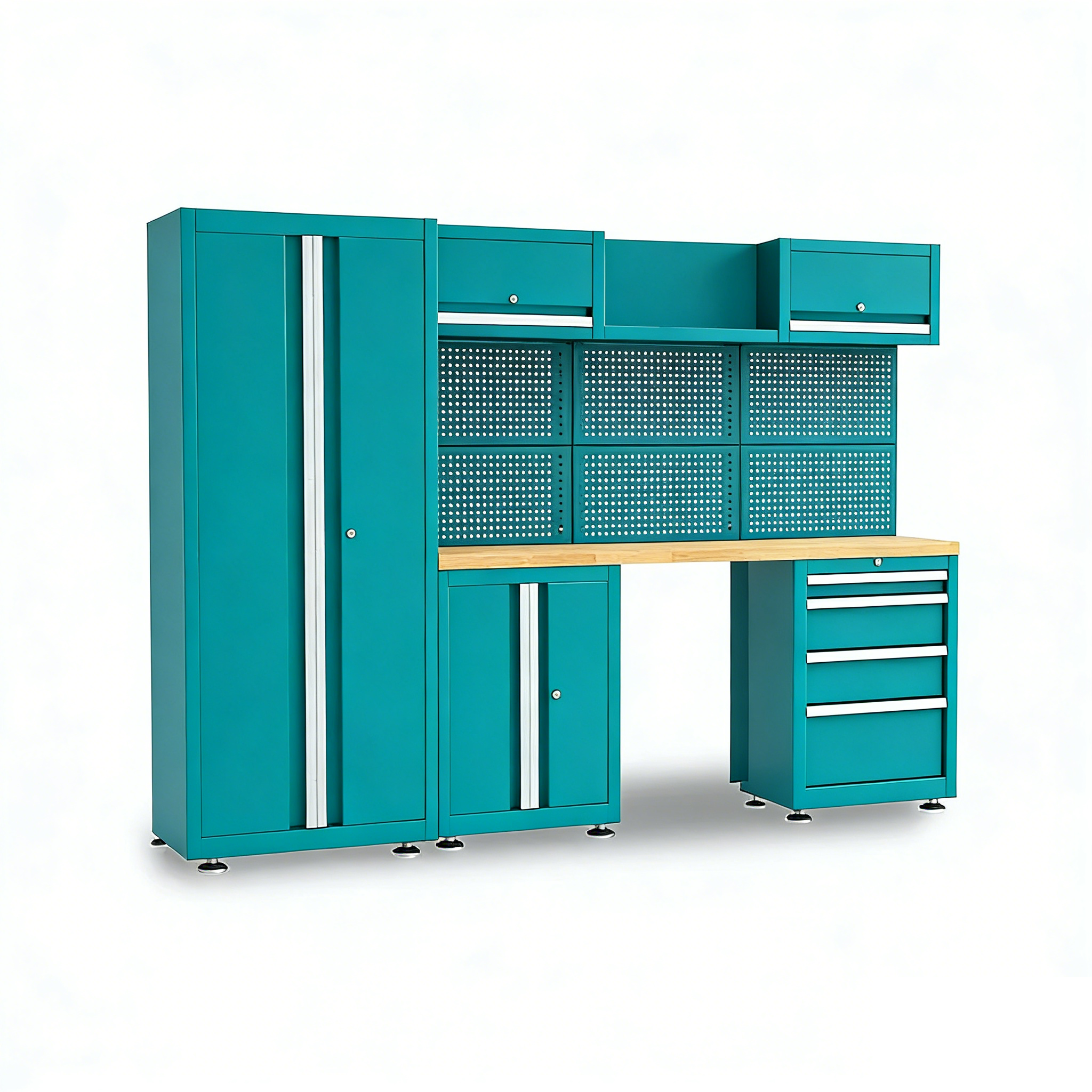
Multifunctional Tool Storage Combination Cabinet Material and appearance: Made of premium cold steel...
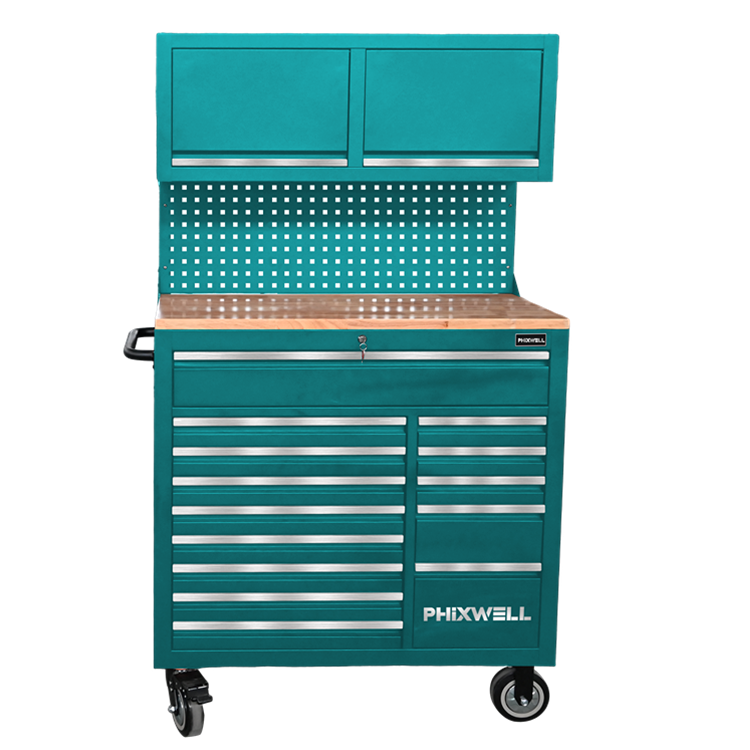
PHIXWELL Multifunctional Tool Workstation: Professional Grade Storage and Operation Integrated Solut...
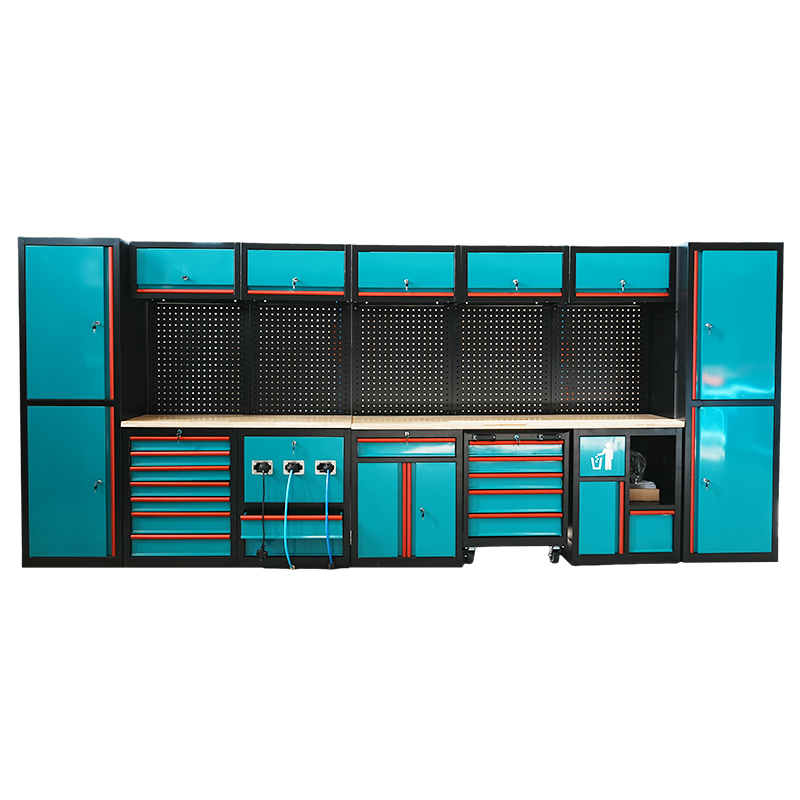
# Multifunctional Workshop Combination Cabinet: Professional Tool Storage and Work Integrated Soluti...
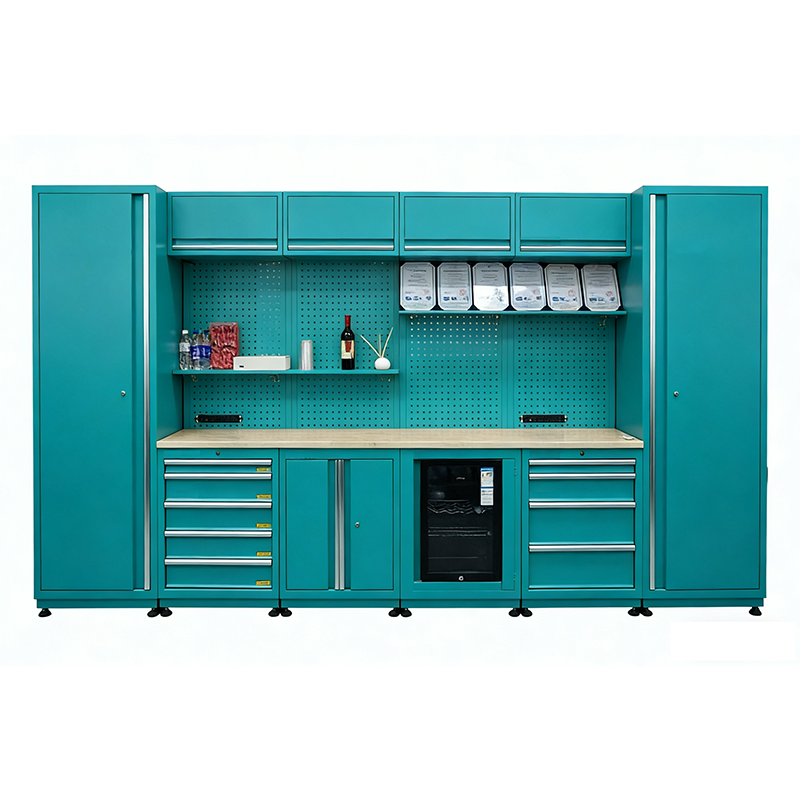
# Workshop Modular Storage Combination Cabinet (Model 719610) Product Introduction This workshop sto...
Our annual output of more than 100,000 tool cabinet can meet the needs of customers with different purchase volumes.

+86-18658800788
+86-0512-58499000

New City Industrial Park, No. 108 Sizha Road, Yangshe Town, Suzhou, Jiangsu, China

