 en
en  English
 Deutsch
719520PHIXWELL 11 drawers Tool Cabinet with 377pcs Tool Set
Prevent insufficient tool protection: Avoid rusting, collision or calibration failure caused by long...

A tool cabinet is a freestanding or wall-mounted storage unit designed specifically to organize, protect, and provide quick access to hand tools, power tool accessories, and workshop supplies. Unlike a generic shelving unit or storage bin, a well-engineered tool cabinet incorporates drawers with full-extension slides, locking mechanisms, load-rated structures, and internal liners that prevent tools from shifting and corroding.
The right cabinet does more than keep a workspace tidy. Studies in lean manufacturing environments consistently show that tool retrieval time accounts for 15–30% of total wasted motion on a shop floor. In a home garage or professional workshop, a logical, well-organized cabinet directly reduces the time spent searching for tools — and the frustration that accompanies it. For tradespeople and mechanics, that translates into measurable productivity gains over the course of a working year.
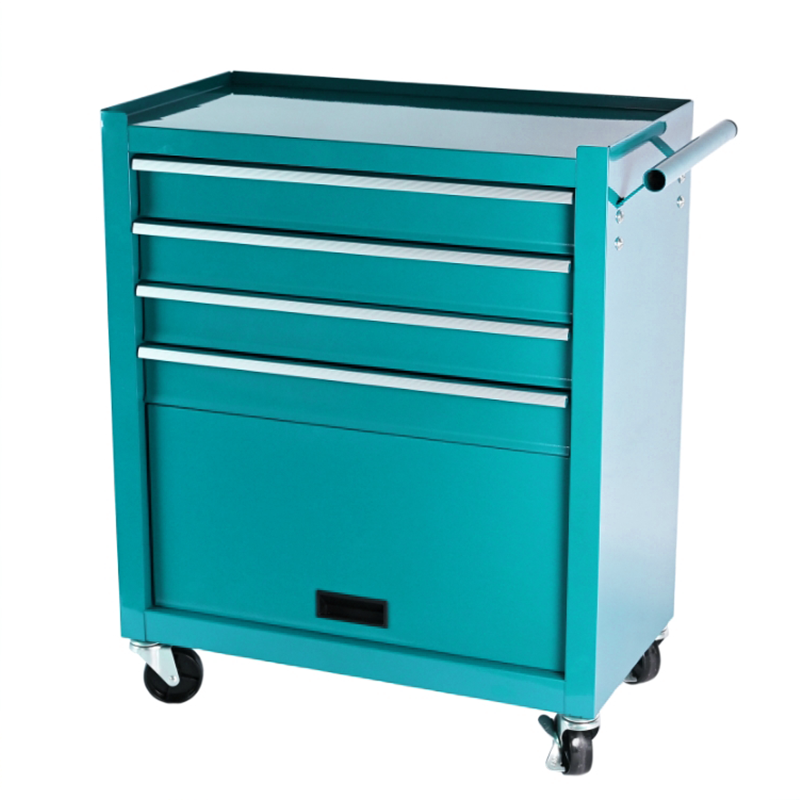
The terms are often used interchangeably in retail, but they describe distinct product categories with different strengths.
For most buyers choosing a primary storage solution, the decision comes down to a roller cabinet (standalone or as part of a combo set) versus a wall-mounted cabinet system. The right choice depends on floor space, portability needs, and tool volume.
Sizing a tool cabinet incorrectly is one of the most common and costly mistakes buyers make. A cabinet that is too small forces overcrowding — tools stack on top of each other, drawers fail to close cleanly, and slides wear prematurely. A cabinet that is unnecessarily large wastes floor space and budget.
Before looking at dimensions, lay out every tool you intend to store. Group them by category: wrenches and sockets, screwdrivers and bits, pliers and cutters, measuring tools, electrical tools, power tool accessories, and so on. This exercise almost always reveals that buyers underestimate their inventory by 30–40% when purchasing their first cabinet.
Tool cabinets are most commonly available in widths of 26, 41, 52, and 60 inches. Wider cabinets allow longer drawers that can accommodate full socket sets, wrench organizers, and breaker bars laid flat — the optimal storage position for most hand tools. Drawer depth (front-to-back) of 18–21 inches suits the majority of garages. Drawer count typically ranges from 5 to 15; more drawers with moderate height (3–4 inches each) enable better categorization than fewer, deeper drawers where tools pile up.
Tool collections grow. A cabinet that is comfortably full on day one will be overcrowded within two years for any active hobbyist or professional. As a practical rule, choose a cabinet that holds your current inventory at roughly 70% capacity, leaving room for additions without an immediate upgrade.
Tool cabinet quality is most directly reflected in the steel gauge used for the body and drawers. Steel gauge is counterintuitive: a lower gauge number means thicker, heavier, stronger steel.
| Steel Gauge | Thickness (approx.) | Typical Use | Verdict |
|---|---|---|---|
| 24 gauge | 0.6 mm | Budget / entry-level cabinets | Adequate for light home use only |
| 21–22 gauge | 0.8–0.9 mm | Mid-range / enthusiast cabinets | Good for regular hobbyist use |
| 18–20 gauge | 1.0–1.2 mm | Professional / industrial cabinets | Recommended for trade use |
Beyond gauge, look for welded (not riveted or screwed) corners, full-extension ball-bearing drawer slides rated for at least 100 lbs per drawer, and a powder-coat finish of sufficient thickness to resist chips and scratches in a working environment. Drawer slides are the single most-used mechanical component in any cabinet — cheap slides that bind or sag under load will frustrate users daily regardless of how good the rest of the cabinet is.
For professional environments — workshops, dealerships, fleet maintenance facilities — tool security is not optional. A single missing torque wrench or calibrated tool can delay a job or create a liability. Even in home garages, a locked cabinet protects against opportunistic theft and keeps tools away from children.
Common locking configurations include:
Regardless of lock type, assess the hasp and lock cylinder quality. A hardened steel cylinder with anti-pick pins is meaningfully more resistant to forced entry than a basic pin-tumbler lock, even when both are sold as "keyed" units.
The interior of a tool cabinet matters as much as the exterior. Bare steel drawer bottoms allow tools to slide and clang with every movement, accelerating wear on both tools and the drawer surface. Non-slip foam or rubber drawer liners are the most cost-effective upgrade available for any cabinet — they are inexpensive, easy to cut to size, and dramatically reduce tool movement and noise.
Beyond basic liners, modular organization systems have matured significantly in the past decade. Options worth considering include:
A fully loaded professional tool cabinet can weigh 400–800 lbs or more. Caster quality is therefore not a minor detail. Look for swivel casters with a diameter of at least 4 inches; larger wheels roll more easily over floor gaps and surface irregularities. Two of the four casters should be locking (ideally all four for stationary use), and the caster mounting plate should be welded, not bolted through a thin sheet-metal base.
For flooring, epoxy-coated concrete is the ideal surface for a rolling cabinet — smooth, hard, and level. Bare concrete is acceptable. Rubber garage flooring tiles add cushioning underfoot but can create flex points that make heavy cabinets harder to roll. Wood subfloor installations should verify that the floor joists can support the concentrated point load of a loaded cabinet's caster footprint.
If the cabinet will be stationary, consider anchoring it to the wall with an anti-tip bracket — particularly important in seismic zones or anywhere children may be present. A fully extended heavy drawer shifts the center of gravity forward significantly and can tip an unloaded cabinet on an uneven floor.
Tool cabinet pricing spans a wide range, and the differences between tiers are real and meaningful.
As a general principle, buy the best quality you can afford at the time of first purchase. Upgrading a cabinet means moving an entire tool inventory — a time-consuming process most buyers do not want to repeat. A quality cabinet bought once outlasts two or three budget replacements and costs less over a 10-year horizon.
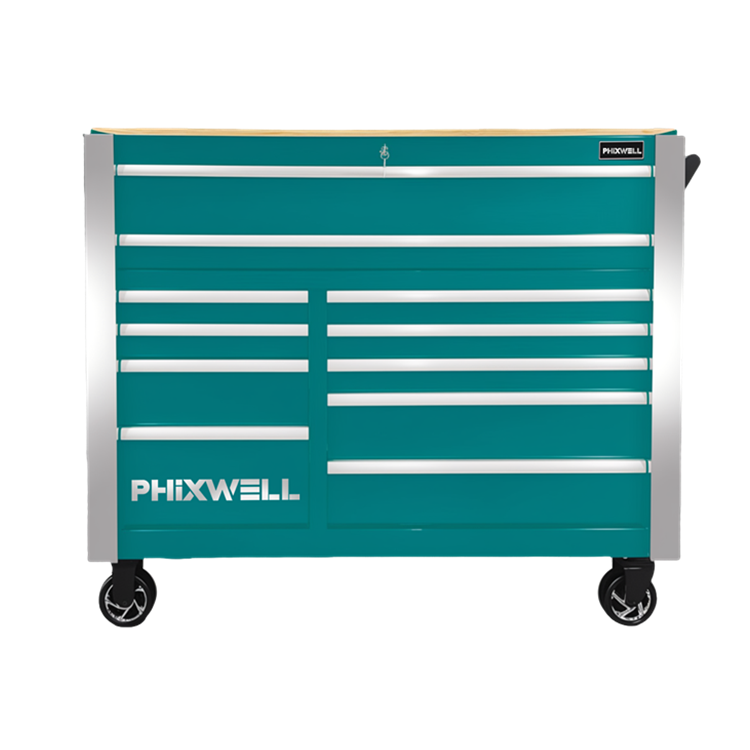
Prevent insufficient tool protection: Avoid rusting, collision or calibration failure caused by long...
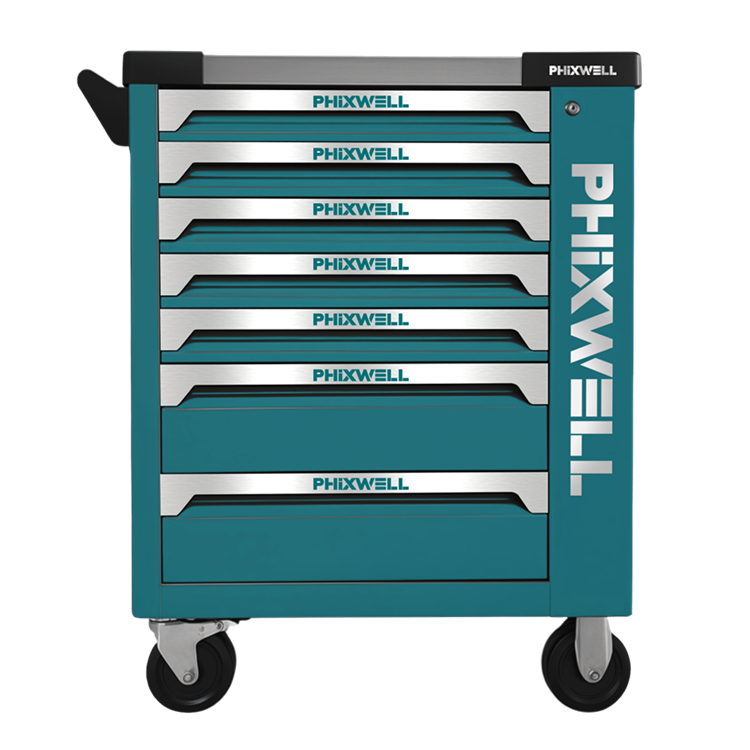
The tool cart group provides a set of tools to solve the problem of tool confusion and difficulty in...
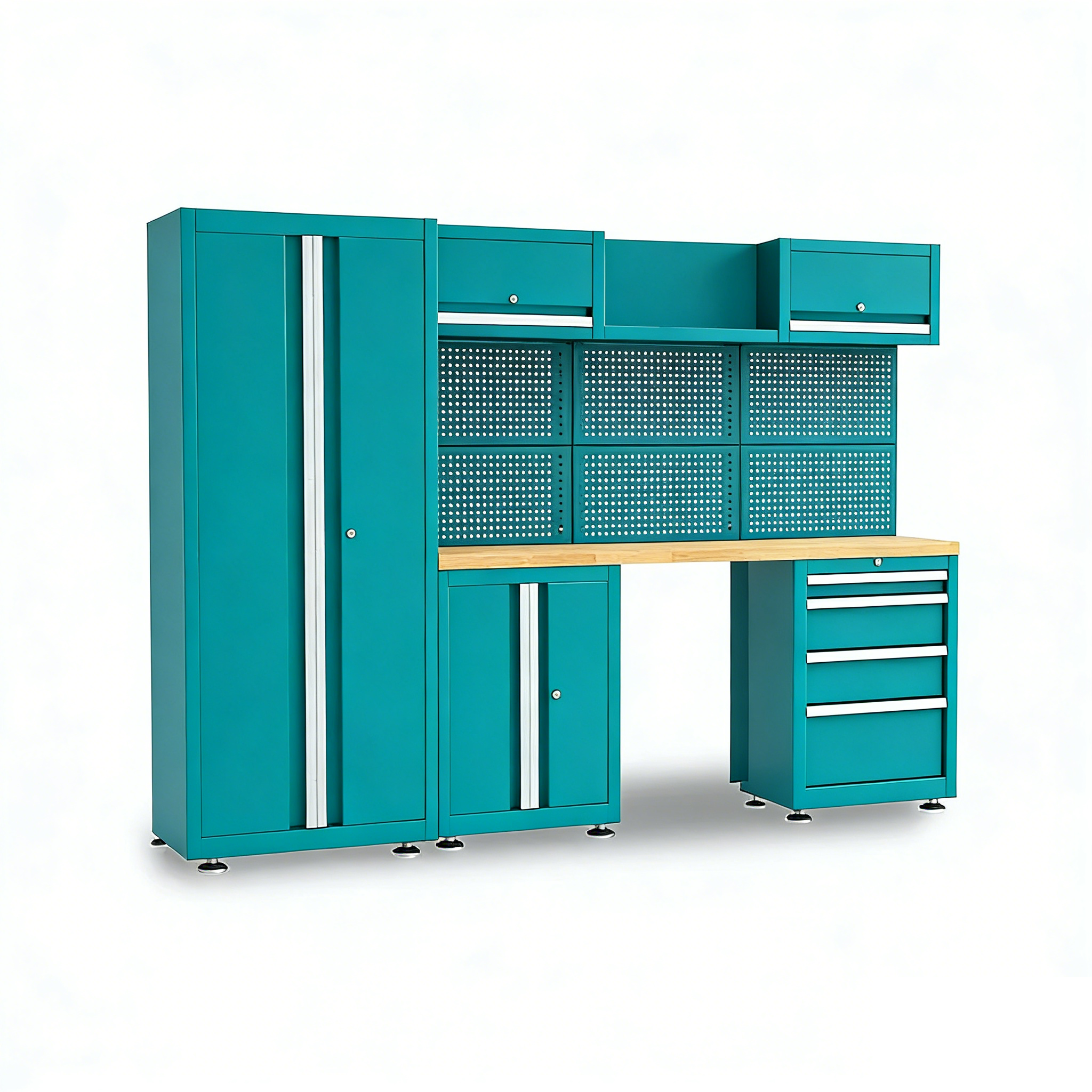
Multifunctional Tool Storage Combination Cabinet Material and appearance: Made of premium cold steel...
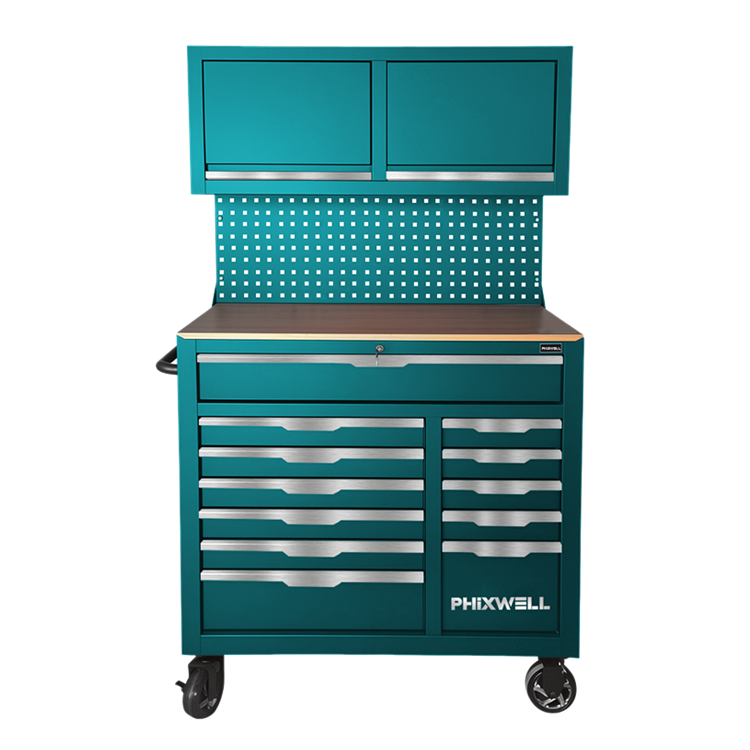
This is a heavy-duty multifunctional tool cabinet workbench set launched by the **PHIXWELL** brand, ...
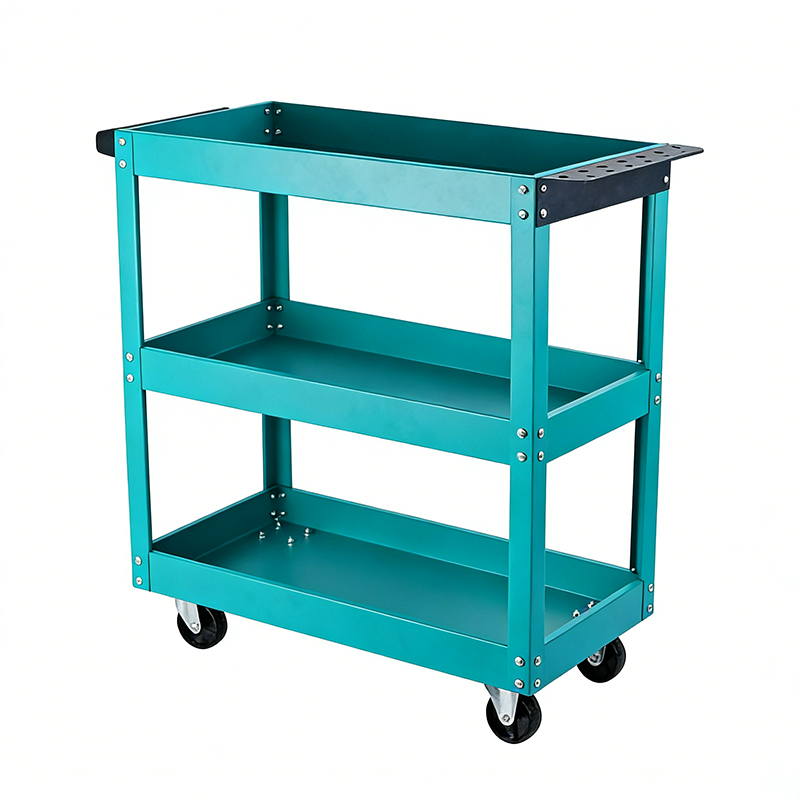
This is a **Three-Layer Auto Repair Tool Cart**, a multifunctional mobile maintenance storage device...
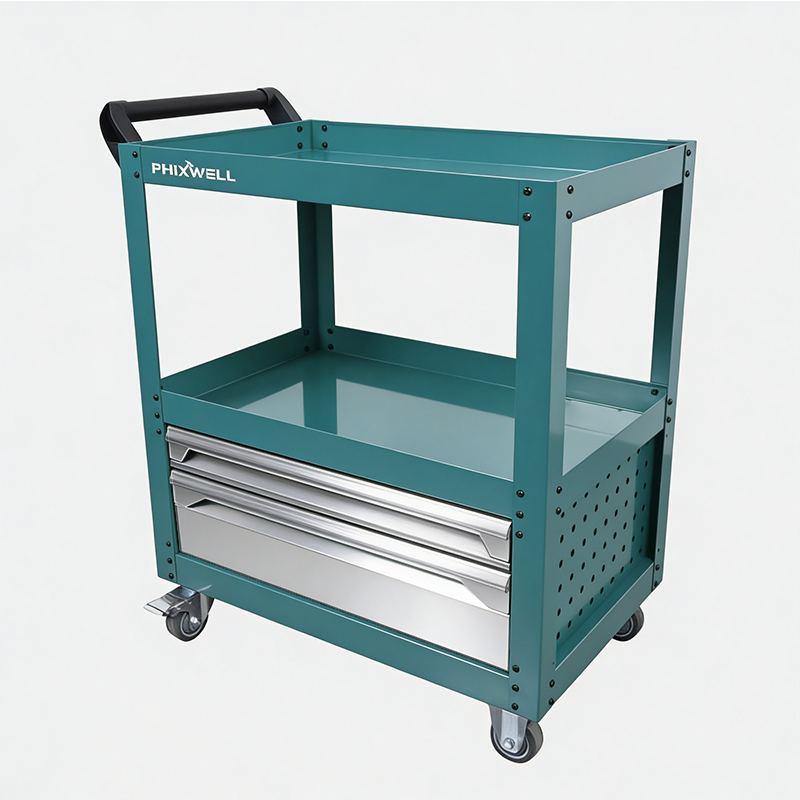
This is a multifunctional tool cart designed specifically for auto repair, maintenance, or industria...
Content
Our annual output of more than 100,000 tool cabinet can meet the needs of customers with different purchase volumes.

+86-18658800788
+86-0512-58499000

New City Industrial Park, No. 108 Sizha Road, Yangshe Town, Suzhou, Jiangsu, China

