 en
en  English
 Deutsch
Multifunctional Tool Storage Combination Cabinet
Multifunctional Tool Storage Combination Cabinet Material and appearance: Made of premium cold steel...

A garage storage cabinet is a freestanding or wall-mounted enclosure designed to organize tools, equipment, automotive supplies, and household overflow in a garage environment. Unlike interior home cabinetry, garage cabinets need to withstand temperature swings, humidity fluctuations, dust, and the physical demands of a working space — which makes material choice, load capacity, and construction quality the primary evaluation criteria.
The right cabinet depends on what you're storing. Heavy power tools and automotive fluids require thick steel shelving and reinforced bases. Smaller hardware, seasonal items, and sporting goods are well served by lighter steel or resin units. Wall-mounted cabinets free up floor space but require secure anchoring into studs; freestanding units offer flexibility but consume footprint. Defining your load requirements before selecting a cabinet prevents the most common purchasing mistake — choosing a visually appealing unit that flexes, tips, or corrodes under real-world garage conditions.
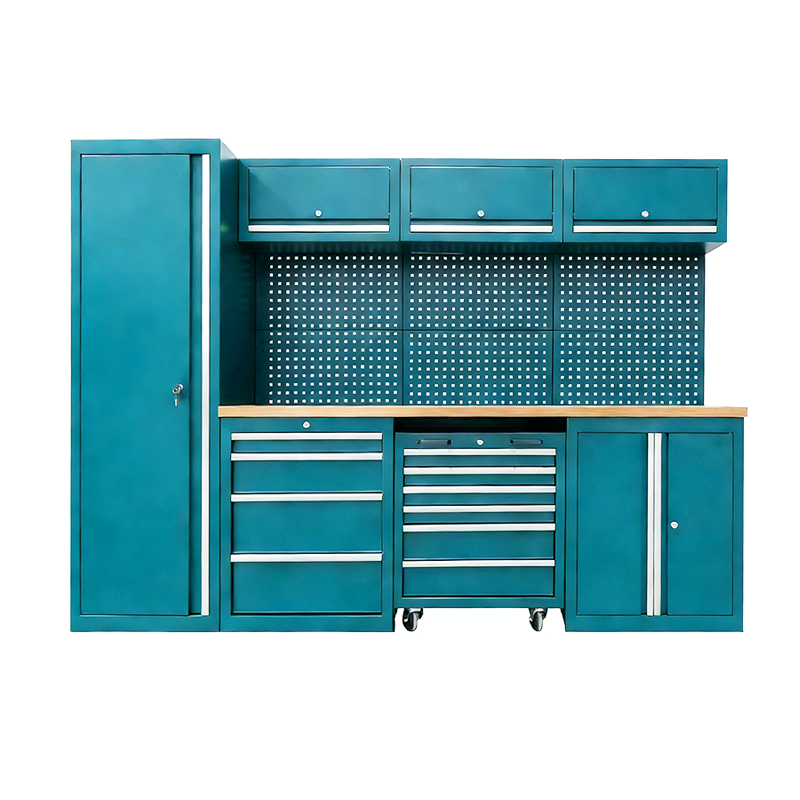
Material is the single most important variable in garage cabinet performance and longevity. The three dominant options — steel, resin (plastic), and wood — each have genuine strengths and real limitations in a garage context.
Steel cabinets are the strongest and most durable option for a working garage. Cold-rolled steel with a powder-coat finish resists most chemical spills, dents from tool impact, and the moisture cycles that damage wood over time. Shelf load ratings on quality steel units typically run 200–400 lbs per shelf, making them suitable for compressors, generators, and battery storage. Gauge matters significantly: 18-gauge steel is standard for mid-range units; 16-gauge and thicker is found in professional-grade cabinetry. Thinner 24-gauge steel cabinets sold at discount price points flex visibly under load and dent easily — gauge should be confirmed before purchase, not assumed from the product description.
Resin cabinets are lightweight, completely rust-proof, and easy to assemble. They handle temperature fluctuation without warping and won't corrode from chemical contact the way bare steel can. Their primary limitation is load capacity — most resin units are rated for 50–100 lbs per shelf, suitable for lighter items but inadequate for heavy tools or automotive equipment. Resin also lacks rigidity under point loads; heavy items stored on resin shelves can cause permanent deformation over time. For light-duty organization of seasonal gear, cleaning supplies, and smaller hand tools, resin cabinets offer good value for money.
Wood and MDF cabinetry can be found in finished garages used as workshops or hobby spaces, where the aesthetic integration with the rest of the home matters. Solid plywood construction holds fasteners well, can be custom-built to exact dimensions, and supports heavy loads with proper framing. The significant limitation in a typical unfinished or attached garage is moisture: MDF swells and delaminates when exposed to humidity cycles, and even sealed plywood can warp in garages with poor insulation or ventilation. Unfinished garages in climates with pronounced seasonal humidity swings are poorly suited to wood cabinetry unless the space is climate-controlled.
| Material | Load Capacity | Moisture Resistance | Best For |
|---|---|---|---|
| Steel (16–18 gauge) | 200–400 lbs/shelf | High (powder-coated) | Heavy tools, automotive, working garage |
| Resin / Plastic | 50–100 lbs/shelf | Excellent | Light storage, chemicals, seasonal items |
| Plywood / Wood | High (custom-built) | Low–Moderate | Finished garages, workshops, climate-controlled |
The choice between freestanding and wall-mounted installation affects usable floor space, maximum load capacity, and installation complexity — and the right answer depends on how the garage is used.
Freestanding cabinets are the most common format. They require no permanent installation, can be repositioned as needs change, and are available in tall configurations (72–84 inches) that maximize vertical storage. The disadvantage is floor footprint: a row of freestanding cabinets along a garage wall eliminates that floor area from vehicle parking or workspace use. Freestanding units should be anchored to the wall with anti-tip hardware in households with children, or in any garage where the doors may be opened against the unit.
Wall-mounted cabinets preserve floor space by elevating storage above the floor line, which also protects contents from flooding and makes floor cleaning easier. They are more installation-intensive: cabinets must be located at wall studs (typically 16 or 24 inches on center) and fastened with hardware rated for the intended load. A standard wall stud can support approximately 50–75 lbs of shear load with appropriate lag screws; heavier cabinet systems require a dedicated wall ledger or French cleat system to distribute the load across multiple studs. Attempting to anchor heavy steel cabinets into drywall alone without stud contact is a safety hazard.
A common solution in organized garages is a combination system: wall-mounted upper cabinets above a continuous work surface or lower cabinet run, with the upper units handling lighter items and the lower units bearing heavier loads. This mimics the kitchen cabinet layout logic and uses both the wall surface and the floor space efficiently.
Beyond material and mounting style, several specific features differentiate cabinets that hold up over years of use from those that degrade quickly:
A well-planned cabinet layout makes a garage consistently usable rather than temporarily organized. The starting point is a floor plan that accounts for vehicle dimensions, door swing clearances, and the location of existing utilities (electrical panels, water shutoffs, and HVAC equipment must remain accessible).
A standard two-car garage (approximately 20 × 20 feet) can typically accommodate a full wall of cabinetry along one or two side walls without compromising vehicle parking, provided the cabinet depth (usually 18–24 inches) is factored into the lane width. In a single-car garage, wall-mounted upper cabinets and a pegboard or slat-wall system for frequently used tools often provide better access than floor-to-ceiling cabinet runs, which can make the space feel narrow.
Zone planning improves day-to-day function: group items by frequency of use and task type. Automotive supplies (oils, fluids, filters) work well in a dedicated lower cabinet near the vehicle access point. Gardening equipment benefits from tall, deep storage near the garage door. Power tools and their accessories are most efficient in a cabinet adjacent to the workbench. Items used only seasonally — holiday decorations, summer or winter sports equipment — are logical candidates for overhead storage platforms or the highest shelves in tall cabinets.
The most underutilized dimension in most garages is vertical space. Standard 8-foot garage ceilings provide room for 84-inch tall cabinets with overhead storage above them, or wall-mounted upper cabinets positioned above a continuous 36-inch workbench surface — a configuration that doubles usable storage while maintaining a clear, functional work area at a comfortable standing height.
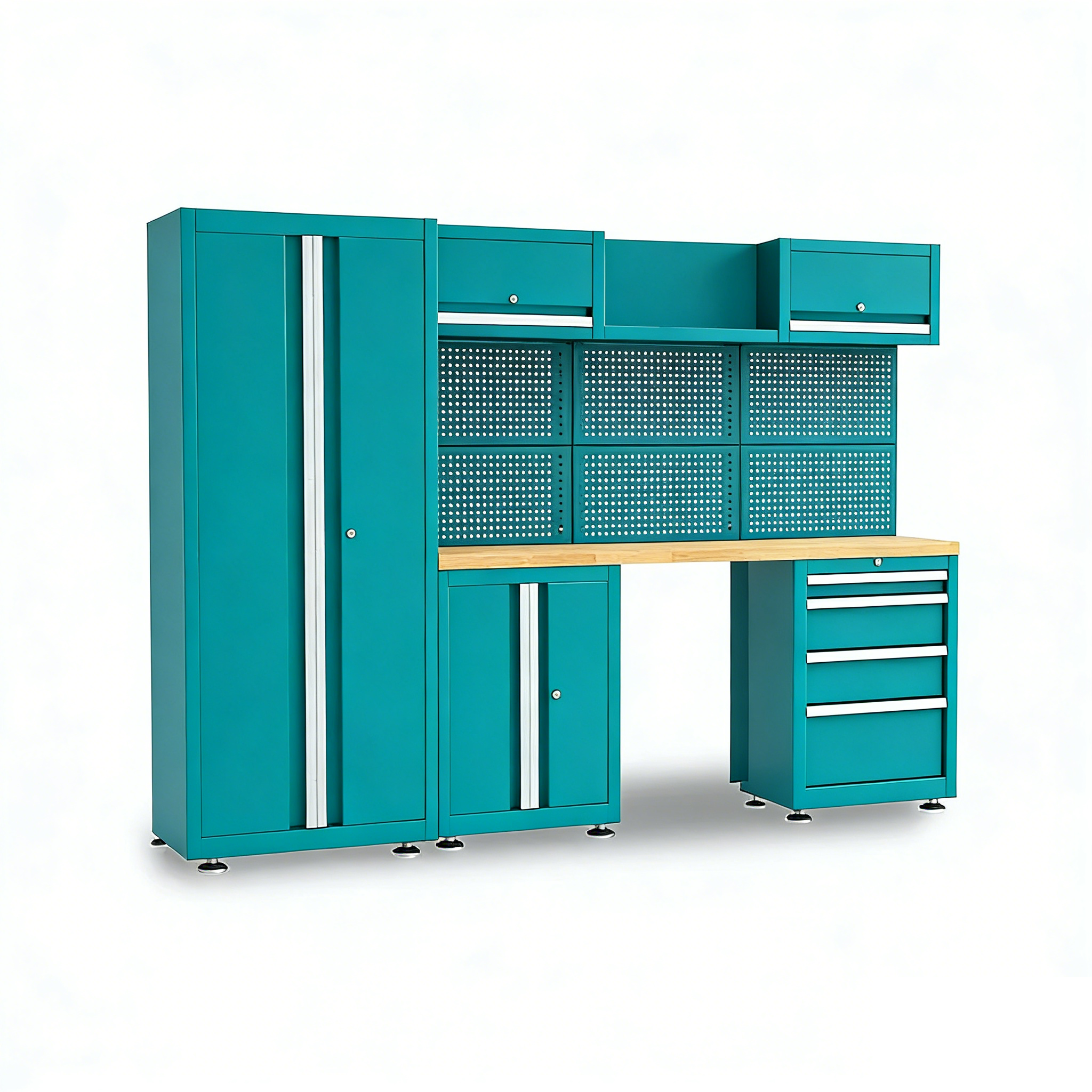
Multifunctional Tool Storage Combination Cabinet Material and appearance: Made of premium cold steel...
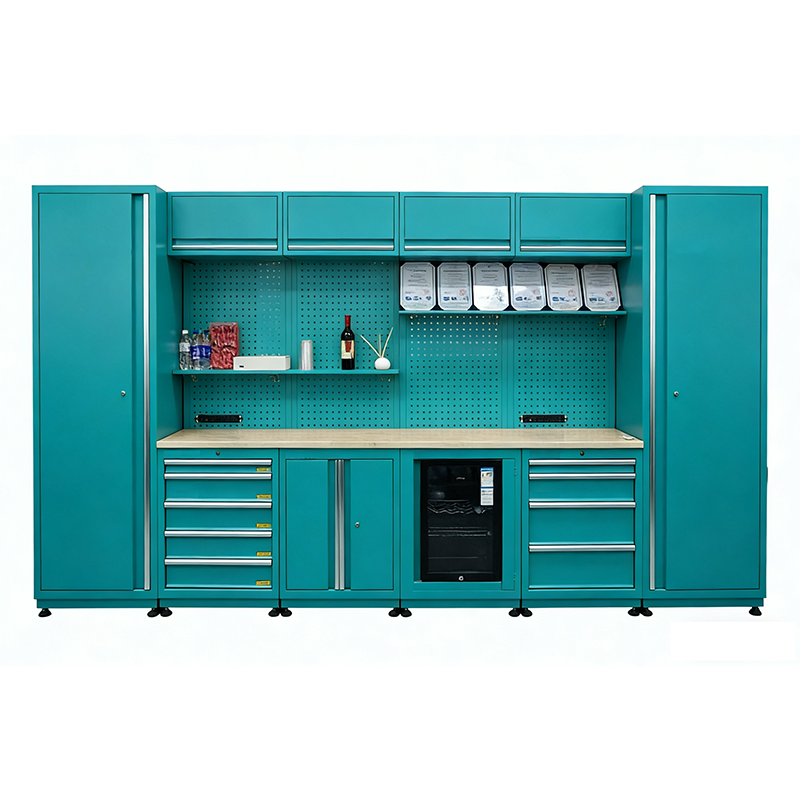
# Workshop Modular Storage Combination Cabinet (Model 719610) Product Introduction This workshop sto...
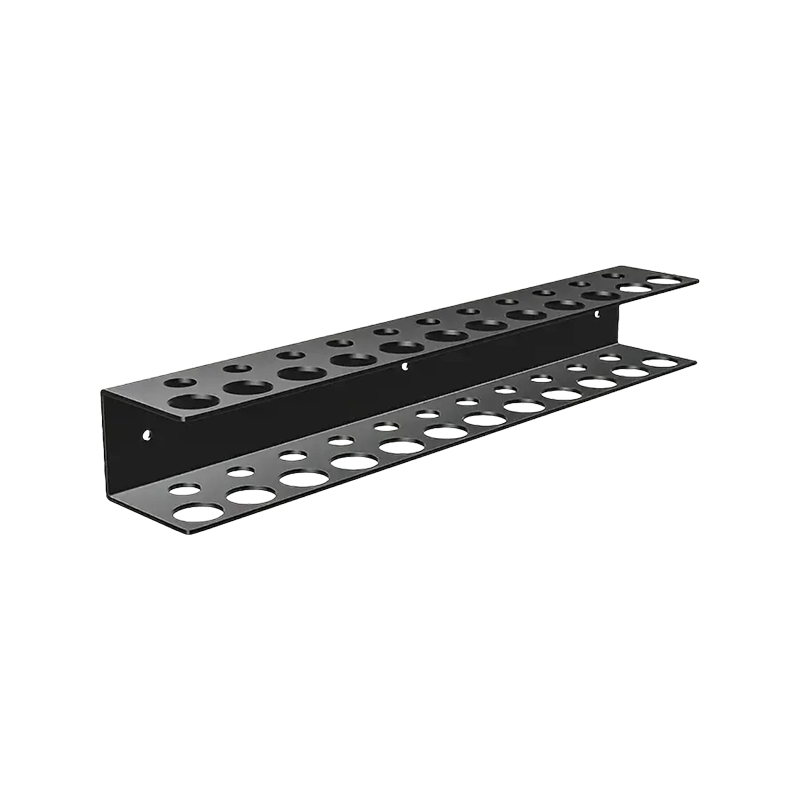
Clear classification: Usually, there are multiple independent slots or hooks, which can be divided a...
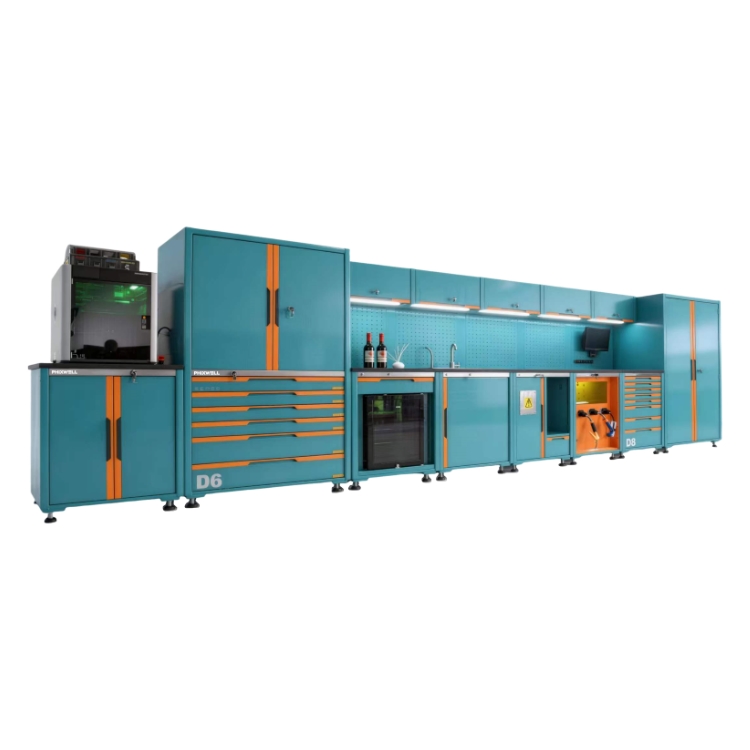
Modular Industrial Workstation & Tool Storage System Product Overview Our Modular Industrial W...
The PHIXWELL 3+1 Classic Garage Storage Cabinet is crafted from high-strength steel, ensuring durabi...
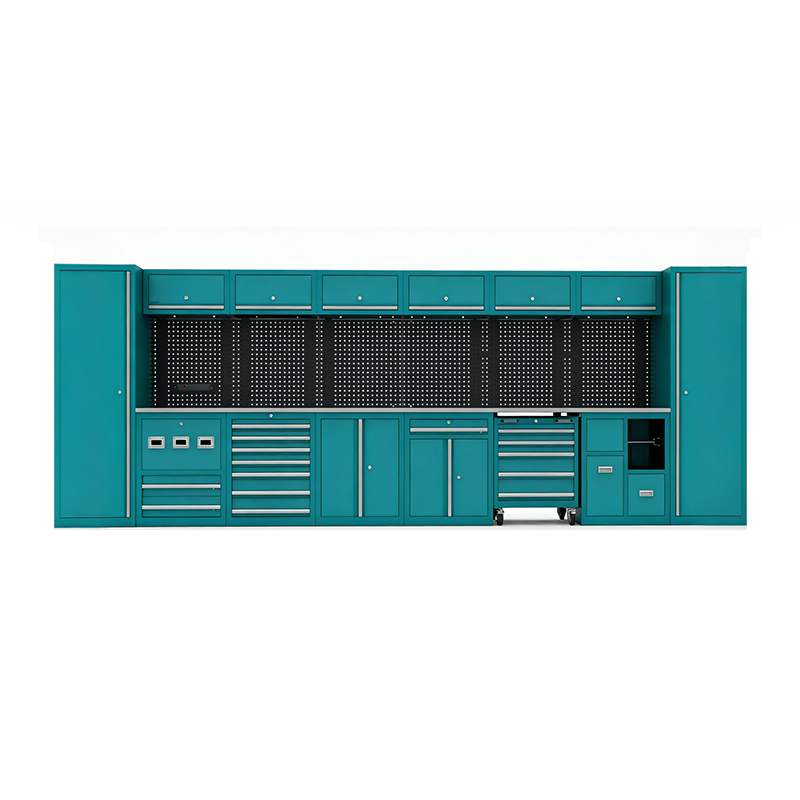
This heavy-duty metal combination cabinet is a top-tier storage solution for workshops, garages, or ...
Our annual output of more than 100,000 tool cabinet can meet the needs of customers with different purchase volumes.

+86-18658800788
+86-0512-58499000

New City Industrial Park, No. 108 Sizha Road, Yangshe Town, Suzhou, Jiangsu, China

