 en
en  English
 Deutsch
Multifunctional Tool Storage Combination Cabinet
Multifunctional Tool Storage Combination Cabinet Material and appearance: Made of premium cold steel...

A mobile tool storage cabinet is a freestanding unit mounted on casters, allowing technicians and tradespeople to roll their entire tool inventory directly to the work area. Unlike wall-mounted tool boards or stationary chests, a mobile cabinet eliminates repeated trips across the shop floor — a small efficiency gain that compounds into hours saved over a busy workweek.
The defining hardware is the caster set. Heavy-duty swivel casters rated at 150–200 lbs each are standard on professional-grade units, with at least two locking wheels to prevent rolling during use. On smooth epoxy floors the difference between 3-inch and 5-inch casters is negligible; on uneven concrete or rubber mat surfaces, larger-diameter wheels roll noticeably more smoothly and reduce the risk of drawers rattling open.
Beyond casters, true mobility requires a low center of gravity. Manufacturers achieve this by placing heavier drawers — wider and deeper ones intended for power tools and air tools — at the bottom of the cabinet, while shallower drawers for sockets, bits, and measuring tools sit higher. This layout also mirrors natural ergonomic reach zones, keeping frequently used items at waist height.
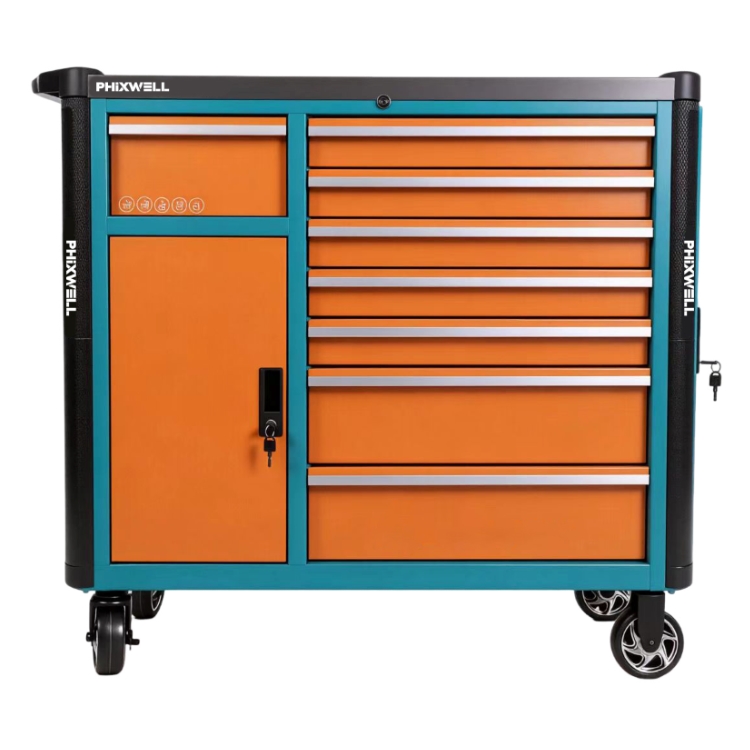
Not every mobile tool cabinet is built for the same job. Understanding the main categories helps narrow the choice before comparing individual specs.
When evaluating any mobile tool storage cabinet, the following specifications directly affect long-term satisfaction:
| Specification | Entry-Level Range | Professional Range |
|---|---|---|
| Steel gauge (body) | 20–22 gauge | 16–18 gauge |
| Drawer weight capacity | 30–60 lbs each | 100–200 lbs each |
| Drawer slide type | Epoxy-coated steel slides | Ball-bearing full-extension |
| Caster diameter | 3 inches | 5–8 inches |
| Locking mechanism | Single keyed lock (top) | Central locking bar, all drawers |
| Work surface | Powder-coated steel top | Stainless steel or hardwood butcher block |
Ball-bearing full-extension slides are worth prioritizing even on a budget purchase. They allow the drawer to open 100% of its depth, exposing tools at the very back, and they sustain smooth operation far longer than basic slides under daily heavy loads.
Cabinet body thickness is expressed in gauge — a counterintuitive scale where a lower gauge number means thicker steel. A 16-gauge body panel measures approximately 1.5 mm thick; a 22-gauge panel is closer to 0.75 mm. In a shop environment where a loaded tool cart can be struck by forklifts, rolling carts, or falling equipment, body rigidity directly affects how long the drawers continue to align and slide properly.
Welded construction outperforms bolted or riveted assemblies in long-term rigidity. Look for full-seam welding at the corners and drawer slide mounting points rather than spot-welded joints, which can flex under heavy lateral loads.
The interior drawer surface finish affects both tool protection and cleaning ease. Powder-coated interiors resist rust and prevent loose metal chips from scratching precision measuring tools. Some professional cabinets include removable foam drawer liners or peg-hole grids for custom organization, which also prevent tools from shifting during transit.
A common mistake is choosing a cabinet based on current tool count rather than projected inventory. Tool collections grow; storage rarely shrinks. A practical rule of thumb: fill a new cabinet no more than 70–75% at purchase, leaving headroom for acquisitions over the next two to three years.
Width also determines aisle compatibility. In a two-car garage workshop, a 41-inch cabinet fits comfortably along one wall with room to open drawers fully. In a commercial bay with vehicle lifts, cabinet width must account for vehicle overhang — a 56-inch unit can block access to lift controls if positioned carelessly.
Height is a subtler consideration. A standard roll-around cabinet without a top chest sits around 37–41 inches — close to average workbench height. Adding a matching top chest brings the total to 60–68 inches, which exceeds comfortable reach for technicians under 5'8". Some manufacturers offer intermediate-height "mid boxes" that add storage without pushing the top chest out of comfortable reach.
Tool theft is a genuine operational risk in shared shops and on open job sites. Most mobile tool cabinets ship with a keyed lock, but the implementation varies significantly. A single top-drawer lock that engages a vertical locking bar running through all drawers is more secure than individual drawer latches, which can be defeated one by one.
For high-value environments, some professional cabinets support aftermarket electronic locks or incorporate built-in USB charging ports and LED interior lighting powered by the shop's electrical system — features that indicate the unit was designed for a semi-permanent bay setup rather than frequent relocation.
Regardless of lock quality, anchoring a loaded full-size cabinet to the floor via anchor bolts is advisable in any facility accessible to multiple personnel. An unanchored cabinet tipped forward under a fully extended heavy bottom drawer can exceed 500 lbs of tipping force — a serious safety hazard in addition to a security gap.
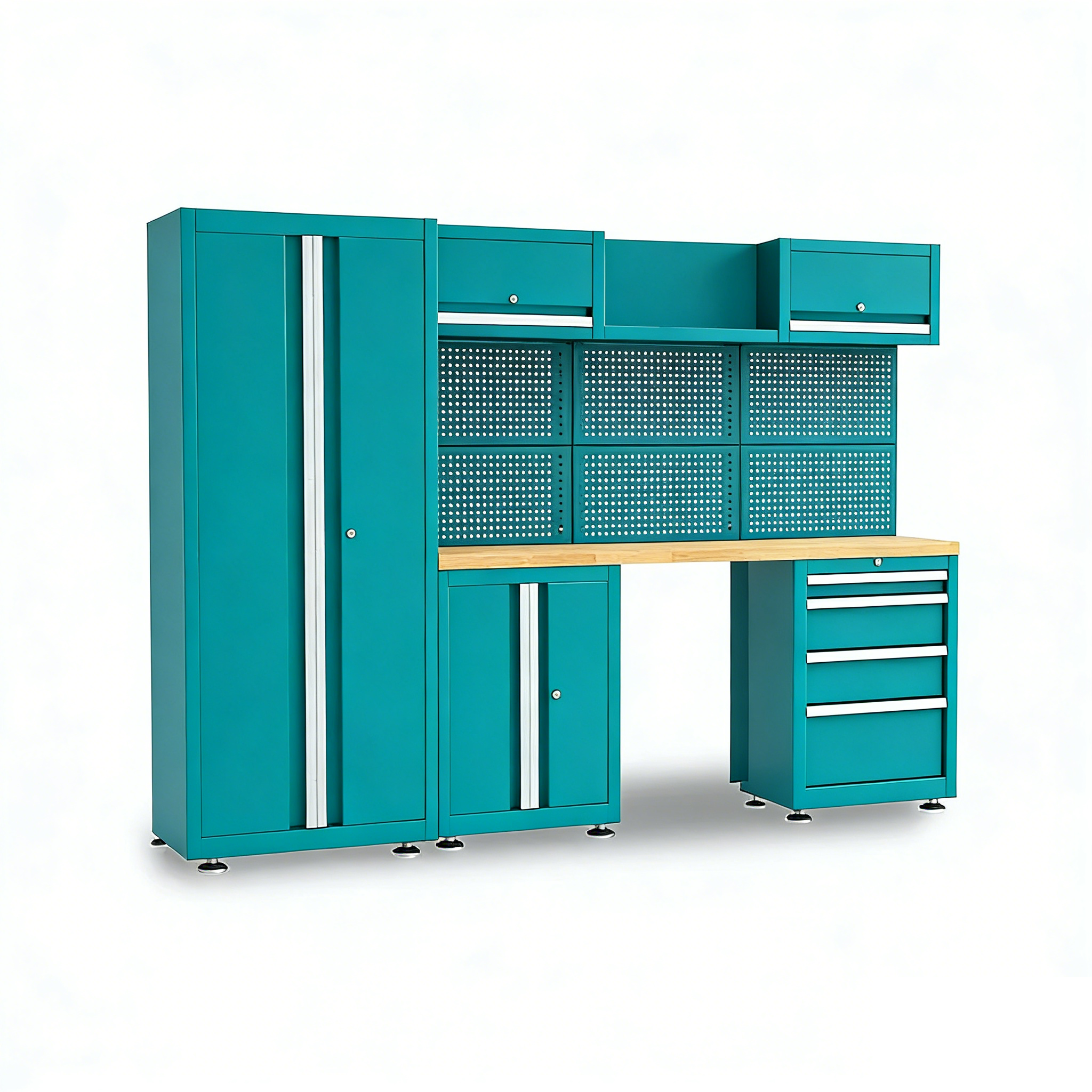
Multifunctional Tool Storage Combination Cabinet Material and appearance: Made of premium cold steel...
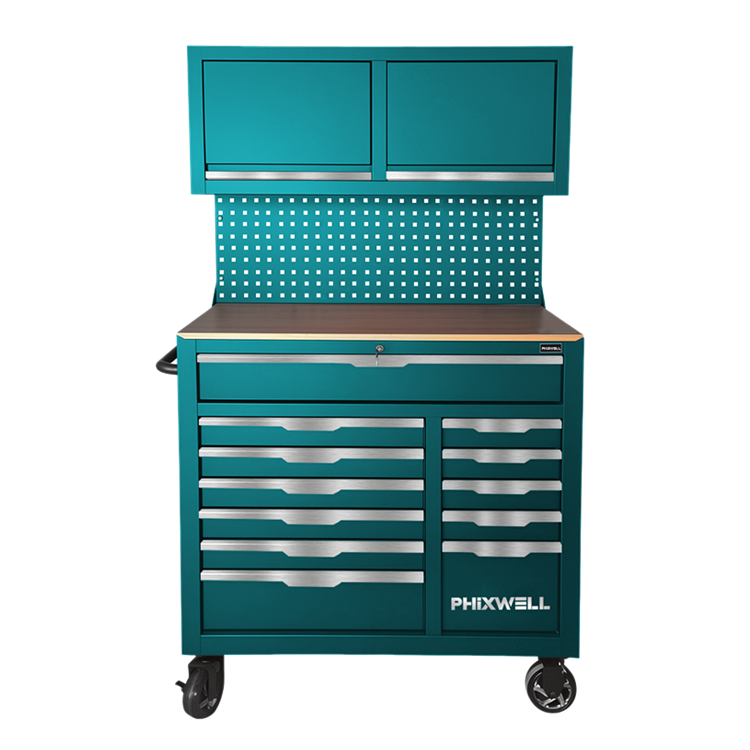
This is a heavy-duty multifunctional tool cabinet workbench set launched by the **PHIXWELL** brand, ...
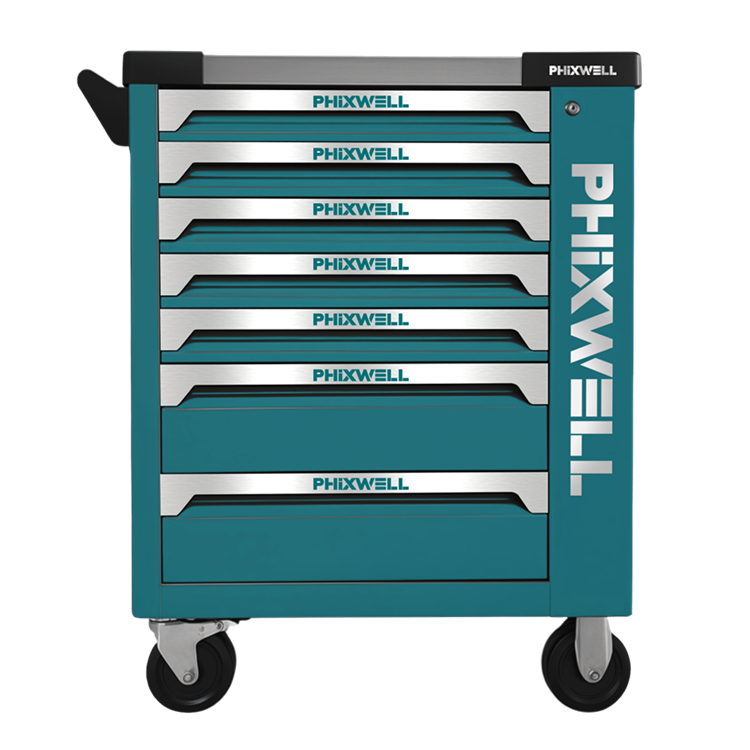
The tool cart group provides a set of tools to solve the problem of tool confusion and difficulty in...
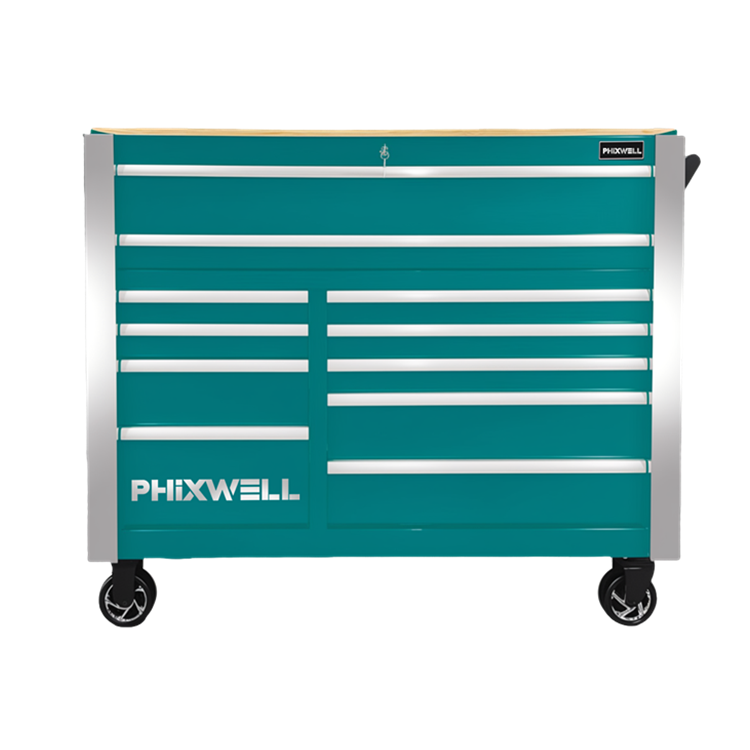
Prevent insufficient tool protection: Avoid rusting, collision or calibration failure caused by long...
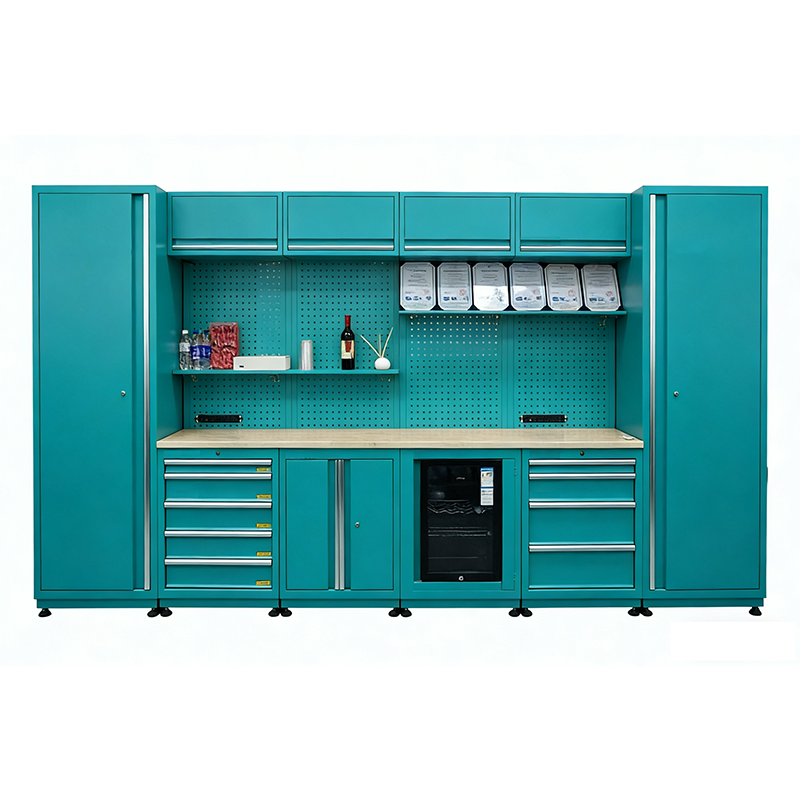
# Workshop Modular Storage Combination Cabinet (Model 719610) Product Introduction This workshop sto...
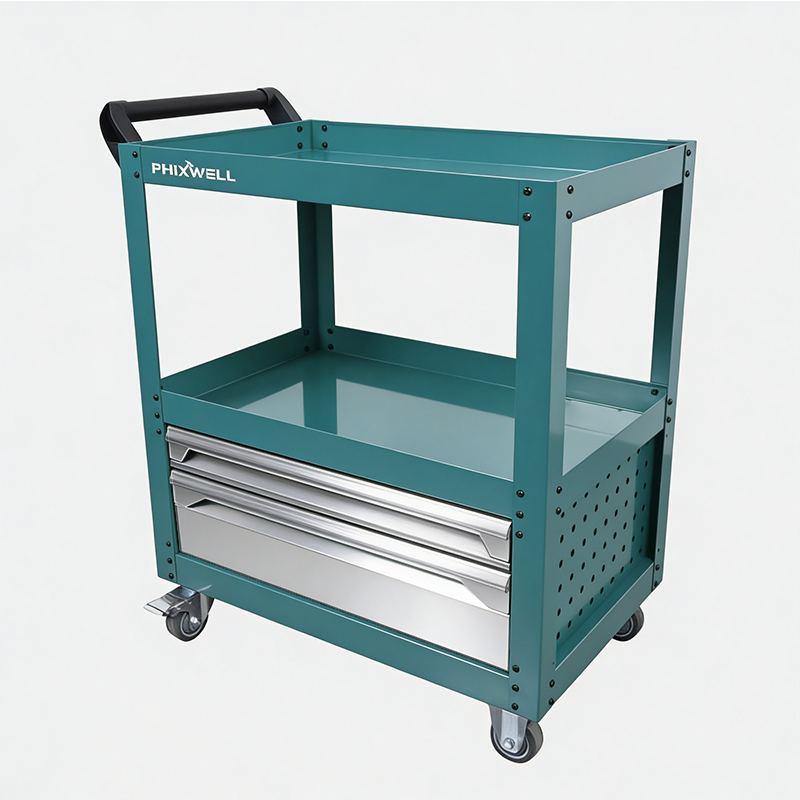
This is a multifunctional tool cart designed specifically for auto repair, maintenance, or industria...
Our annual output of more than 100,000 tool cabinet can meet the needs of customers with different purchase volumes.

+86-18658800788
+86-0512-58499000

New City Industrial Park, No. 108 Sizha Road, Yangshe Town, Suzhou, Jiangsu, China

