 en
en  English
 Deutsch
Workshop Modular Storage Combination Cabinet
# Workshop Modular Storage Combination Cabinet (Model 719610) Product Introduction This workshop sto...

A well-designed workstation improves efficiency primarily by reducing wasted motion — the time spent walking to retrieve a tool, searching through disorganized storage, or repositioning materials because the work surface layout doesn't support the actual task flow. These small inefficiencies compound significantly over a full workday, and their cumulative effect is often far larger than most shop operators initially assume, since each individual delay feels minor in isolation but adds up across dozens or hundreds of repetitions.
Beyond motion efficiency, a proper workstation also reduces errors and rework — clearly organized tools and adequate work surface space make it easier to follow a task correctly the first time, while cluttered or poorly lit work areas increase the likelihood of mistakes, dropped tools, or overlooked steps that ultimately cost more time to correct than a well-organized setup would have taken in the first place.
A genuinely effective professional workstation is defined less by any single feature and more by how well its combination of surface, storage, and layout matches the actual work being performed at it. The best workstations are designed around the specific task sequence they support, positioning tools, materials, and work surface space in the order and location that matches how the work actually flows, rather than being organized around generic categories that don't reflect real usage patterns.
A useful test
A good indicator of workstation quality: can someone unfamiliar with the shop walk up, immediately understand where key tools live, and locate what they need without asking? If not, the organization system is serving the person who set it up more than it's serving actual workflow efficiency.
The productivity impact of tool organization comes down to eliminating two specific time costs: search time (locating a tool that isn't where it should be) and travel time (walking to and from storage that's positioned inconveniently relative to the work). Both of these costs recur constantly throughout a workday, and unlike a one-time setup cost, poor organization keeps generating lost time indefinitely until the underlying system is fixed — which is why investing time in proper tool organization upfront typically pays back quickly in a shop with regular, repetitive work.
Beyond the direct time savings, well-organized tool storage also reduces tool loss and damage, since tools kept in a designated, protected location are less likely to be misplaced, left in inconvenient spots where they can be damaged, or simply lost track of over time — an indirect productivity and cost benefit that compounds alongside the more obvious time savings.
Beyond the efficiency arguments already covered, proper tool storage protects the tools themselves from damage, corrosion, and wear that can occur when tools are left exposed to dust, moisture, or physical impact in an unorganized shop environment. Precision tools in particular — measuring instruments, cutting edges, calibrated equipment — are especially vulnerable to accuracy loss or damage from improper storage, making dedicated, protective storage a functional necessity rather than just an organizational nicety for these tool categories.
Proper storage also plays a real role in shop safety, since tools left scattered on work surfaces or floors create trip hazards and increase the risk of cuts or other injuries from unexpectedly encountering a sharp or heavy tool — a factor that matters as much for regulatory compliance and insurance considerations in professional shop environments as it does for simple day-to-day convenience.
| Tool Category | Organization Approach |
|---|---|
| Hand tools (wrenches, screwdrivers, pliers) | Shadow boards or foam-cutout drawer inserts for immediate visual identification of missing tools |
| Power tools | Dedicated cabinet storage or charging stations, positioned near the primary power outlet locations |
| Measuring/precision instruments | Protected, padded storage separate from general tool storage to prevent damage |
| Small parts and fasteners | Labeled bin or drawer systems organized by size and type |
| Consumables (blades, bits, abrasives) | Dedicated storage with clear stock visibility to flag when restocking is needed |
Building an efficient workshop workspace comes down to designing the physical layout around actual work patterns rather than defaulting to a generic arrangement — this means observing (or honestly reflecting on) how work actually moves through the space: where materials enter, where they're processed, and where finished work exits, then arranging workstations, storage, and traffic paths to support that flow with minimal backtracking or wasted movement.
Efficient layouts also account for multiple people working simultaneously where relevant, ensuring workstations don't create bottlenecks or conflicts when several tasks are happening in the shop at once. Regularly revisiting the layout as work patterns, equipment, or team size changes helps prevent an initially efficient setup from gradually becoming a poor fit for how the shop actually operates over time — workspace efficiency isn't a one-time setup task but an ongoing process of adjustment as real-world usage reveals what works and what doesn't.
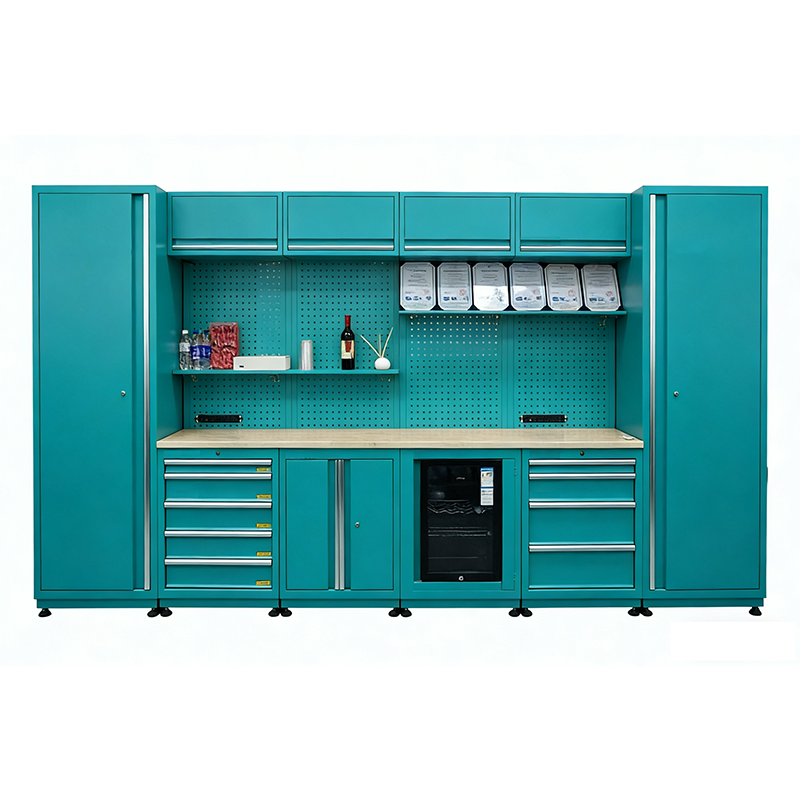
# Workshop Modular Storage Combination Cabinet (Model 719610) Product Introduction This workshop sto...
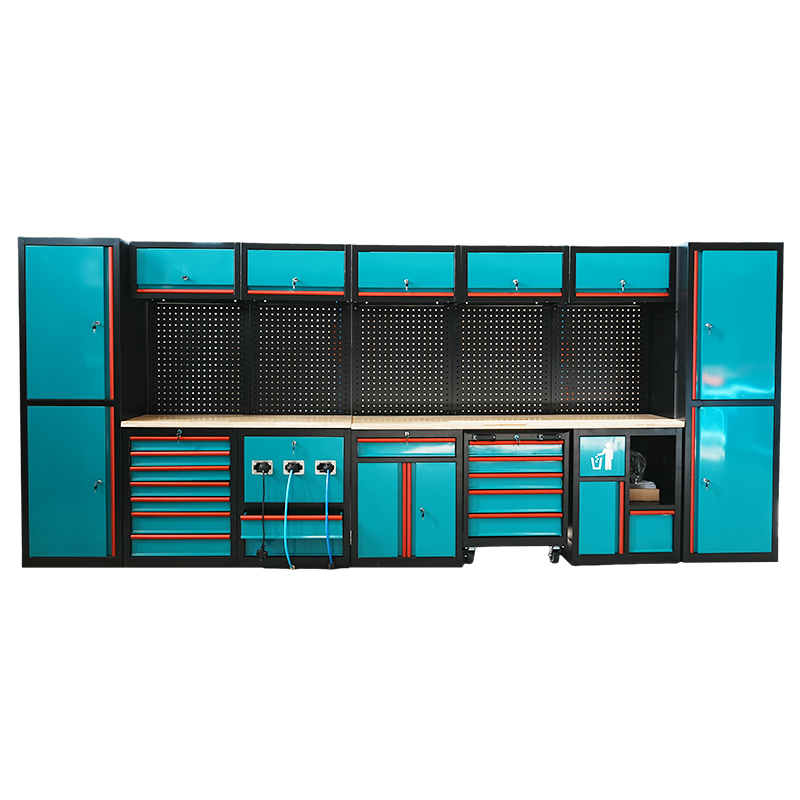
# Multifunctional Workshop Combination Cabinet: Professional Tool Storage and Work Integrated Soluti...
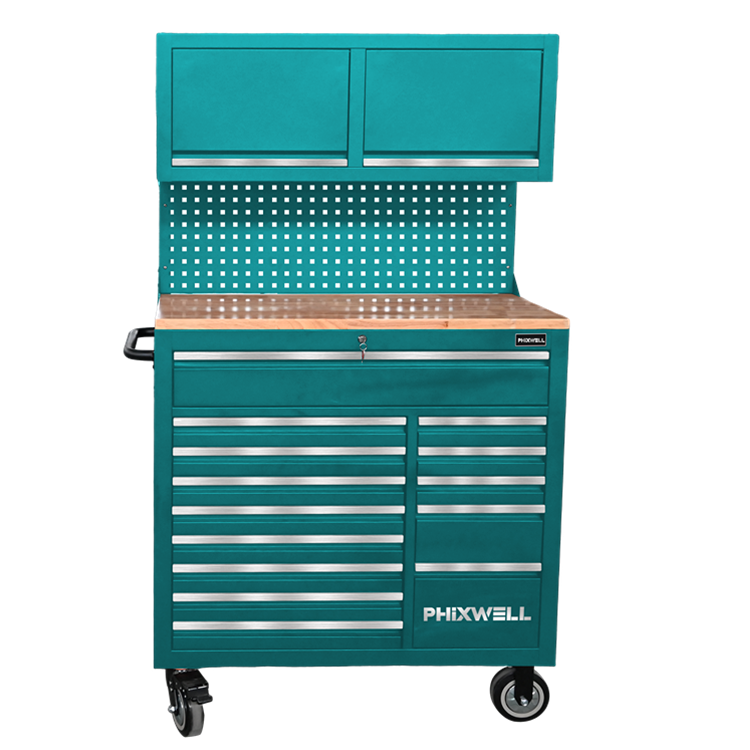
PHIXWELL Multifunctional Tool Workstation: Professional Grade Storage and Operation Integrated Solut...
Content
Our annual output of more than 100,000 tool cabinet can meet the needs of customers with different purchase volumes.

+86-18658800788
+86-0512-58499000

New City Industrial Park, No. 108 Sizha Road, Yangshe Town, Suzhou, Jiangsu, China

