 en
 English
 Deutsch
719521 Heavy-Duty Multifunctional Tool Cabinet Workbench Set
This is a heavy-duty multifunctional tool cabinet workbench set launched by the **PHIXWELL** brand, ...

Standing between a $600 heavy-duty tool storage cabinet and a $250 light-duty tool storage model, most buyers look at the price tag first and the spec sheet second. That order is backward. The real difference between these two classes is not the opening price — it is the cost per year of service, the load capacity, and the number of times the drawers still slide smoothly after years of daily use.
Light-duty storage has a place in home garages and seasonal projects. Heavy-duty storage is engineered for continuous professional work. This comparison examines the measurable specifications that separate the two classes, then applies them to the actual conditions of a working workshop.
Heavy-duty tool storage is defined by steel thickness of 0.8mm or more, ball-bearing drawer slides, and load ratings that assume daily professional use; light-duty storage uses lighter steel, simpler slides, and is rated for occasional tasks.
These are engineering thresholds, not marketing labels. Once you know what to measure, the distinction becomes visible within minutes. A cabinet with 0.6mm steel walls may look identical from the outside to a 1.0mm unit, but under load the thin version will flex, drawers will misalign, and the entire body will rack.
Definition: Heavy-duty tool storage means a cabinet, cart, or workstation built to support professional tool loads continuously without structural fatigue — measured by steel gauge, drawer slide type, and per-drawer load capacity.
| Specification | Heavy-Duty Storage | Light-Duty Storage |
| Steel gauge | 0.8–1.2mm (22–18 gauge) | 0.5–0.7mm (24–22 gauge) |
| Drawer slides | Ball-bearing, 35–50kg per drawer | Roller or single-track, 15–25kg per drawer |
| Total cabinet load | 300–500kg | 100–200kg |
| Typical application | Professional shops, daily use | Home garages, weekend use |
| Service life | 10–15 years | 3–6 years |
These figures translate directly into buying decisions. A seven-drawer cabinet built from 1.0mm steel with ball-bearing slides and a 400kg rating clears the heavy-duty threshold by a wide margin — the kind of unit that survives a decade in a working shop.
 719502 PHIXWELL 7 drawer tool cabinetCustomization Process Initial Consultation The customization process begins with a detailed discussion of your requirements. You can reach out to our team via phone, e...View Product →
If you only check two numbers before buying tool storage, make them the steel gauge and the drawer slide type — these two components determine roughly 80% of a storage unit's real-world lifespan.
Steel gauge is the thickness of the sheet metal used for the cabinet body, drawer housings, and bottom pan. In the U.S. market, 22-gauge (0.76mm) is the dividing line between light and heavy construction. Cabinets at or above this thickness resist racking and corner deformation under load. Below it, the body can twist and drawers begin to bind within two years of regular use.
Drawer slides matter just as much. Ball-bearing slides ride on steel balls inside a C-shaped channel and maintain smooth operation at 35–50kg per drawer. Roller slides use plastic or metal wheels on a track; they work at 15–25kg but wear unevenly under sustained heavy loads. A single drawer filled with socket sets and combination wrenches typically weighs 20–30kg — enough to push roller slides past their comfortable zone.
Shops that bought light cabinets to save money typically replace them within half the time of heavy units — and the failures are almost always the slide mechanism or the bottom pan. For a deeper breakdown of how steel gauge and slide construction affect a purchase, read our tool storage cabinet buying guide covering steel, slides, and security.
Rule of thumb: a cabinet that calls itself heavy-duty but uses roller slides is not heavy-duty. Ball-bearing slides on every drawer are the non-negotiable minimum.
A professional technician's tool load typically weighs between 150 and 400kg, which means any cabinet in the light-duty class will be operating beyond its rated capacity within the first year of full-time use.
To see the scale of the gap, compare the rated loads for five common storage configurations. The chart below uses load ratings from steel tool cabinets and mobile carts of both classes.
Note the gap between the heavy-duty cabinet at 400kg and a light-duty unit at 120kg. That difference is not a rounding error; it is the difference between a cabinet that holds a full professional tool set and one that shows structural fatigue in under two years.
Independent testing of steel garage storage combination cabinets has confirmed that a unit with 1.0mm steel and ball-bearing slides holds over 300kg without permanent deformation. For documented limits, see our verified weight limits for steel garage storage combination cabinets.
Field observation: a single technician servicing commercial vehicles carries about 250kg of tools. Storage rated below that threshold will not survive daily contact with a professional workload.
A $600 heavy-duty cabinet used for 15 years costs $40 per year; a $250 light-duty cabinet that fails in 5 years costs $50 per year — and the comparison still ignores tool damage and lost time.
Purchase price is a snapshot. Cost per year of service is the number that reflects actual workshop economics. The table below projects total ownership over a 10-year horizon.
| Cost item | Heavy-Duty | Light-Duty |
| Initial price | $600 | $250 |
| Replacement cycles in 10 years | 1 | 2–3 |
| Total purchase cost in 10 years | $600 | $500–$750 |
| Tool damage risk from failed slides | Low | Higher |
Value formula: value equals service life divided by purchase price. A 15-year unit at $600 delivers more than twice the value of a 5-year unit at $250, before counting the labor time lost to jammed drawers and sagging shelves.
Choose heavy-duty storage when your tools stay in one bay and get used daily; choose light-duty or mobile storage when your needs are seasonal, low-load, or space-constrained.
Workflow determines the right class. A fabrication shop with fixed stations needs stationary heavy cabinets. An automotive repair business moving between bays needs heavy carts with 180kg capacity. A home garage storing three socket sets and a drill needs neither the price nor the floor space commitment of a heavy unit.
For a space-limited layout, a 3+1 garage storage combination cabinet provides heavy-grade construction in a compact footprint — enough for a small set of power tools and hand tools without taking over the garage.
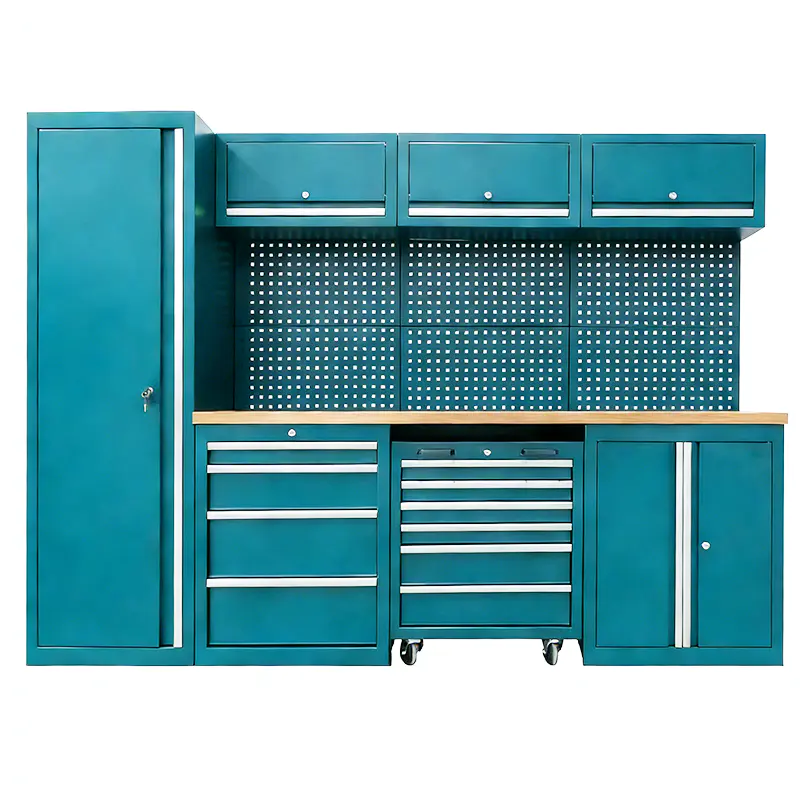 PHIXWELL 3+1 classic garage storage cabinetCustomization Process Initial Consultation The customization process begins with a detailed discussion of your requirements. You can reach out to our team via phone, e...View Product →
Workshops that need both storage and a stable work surface can combine a heavy-duty cabinet with a workbench top. This configuration suits assembly tables and fabrication stations where the surface must hold 100kg or more while tools stay organized underneath.
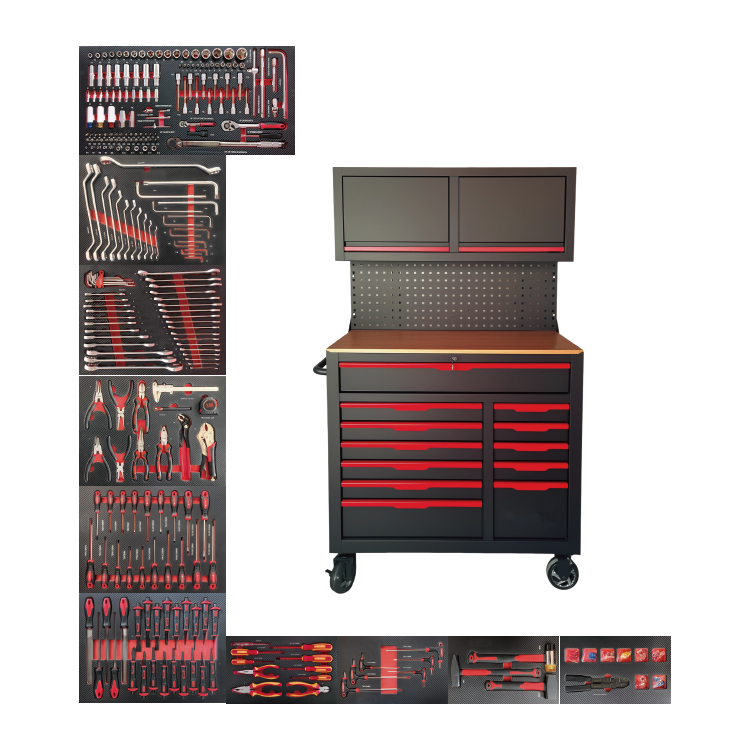 719521 Heavy-Duty Multifunctional Tool Cabinet Workbench SetCustomization Process Initial Consultation The customization process begins with a detailed discussion of your requirements. You can reach out to our team via phone, e...View Product →
Practical dividing line: if you use hand tools more than 20 hours per week, heavy-duty storage pays for itself. Below that threshold, light-duty units are acceptable, provided you respect their load limits.
Check the steel gauge (0.8mm or more), confirm ball-bearing slides on every drawer, and verify the per-drawer load rating. If the manufacturer does not publish load ratings, treat the cabinet as light-duty regardless of the label.
Heavy-duty tool carts typically carry 150–200kg total. The limiting component is usually the casters — look for 5-inch casters with a minimum 100kg rating per wheel.
Yes, in three situations: home garages with tool inventories under 50kg, seasonal use where storage sits idle for months, and compartmentalized setups where no single drawer exceeds 15kg.
Moving from 0.6mm to 1.0mm steel raises manufacturing cost by roughly 15–25% but extends service life by two to three times. Over a 10-year period, the heavier unit is cheaper per year of service.
The decision between heavy-duty and light-duty tool storage is not about brand or price — it is about matching the rated capacity to the actual weight of your tool inventory and the frequency of your work. Measure your tools, count your hours, and pick the class that holds up. The cost difference shows up in year two; the value difference shows up in year ten.
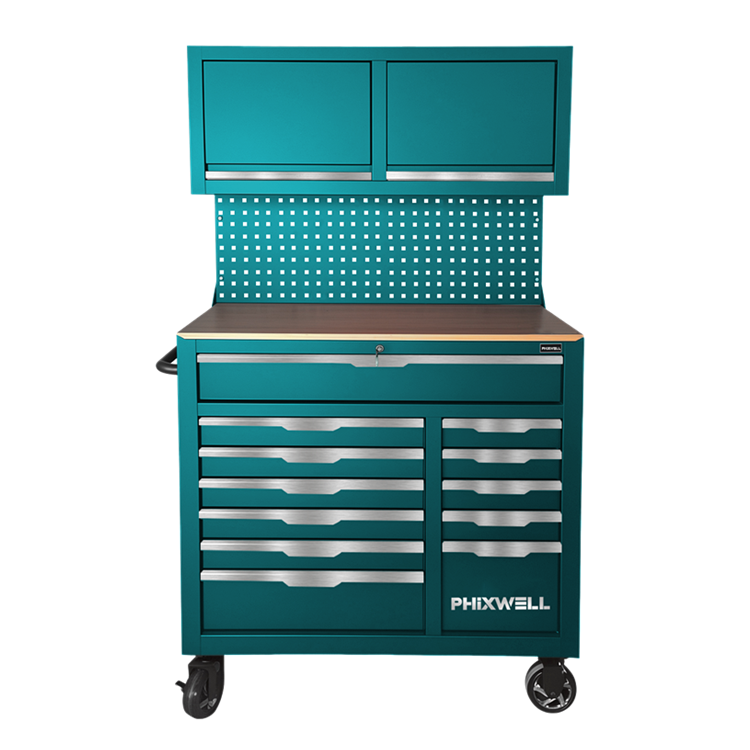
This is a heavy-duty multifunctional tool cabinet workbench set launched by the **PHIXWELL** brand, ...
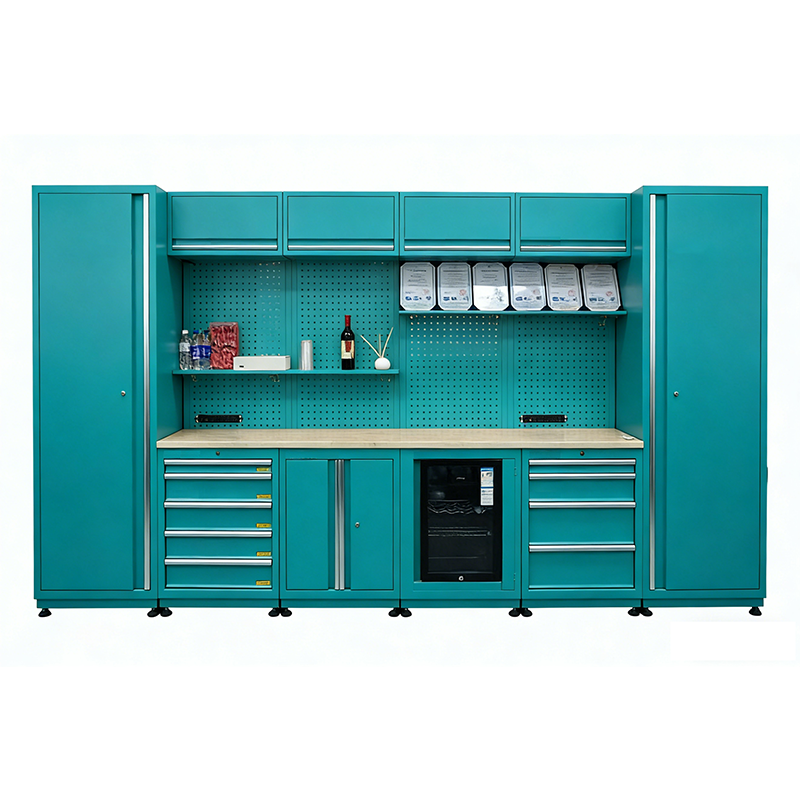
# Workshop Modular Storage Combination Cabinet (Model 719610) Product Introduction This workshop sto...
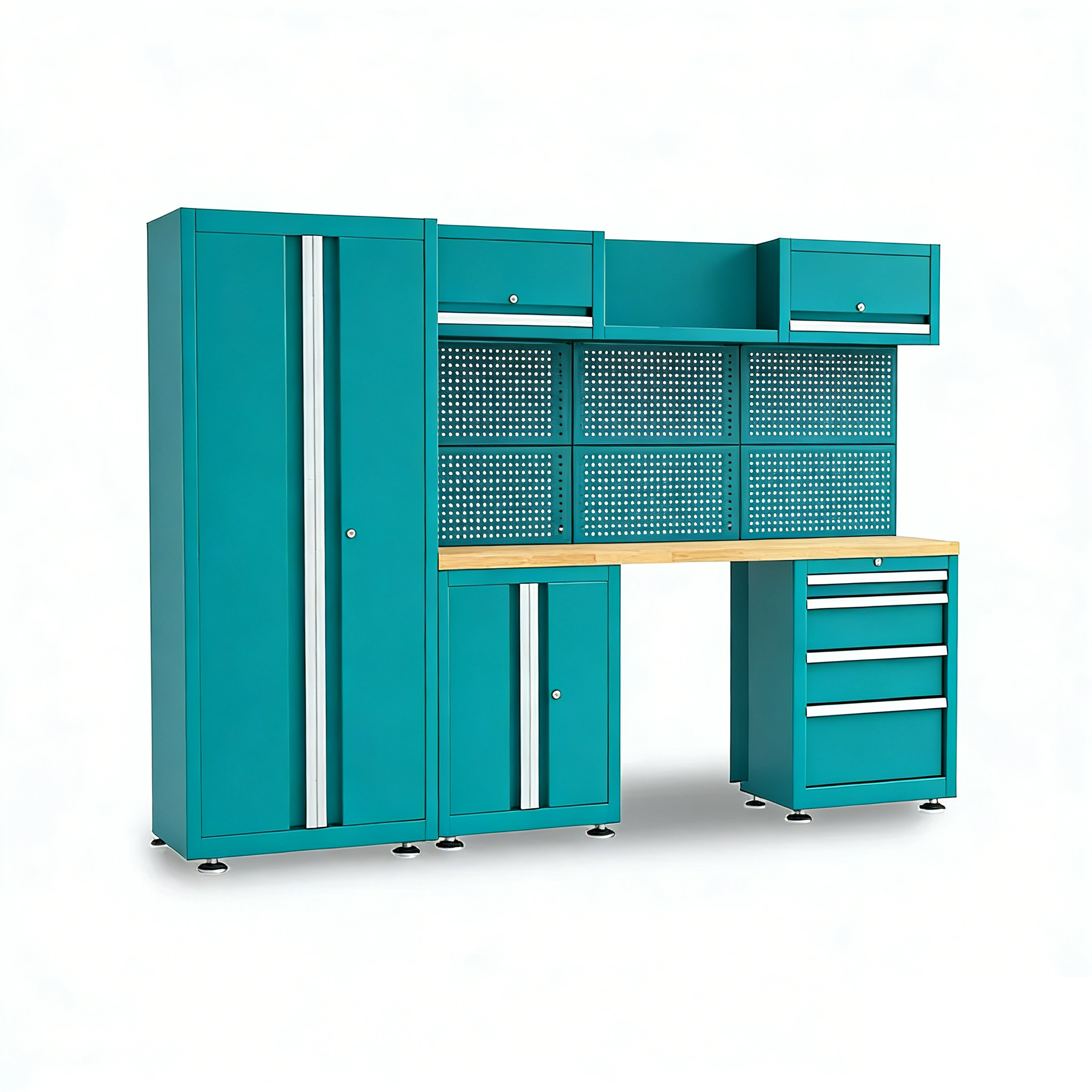
Multifunctional Tool Storage Combination Cabinet Material and appearance: Made of premium cold steel...
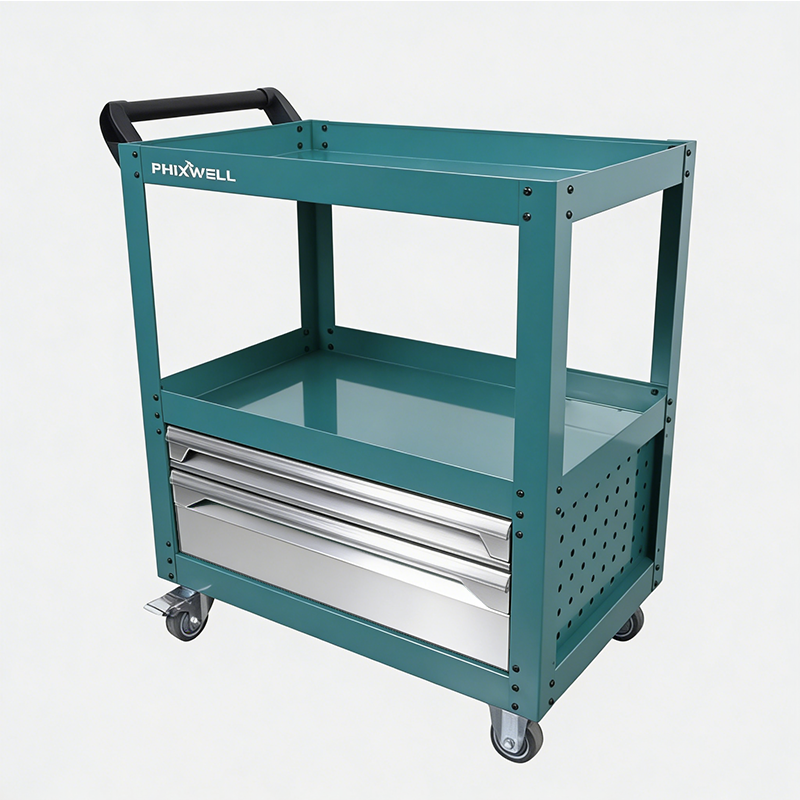
This is a multifunctional tool cart designed specifically for auto repair, maintenance, or industria...
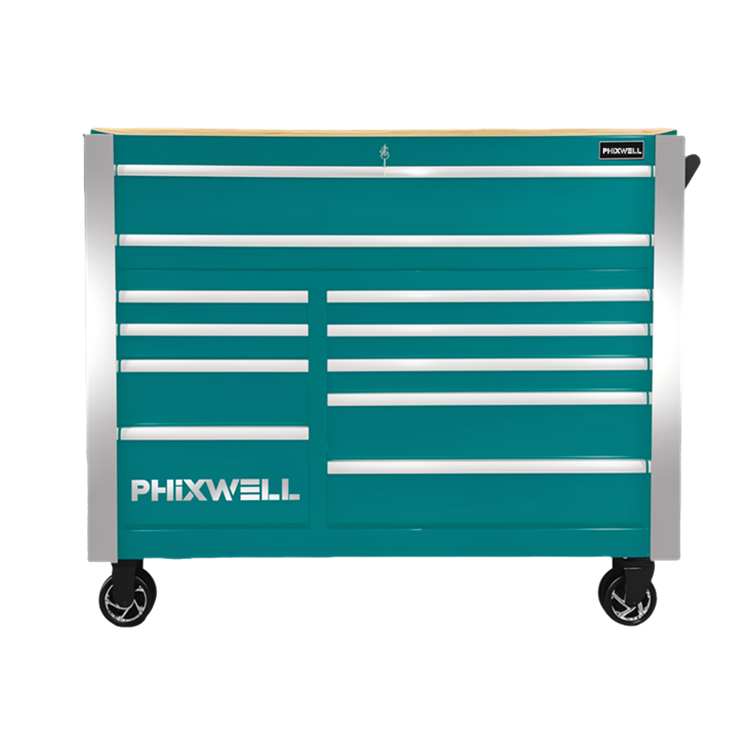
Prevent insufficient tool protection: Avoid rusting, collision or calibration failure caused by long...
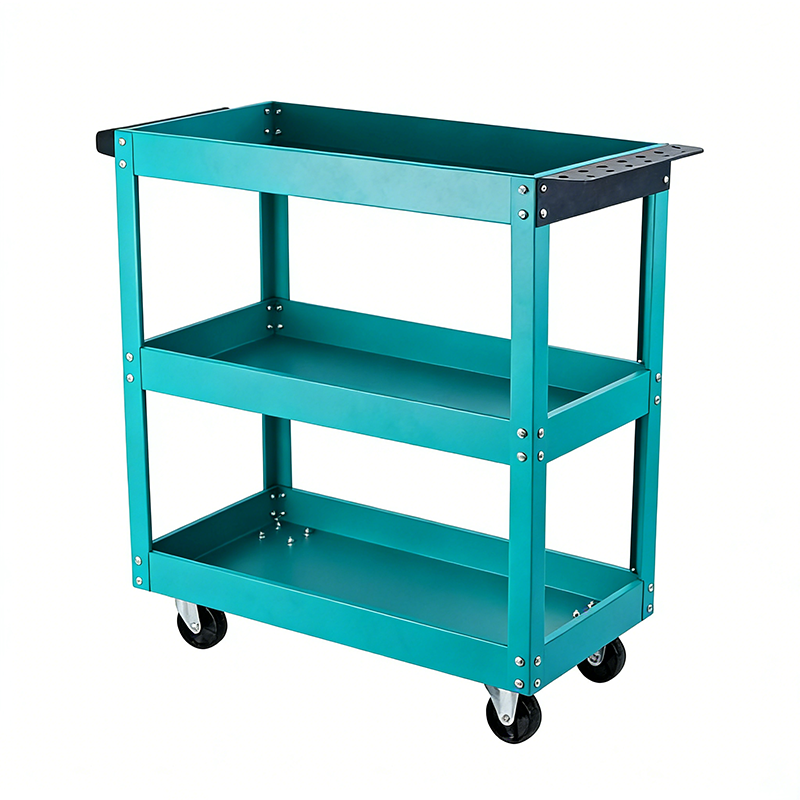
This is a **Three-Layer Auto Repair Tool Cart**, a multifunctional mobile maintenance storage device...
Content
Our annual output of more than 100,000 tool cabinet can meet the needs of customers with different purchase volumes.

+86-18658800788
+86-0512-58499000

New City Industrial Park, No. 108 Sizha Road, Yangshe Town, Suzhou, Jiangsu, China

