 en
en  English
 Deutsch
The Tool Box Comes With A Hanging Board
Storage of scattered items: Specifically designed to store small components such as screws, nuts, wa...

Toolboxes are not a single product category — they span a wide range of formats, materials, and carrying capacities designed for fundamentally different use cases. The right type depends on where you work, how you transport tools, and how frequently you access them. Choosing the wrong format leads to either overpacking a box that can't be comfortably carried, or under-utilizing a large storage solution that sits half-empty on a shelf.
The main types in commercial and residential use:
Traditional portable boxes — typically 16 to 24 inches wide with a hinged lid and single carry handle — remain the most common entry-level format. Steel versions offer better dent resistance and tool protection; injection-molded polypropylene versions are lighter and corrosion-proof. Most include a lift-out tray for small parts with open storage below for larger hand tools. Typical capacity: 50–80 hand tools.
Cantilever boxes use a folding arm mechanism that spreads multiple tiered trays outward when opened, giving simultaneous access to the full contents. This format is preferred by tradespeople who need to locate small parts quickly without unpacking the box. They are almost exclusively plastic, weigh less than steel equivalents, and are particularly popular in electrical, plumbing, and HVAC work where sorting by fitting size matters.
Designed to mount to a pickup truck bed, crossover boxes span the bed width just behind the cab and typically lock from the top. Materials range from aluminum diamond plate (lightweight, corrosion-resistant) to heavy-gauge steel (more secure, heavier). Crossover boxes typically hold 8–15 cubic feet of storage, enough for full sets of power tools, extension cords, and jobsite consumables. Side-mount, underbody, and chest-style variants serve specialized truck configurations.
Rolling chests — a lower cart on casters topped by a removable upper box — are the standard format for garage workshops and automotive bays. The lower cart typically holds 5–10 drawers for organized hand tool storage; the upper box provides deeper compartments for power tools and bulky items. Combined units range from entry-level 26-inch wide models to professional 72-inch wide combinations with 40+ drawers and 20,000+ cubic inches of capacity.
Modular systems use interlocking, interchangeable boxes, organizers, and trays that stack and click together for transport — then separate for use at different stations. Several major tool manufacturers have developed proprietary locking systems (Milwaukee PACKOUT, DEWALT TSTAK, Bosch L-BOXX are prominent examples) that interconnect their accessories. For contractors moving tools between multiple jobsites, modular stackers offer the flexibility of portability without the disorganization of a single large box.
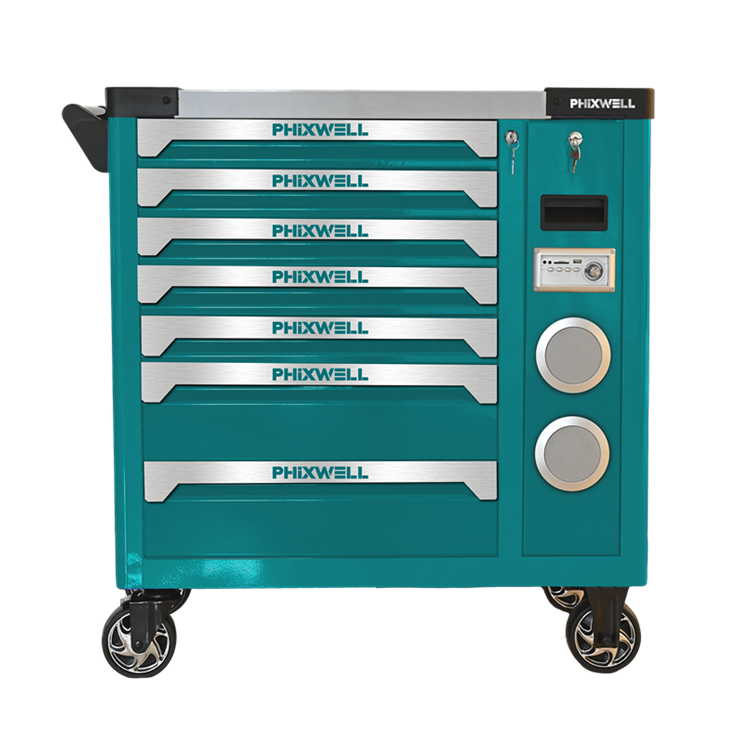
A well-stocked toolbox covers a defined range of tasks without becoming a disorganized catch-all. The most functional approach is to build around tool categories rather than individual tools — ensuring coverage across fastening, measuring, cutting, striking, and gripping before adding specialty items.
Screwdrivers (flat and Phillips in multiple sizes), nut drivers, and a socket set with both metric and SAE sizing form the core of any fastening category. For general residential use, a 40-piece socket set covering 1/4-inch and 3/8-inch drives handles the majority of fastener sizes encountered in appliances, furniture assembly, and light mechanical work. Hex key (Allen wrench) sets — both long-arm and ball-end — address furniture hardware and bicycle components frequently missed by socket sets.
A 25-foot tape measure, a 4-inch and 12-inch combination square, a torpedo level, and a chalk line cover the measuring needs of most DIY and light construction work. Pencils and a marking knife complete the layout kit. These tools are frequently the first omitted and the most often needed — a box without measuring tools forces guesswork on every cut and installation.
A 16-ounce curved-claw hammer handles both driving and pulling nails for general use; a rubber mallet protects finished surfaces. A flat bar (also called a wrecking bar or pry bar) in the 12–18 inch range provides leverage for demolition, floorboard removal, and crate opening without damaging adjacent surfaces. A center punch completes the striking category for metalwork.
Needle-nose pliers, slip-joint pliers, and locking pliers (Vise-Grips) cover the gripping range. For cutting, a utility knife with spare blades, a pair of diagonal cutting pliers, and wire strippers address most household and light trade cutting tasks. A hacksaw with spare blades extends cutting capability to metal pipe, bolts, and fasteners.
A non-contact voltage tester, a flashlight or headlamp, safety glasses, and work gloves round out a complete general toolbox. Non-contact voltage testers are among the highest-value safety tools for the price — a $15–$25 investment that prevents contact with live electrical circuits during any wiring or outlet work. Threadlocker (blue Loctite), penetrating oil, and electrical tape address common repair scenarios that otherwise require a separate supply run.
| Category | Core Items | Minimum Count |
|---|---|---|
| Fastening | Screwdrivers, socket set, hex keys | 15–20 pieces |
| Measuring | Tape measure, square, level | 4–6 pieces |
| Striking / Prying | Hammer, mallet, flat bar | 3–4 pieces |
| Gripping / Cutting | Pliers set, utility knife, wire strippers | 6–8 pieces |
| Safety / Specialty | Voltage tester, flashlight, gloves, glasses | 4–5 pieces |
A tool cabinet is a floor-standing, stationary storage unit — distinguished from a rolling tool chest by its fixed position, full-height door configuration, and typically larger overall footprint. Where a rolling chest is designed for mobility and drawer access, a tool cabinet is designed for maximum organized storage capacity in a dedicated workspace.
Tool cabinets range from single-section units (30–41 inches wide, 64–72 inches tall) to multi-section combinations that span an entire garage wall. The most common configuration pairs a base cabinet with a wall-mounted upper cabinet, creating a workbench-height surface between them — a layout that serves both as storage and as a primary work surface.
The mechanical difference between cabinets and chests affects not just aesthetics but daily usability:
Tool cabinet steel is rated by gauge — a counterintuitive scale where lower gauge numbers indicate thicker, stronger steel. Consumer-grade cabinets typically use 20–24 gauge steel; professional and industrial units run 16–18 gauge. The difference is meaningful: 18-gauge steel resists denting from dropped tools, handles drawer slamming over years of daily use, and maintains drawer alignment under heavy loads without the rail flex that causes binding in lighter-gauge alternatives.
Drawer slide quality is the second critical spec. Ball-bearing slides rated for 100 lbs per drawer are the minimum for professional use; full-extension slides that allow 100% drawer access (rather than the 75% access of partial-extension slides) are strongly preferred for deep tool sets. Soft-close mechanisms prevent tool movement from drawer slam and extend slide life significantly.
A useful sizing heuristic: estimate your current tool count, then select a cabinet with 30–40% more capacity than you currently need. Tool collections grow consistently — a cabinet that fits today's inventory perfectly will be overcrowded within two to three years of active work. Allocating growth capacity at purchase is significantly cheaper than adding a second cabinet unit later.
For automotive workshops, a 52–56 inch wide combination unit (base cabinet plus rolling chest) is the practical minimum for a full set of hand tools, socket sets, and diagnostic equipment. Professional technicians typically work with 72-inch or wider combinations to accommodate specialty tooling alongside general sets without drawer consolidation.
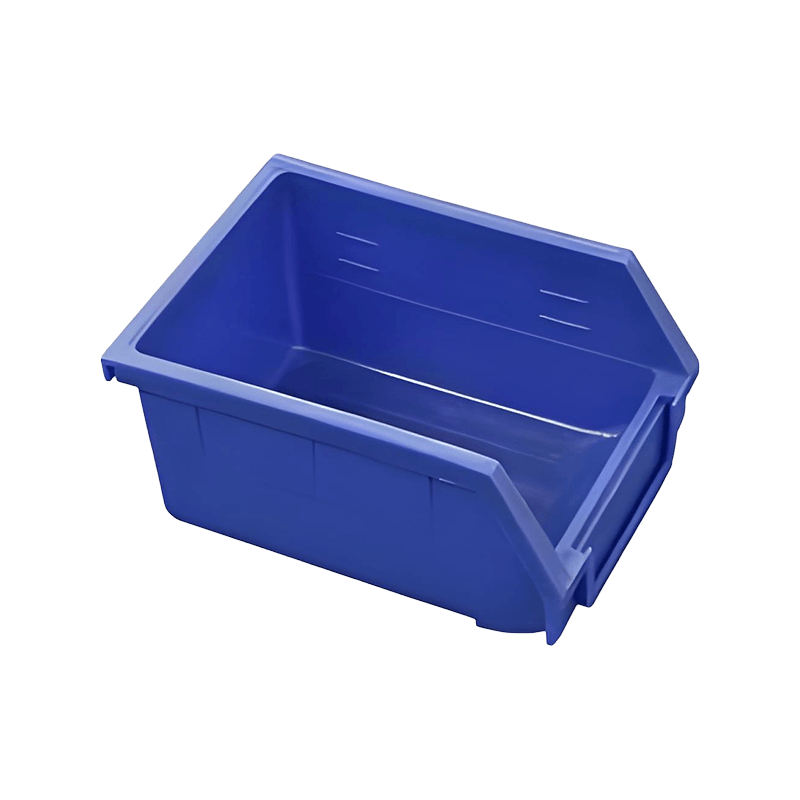
Storage of scattered items: Specifically designed to store small components such as screws, nuts, wa...
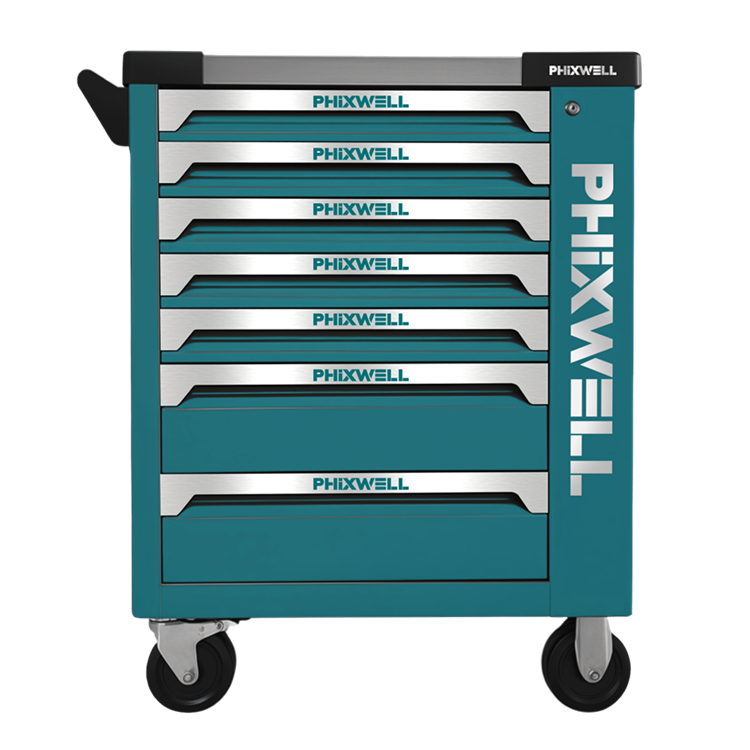
The tool cart group provides a set of tools to solve the problem of tool confusion and difficulty in...
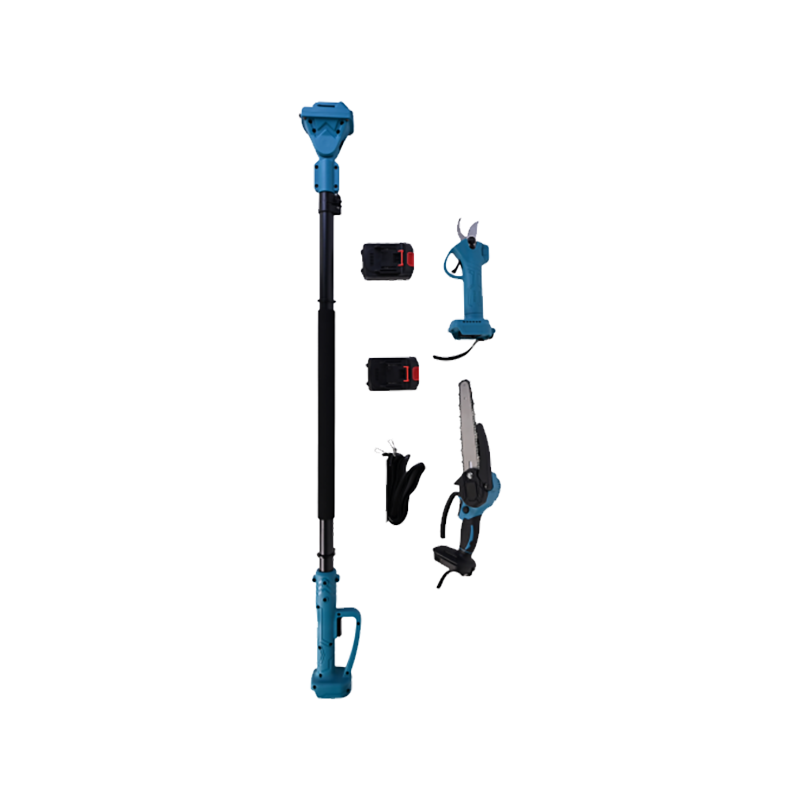
Easy to switch between handheld and high pole modes, suitable for trimming needs at different height...
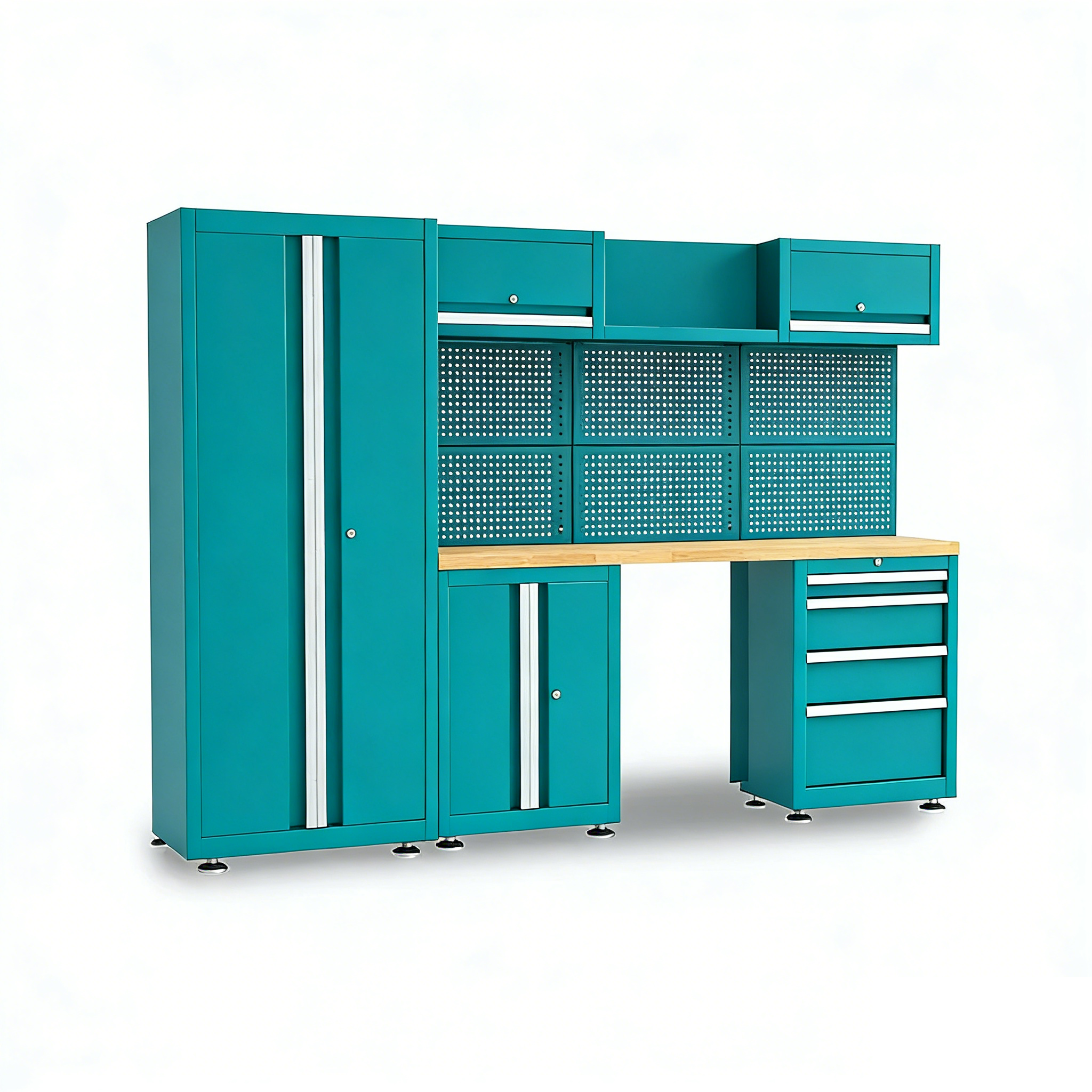
Multifunctional Tool Storage Combination Cabinet Material and appearance: Made of premium cold steel...
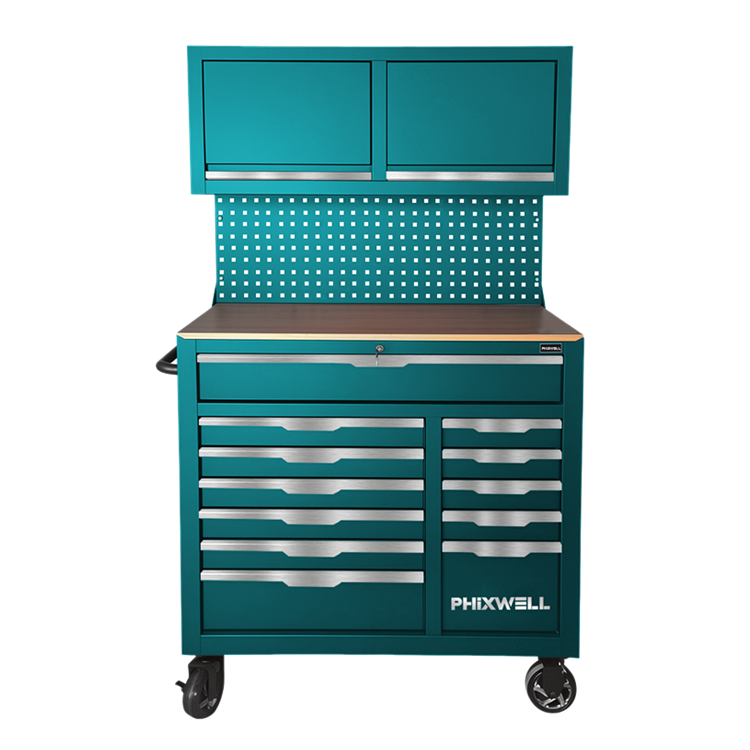
This is a heavy-duty multifunctional tool cabinet workbench set launched by the **PHIXWELL** brand, ...
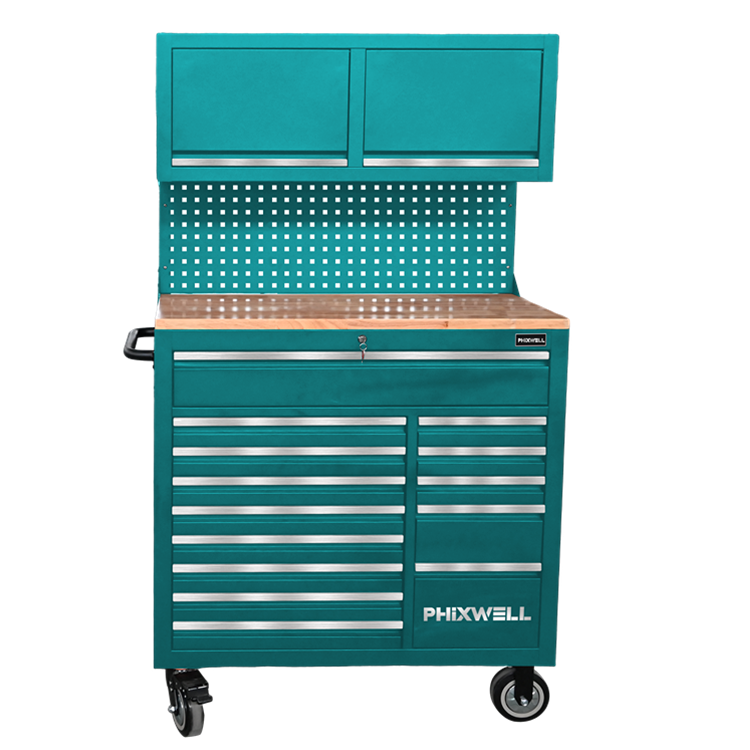
PHIXWELL Multifunctional Tool Workstation: Professional Grade Storage and Operation Integrated Solut...
Our annual output of more than 100,000 tool cabinet can meet the needs of customers with different purchase volumes.

+86-18658800788
+86-0512-58499000

New City Industrial Park, No. 108 Sizha Road, Yangshe Town, Suzhou, Jiangsu, China

