 en
en  English
 Deutsch
719521 Heavy-Duty Multifunctional Tool Cabinet Workbench Set
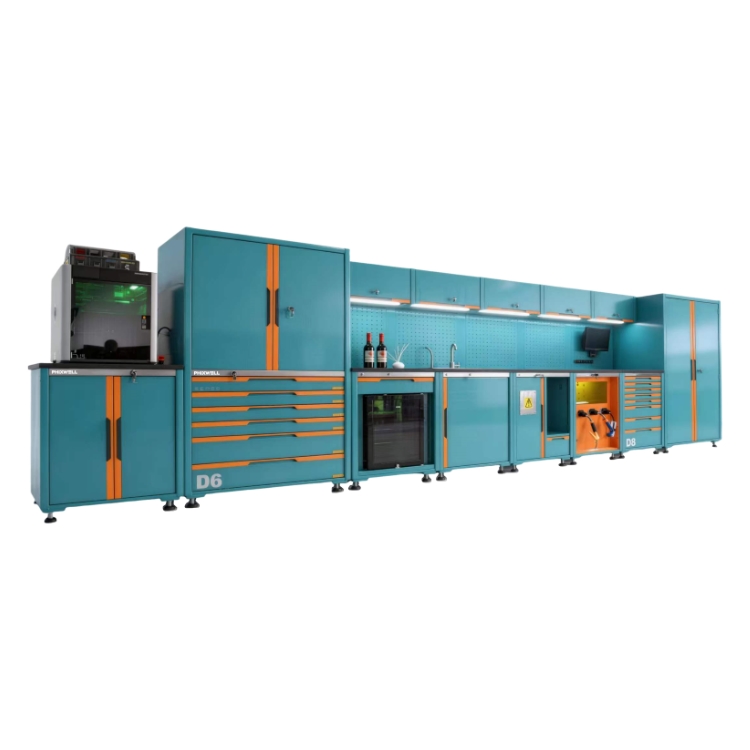
This is a heavy-duty multifunctional tool cabinet workbench set launched by the **PHIXWELL** brand, ...

A combination cabinet—an integrated unit merging adjustable shelves, lockable cabinets, and sliding drawers—is the most space-efficient and structurally robust storage solution for a garage. By consolidating tool storage, chemical lock-up, and bulky item shelving into a single welded or bolted assembly, a combination cabinet eliminates the wasted gaps between standalone units, delivering a 30–40% higher storage density per square meter of floor space than separate tool chests and open shelving. For a standard two-car garage, replacing disconnected shelving with a properly specified combination cabinet system can reclaim over 5 m² of walkable floor area while providing a load capacity that exceeds 800 kg per bay—enough to hold multiple engine blocks, sets of tires, and heavy power tools without deflection or floor damage.
A true garage combination cabinet is not a repurposed kitchen unit. It is engineered from heavy-gauge steel or aluminum, with fully welded frames, reinforced shelf supports, and load-rated drawer slides. The defining characteristic is the simultaneous presence of three storage zones within a contiguous footprint: an enclosed lockable compartment with doors, a set of smooth-rolling drawers on ball-bearing slides, and open or partially enclosed shelving that can accommodate tall containers and irregularly shaped equipment. This hybrid design means that aerosols, automotive fluids, and power tools can be stored securely behind doors, small parts and sockets organized in drawers, and bulk items like jerry cans, helmets, or seasonal tires placed on open shelves—all within arm's reach of a single standing position.
The load-bearing capacity and dent resistance of a garage cabinet are determined primarily by the steel gauge used in the body and shelves. The table below maps common gauge numbers to real-world performance, showing why gauge selection is the first technical decision in specifying a combination cabinet.
| Gauge | Nominal Thickness | Shelf Load Capacity (900 mm span) | Typical Application |
|---|---|---|---|
| 18 gauge | 1.2 mm | up to 275 kg | Heavy workshop; engine parts storage |
| 20 gauge | 0.9 mm | up to 160 kg | General garage; tools and supplies |
| 22 gauge | 0.76 mm | up to 80 kg | Light storage; cleaning supplies |
Beyond the gauge number, the construction method separates a durable cabinet from a disposable one. Spot-welded construction with full-perimeter return flanges on shelves increases rigidity by a factor of two compared to shelves that simply rest on tabs. Drawer slides rated for 45 kg or 90 kg per pair—with a full-extension travel of 100%—allow retrieval of tools at the back of the drawer without straining. In a high-use garage environment, slides that carry a 50,000-cycle tested rating ensure that drawers operate smoothly years after installation, even when loaded with sockets and power tool batteries.
Manufacturers certify load ratings through static load tests, but the real-world requirement is often more demanding because tools are set down dynamically. A shelf rated at 200 kg static can typically withstand an abrupt placement of a 25 kg toolbox without permanent deformation only if it incorporates a sufficient safety margin. Independent testing on 18-gauge welded steel combination cabinets shows that the total cabinet load capacity—with weight distributed across shelves and the cabinet base—can reach 1,800–2,200 lbs (820–1,000 kg) before floor-level fastening becomes the limiting factor.
The base-bearing design is critical. A cabinet that rests on a full-perimeter base channel spreads the load across the garage slab, preventing point loading that could crack ceramic tile or indent epoxy coatings. Adding four adjustable leveling feet rated at 500 kg each allows the cabinet to be stabilized on uneven floors, which is common in older garages with a gradient for drainage. A properly leveled combination cabinet eliminates the risk of drawers self-opening or doors swinging, even under vertical deflection.
The term "combination cabinet" also refers to modular systems where multiple units are joined to create a continuous work and storage wall. Standard modules include a base cabinet with drawers, a tall locker cabinet, a wall-mounted upper cabinet, and a corner cabinet that eliminates dead space. The real advantage emerges when these modules lock together with mechanical fasteners, forming a rigid monocoque structure that resists twisting better than the sum of its individual parts.
The buying decision often comes down to a choice between a dedicated combination cabinet, heavy-duty open shelving, or a rolling tool chest fitted with a worktop. The table below compares these options across the metrics that matter in a working garage.
| Criteria | Combination Cabinet | Open Shelving (Wire/Steel) | Rolling Tool Chest |
|---|---|---|---|
| Dust/Debris Protection | High (doors + gasketed) | None | Moderate (drawer seals optional) |
| Weight Capacity per m² | >500 kg | 200–350 kg | 250–400 kg (concentrated) |
| Security Locking | Integrated lock, keyed alike | None | Central locking drawers |
| Flexibility to Reconfigure | Modular add-on, but semi-permanent | High; easy to move | Mobile but fixed configuration |
| Cost per Stored Litre | Moderate | Low | High |
The combination cabinet is the only option that provides a closed, lockable environment for hazardous materials (paints, solvents, automotive fluids) alongside open bulk storage and precision tool drawers. Open shelving, while economical, exposes everything to grinding dust and humidity, accelerating tool corrosion. Rolling tool chests offer excellent drawer organization but lack the enclosed tall storage for chemical containers that fire codes increasingly require in attached garages.
A loaded combination cabinet approaching 1,000 kg is a tipping hazard if not anchored. The cabinet must be secured to the wall or floor using lag screws into wall studs (minimum two per cabinet) or concrete expansion anchors into the garage slab. Cabinets designed for seismic zones include a continuous mounting rail that distributes anchorage forces and an anti-tip bracket tested to 2,500 N of tensile pull. On epoxy-coated or polished concrete floors, the use of load-spreading base plates prevents the concentrated stress that could delaminate the coating. Manufacturers that provide pre-drilled anchorage holes on 16-inch centers simplify alignment with standard stud framing, eliminating the need for field drilling that can introduce corrosion initiation points at exposed steel edges.
Garages in coastal or humid regions subject steel cabinets to sustained humidity above 70% RH, which causes unprotected cold-rolled steel to form red rust within 200 hours in salt-spray testing. Combination cabinets built for these conditions use a powder-coated finish over a zinc phosphate pre-treatment, achieving 500–1,000 hours of ASTM B117 salt-spray resistance before scribe-line corrosion exceeds 2 mm. Stainless steel drawer slides, aluminum door handles, and sealed-bearing casters are further indicators of a cabinet designed to last 15–20 years without rust-through. For wood-composite cabinet alternatives, only those meeting ANSI A208.2 moisture-resistant standards (with a thickness swell below 8% after 24-hour water immersion) should be considered in garages without active climate control.
The following checklist distills the technical considerations into a purchase specification that can be validated against product documentation.
Improper installation sequence is the most common cause of misaligned doors and drawers. The correct procedure begins with levelling the base cabinet on adjustable feet, shimming as necessary until the cabinet is perfectly plumb and square. Wall-mounted upper cabinets are installed next, aligned with a laser level and anchored into studs with minimum 75 mm lag screws. The worktop or cap shelf is placed last, bridging base cabinets and tying the entire assembly together with mechanical fasteners at every attachment point. At each stage, door and drawer alignment is checked with a 1 mm feeler gauge to ensure consistent gaps; adjustments of just 0.5 mm at the hinge plate can correct a door that binds or fails to latch.
A combination cabinet in a working garage lives in an abrasive environment of brake dust, metal shavings, and vibration. Annual maintenance consists of cleaning drawer slides with a dry lubricant—not grease, which traps grit—and re-torquing all structural fasteners to the manufacturer's specification, typically 15–25 Nm for M8 bolts in steel frames. Door hinges on cabinets that have settled should be adjusted to restore the factory gap; a door that rubs wears through the powder coat at the contact point, initiating rust. If the cabinet is ever moved, it must be re-levelled and re-anchored immediately; a cabinet that is out of level concentrates load on two feet instead of four, overloading the slab locally and potentially cracking ceramic tile underlayment.
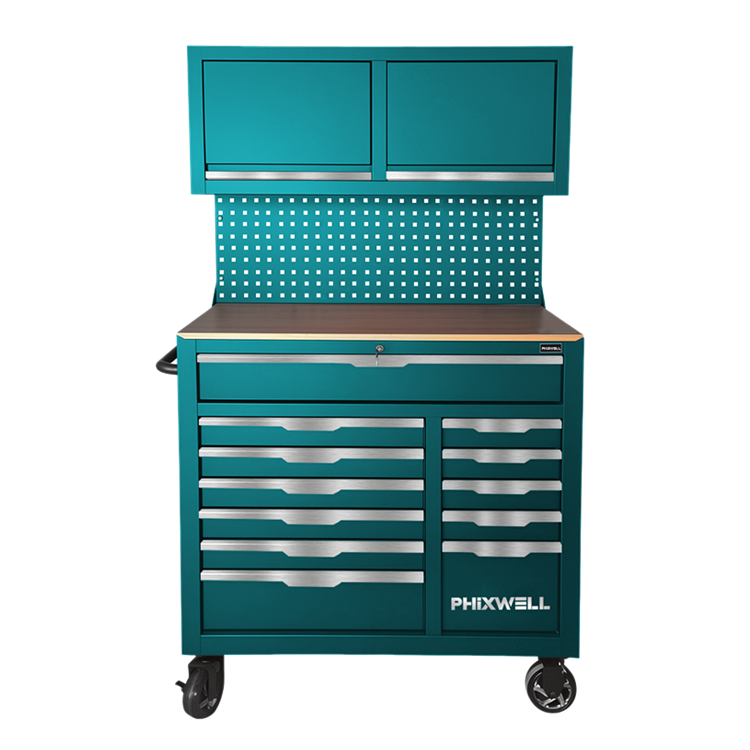
This is a heavy-duty multifunctional tool cabinet workbench set launched by the **PHIXWELL** brand, ...
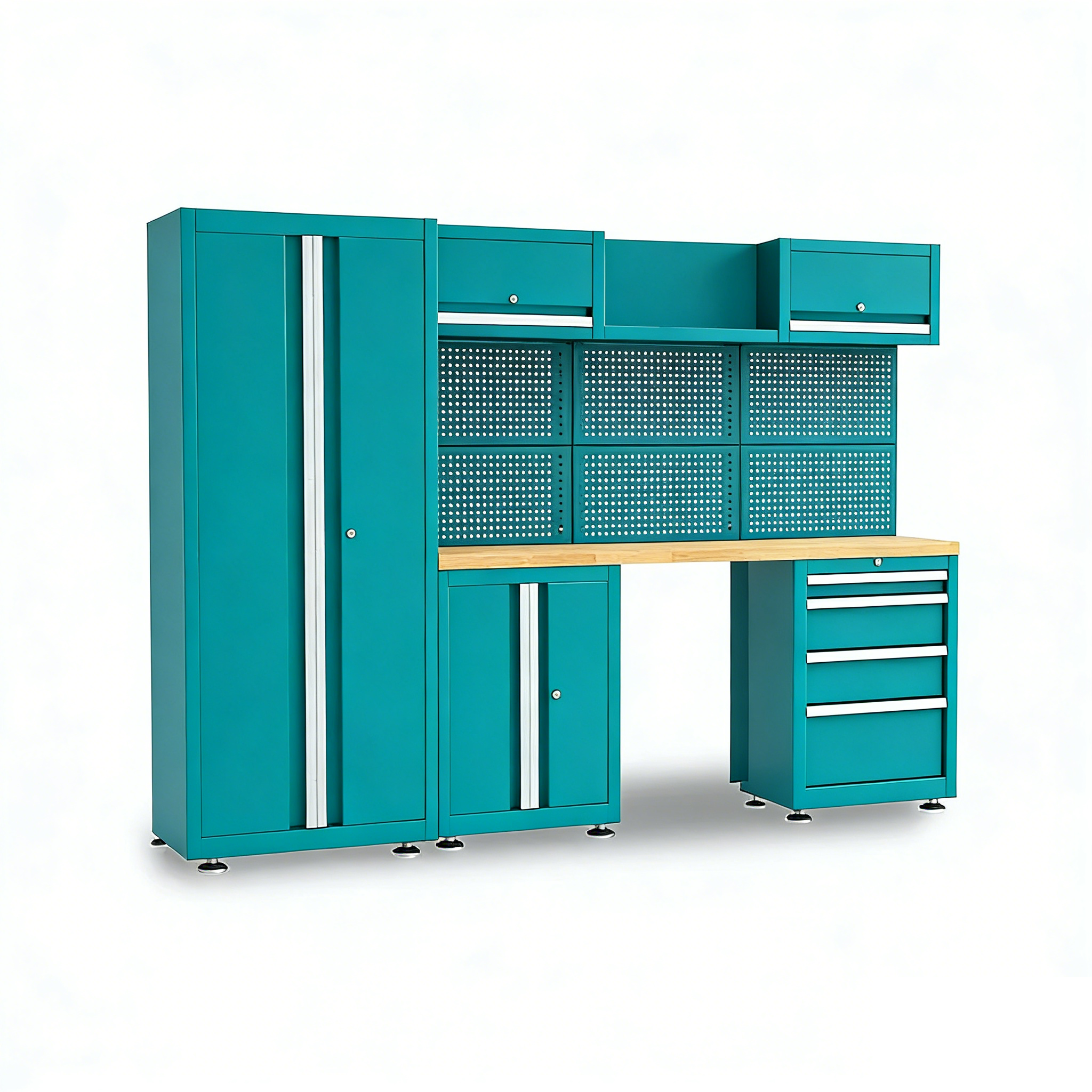
Multifunctional Tool Storage Combination Cabinet Material and appearance: Made of premium cold steel...
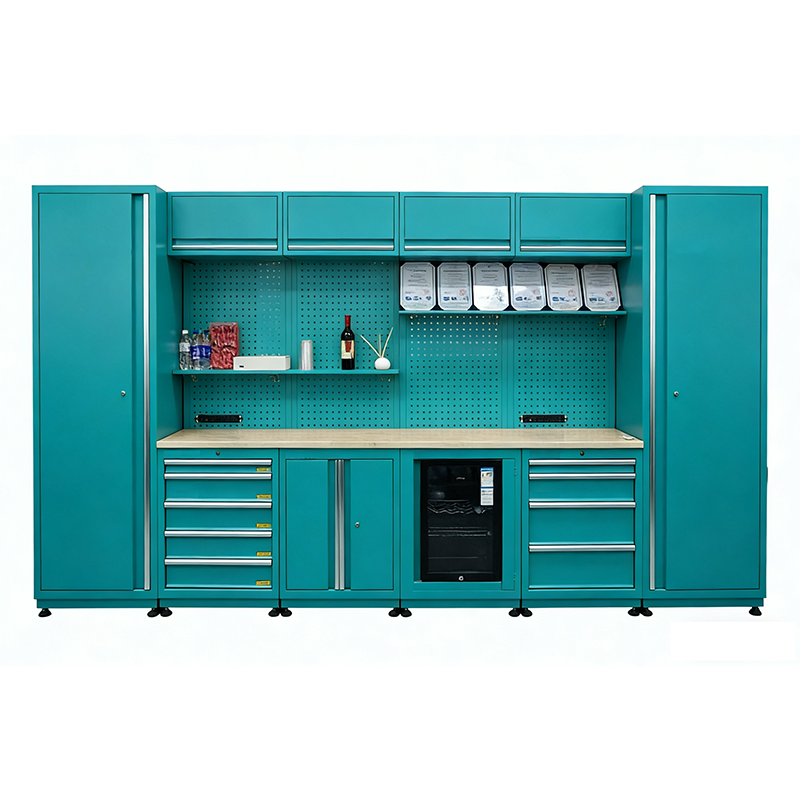
# Workshop Modular Storage Combination Cabinet (Model 719610) Product Introduction This workshop sto...
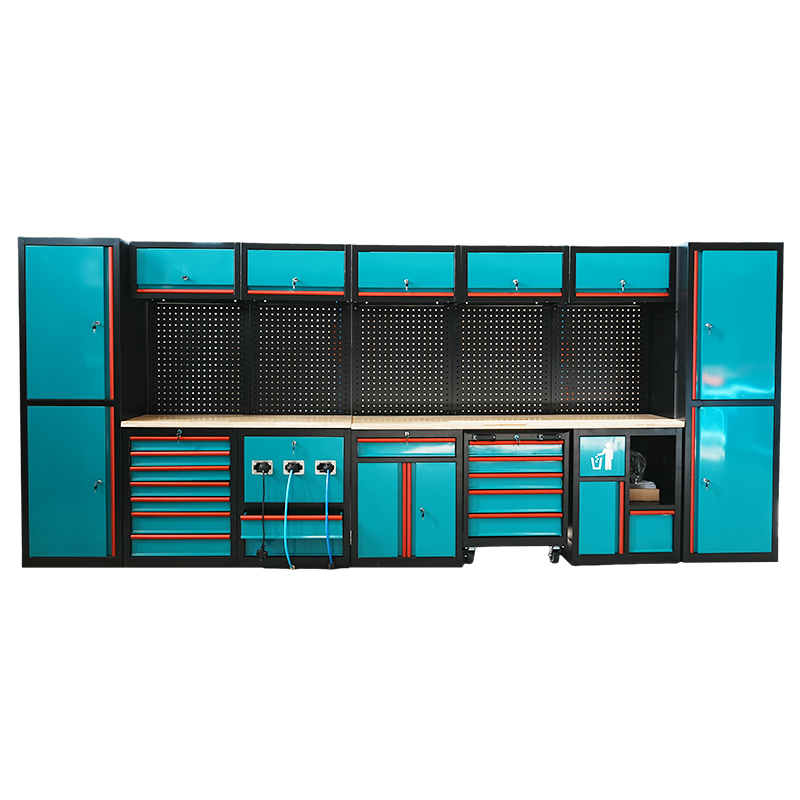
# Multifunctional Workshop Combination Cabinet: Professional Tool Storage and Work Integrated Soluti...
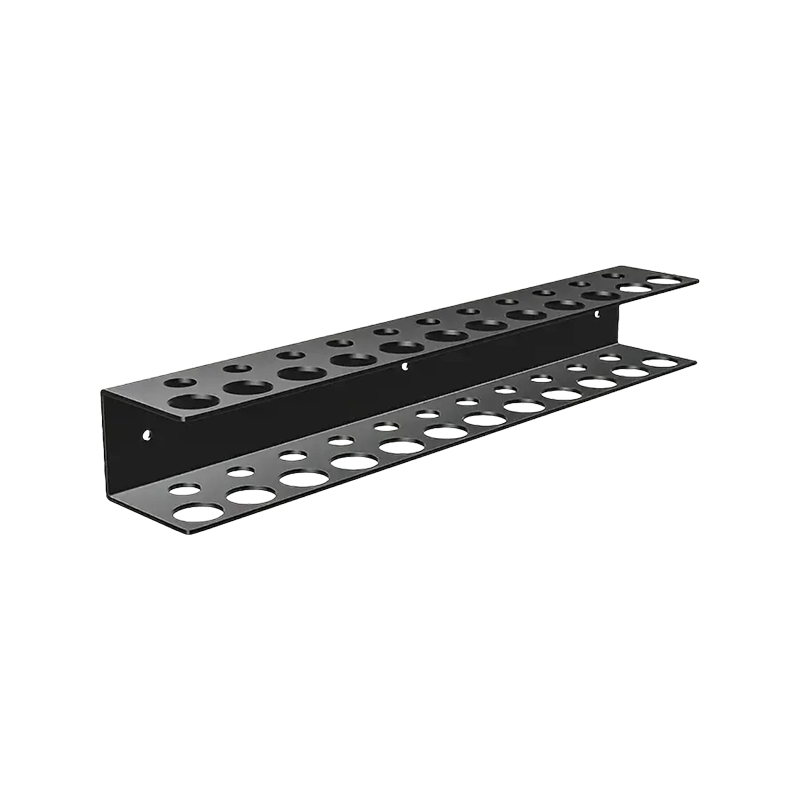
Clear classification: Usually, there are multiple independent slots or hooks, which can be divided a...
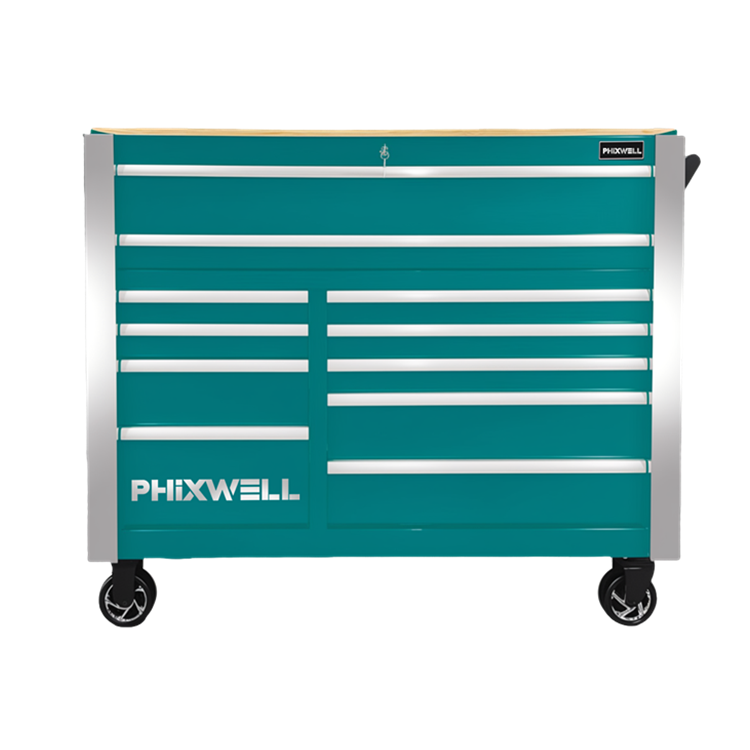
Prevent insufficient tool protection: Avoid rusting, collision or calibration failure caused by long...
Content
Our annual output of more than 100,000 tool cabinet can meet the needs of customers with different purchase volumes.

+86-18658800788
+86-0512-58499000

New City Industrial Park, No. 108 Sizha Road, Yangshe Town, Suzhou, Jiangsu, China

