 en
en  English
 Deutsch
719709 PHIXWELL Three-Layer Auto Repair Tool Cart
This is a **Three-Layer Auto Repair Tool Cart**, a multifunctional mobile maintenance storage device...

For any automotive enthusiast or professional mechanic, tools are more than just equipment—they are investments and extensions of skill. However, these valuable assets are only as effective as their accessibility and condition allow. A cluttered workspace with tools scattered across benches, floors, and various small boxes is a recipe for frustration, lost time, and even safety hazards. This is where transitioning from a simple toolbox to a dedicated Auto Repair Cabinet becomes a game-changing decision. A purpose-built cabinet does far more than store tools; it organizes, protects, and systematizes your entire workflow. Investing in a proper storage solution transforms your garage or shop from a chaotic area into a streamlined, professional-grade environment. It directly contributes to increased productivity, as technicians spend less time searching for tools and more time applying them. Furthermore, it safeguards your tools from damage, dust, and moisture, significantly extending their lifespan and protecting your financial investment. Ultimately, the right cabinet is not an expense but a foundational component of a safe, efficient, and scalable operation.
Selecting the ideal Auto Repair Cabinet requires careful evaluation of your specific needs and the environment it will serve. Rushing this decision can lead to purchasing an unit that is either insufficient for your tool collection or wasteful of your space and budget. The first and most critical step is conducting an honest assessment of your current and anticipated future tool inventory. Consider not just the number of tools, but their size, weight, and shape—long wrenches, bulky power tools, and delicate diagnostic equipment all have different storage demands. Simultaneously, meticulously measure your available floor and wall space, considering door swings, vehicle clearance, and workflow pathways. The goal is to find a cabinet that offers maximal storage density without impeding movement in your workshop. Understanding these core parameters of scale and scope will guide you towards the correct type, size, and configuration of cabinet, ensuring it serves as a long-term asset rather than a temporary fix.
The longevity and performance of your cabinet hinge entirely on its construction. The industry standard for professional-grade units is cold-rolled steel, prized for its strength and resistance to warping.
This is where a cabinet's functionality is truly defined. It's not just about the number of drawers, but their dimensions, weight capacity, and layout.
Use the following table to plan your drawer configuration based on common tool types:
| Tool Category | Recommended Drawer Type | Key Considerations |
| Screwdrivers, Pliers, Wrenches | Shallow drawers (2-3" height) with dividers | Organization is key; foam liners or customizable dividers prevent tangling. |
| Socket Sets, Ratchets | Medium-depth drawers (4-6" height) with socket organizers | Organizers by drive size (1/4", 3/8", 1/2") and metric/SAE are crucial. |
| Power Tools (Drills, Impacts, Grinders) | Deep drawers (8-12" height) with high weight capacity | Ensure ample length and width; consider non-slip mats to prevent movement. |
| Long Items (Pry Bars, Hammers, Torque Wrenches) | Full-length deep drawers or dedicated vertical storage | Some cabinets offer end compartments or tall side lockers for this purpose. |
The market offers a variety of cabinet styles, each designed to excel in specific scenarios. From the compact home garage to the bustling professional bay, understanding these types will lead you to your perfect match.
Built to withstand the relentless demands of daily commercial use, these cabinets are the bedrock of a professional auto shop tool storage cabinet system. They prioritize maximum strength, security, and capacity above all else.
The quintessential roll cab tool chest for mechanics combines secure storage with unparalleled mobility. It serves as a portable workstation that brings the tools directly to the job.
A modular automotive workshop storage cabinet system is the ultimate solution for flexibility and future expansion. It typically starts with a main roll cab or base cabinet, to which you can add a top chest, side lockers, end cabinets, or even overhead storage.
These cabinets strike an ideal balance between durability, functionality, and price for the serious DIYer or home mechanic. They bridge the gap between flimsy consumer storage and cost-prohibitive industrial equipment.
While options and accessories are plentiful, certain features are fundamental to the utility and longevity of any quality Auto Repair Cabinet. Compromising on these elements will almost certainly lead to regret as your tools and demands grow.
This is a common point of confusion. Typically, a "tool chest" refers to a smaller, portable box with a hinged lid and one or two trays inside, designed for carrying a basic set of tools. A tool cabinet is a larger, stationary or semi-mobile unit featuring multiple full-extension drawers for comprehensive, organized storage of a complete tool collection. A roll cab tool chest for mechanics often blends the terms, being a mobile cabinet with drawers, but it is fundamentally a cabinet in function and form.
Drawer weight capacity varies dramatically by cabinet quality. For a budget-friendly tool cabinet for home garage repair, drawers may hold 25-50 lbs each. A mid-range heavy duty auto repair tool cabinet will often have ratings of 75-100 lbs per drawer. High-end professional auto shop tool storage cabinet drawers can support 150 lbs, 200 lbs, or even more. Always check the manufacturer's specifications for each individual drawer, as capacities can differ within the same unit.
This depends on your space and flexibility needs. A single large cabinet is often more cost-effective per unit of storage and provides a clean, unified look. However, a modular automotive workshop storage cabinet system offers unparalleled advantages: you can start small and expand precisely as needed, reconfigure the layout if your shop changes, and move smaller units more easily than one massive cabinet. Modularity is the clear winner for future-proofing and adapting to an evolving workspace.
For a cabinet that will last in an auto repair setting, do not settle for anything thinner than 22-gauge steel for the main body. For a truly heavy duty auto repair tool cabinet, aim for 18 or 20-gauge as a sweet spot of strength and value. Drawer fronts and sides on premium models will often be 16-gauge or thicker. Remember, a lower gauge number means thicker, stronger steel. The gauge, combined with the quality of reinforcement and welding, determines the cabinet's resistance to sagging, denting, and overall fatigue.
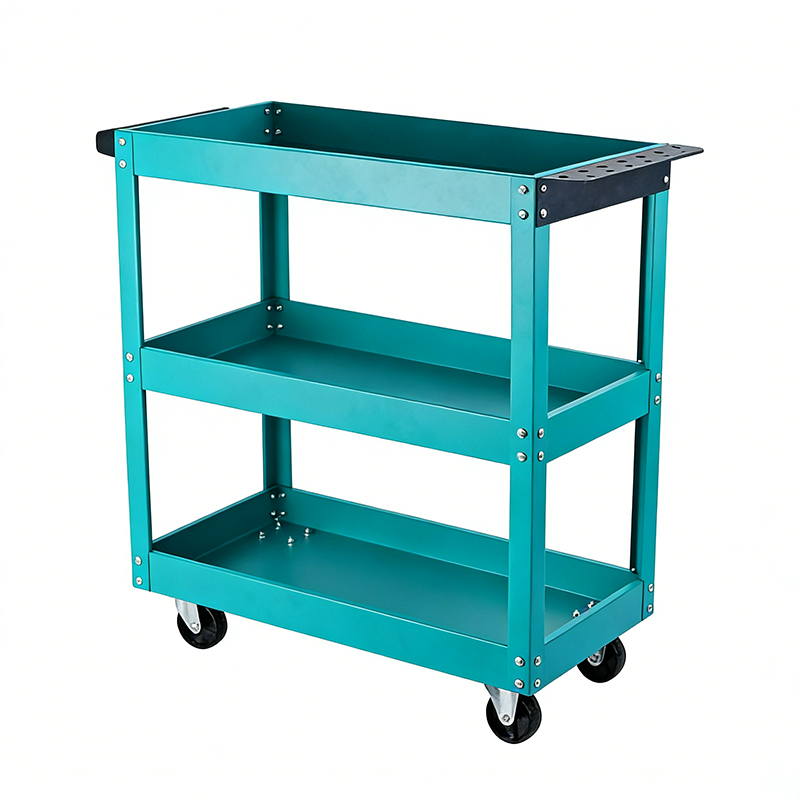
This is a **Three-Layer Auto Repair Tool Cart**, a multifunctional mobile maintenance storage device...
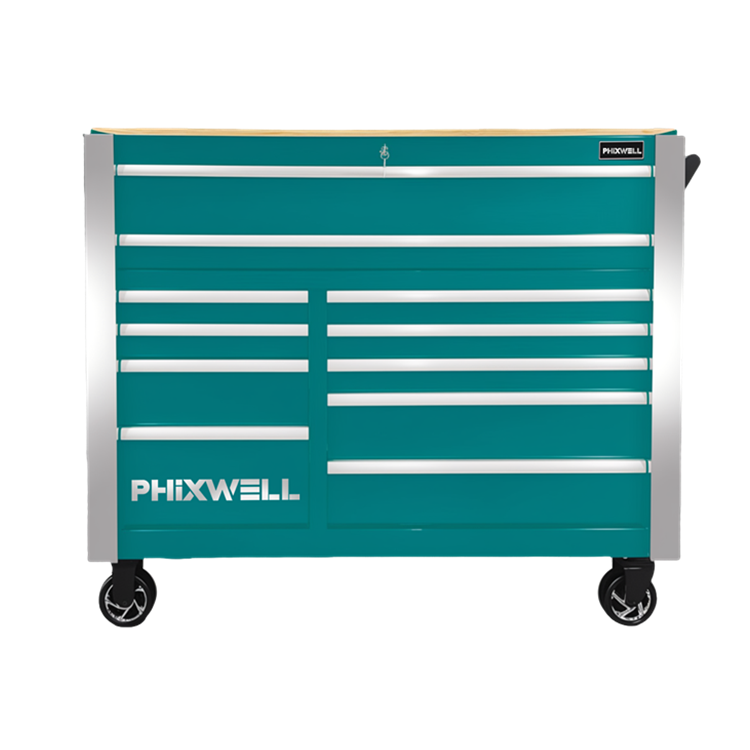
Prevent insufficient tool protection: Avoid rusting, collision or calibration failure caused by long...
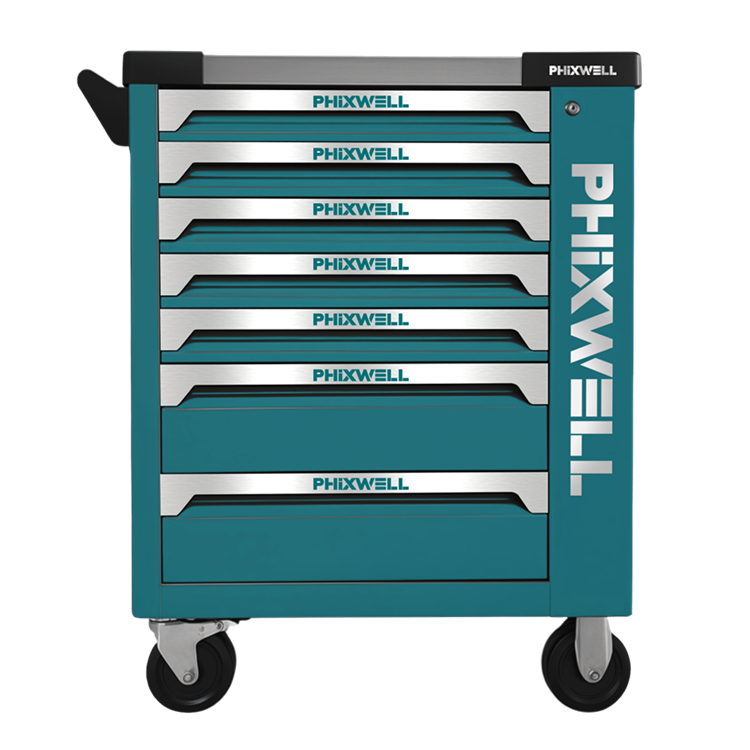
The tool cart group provides a set of tools to solve the problem of tool confusion and difficulty in...
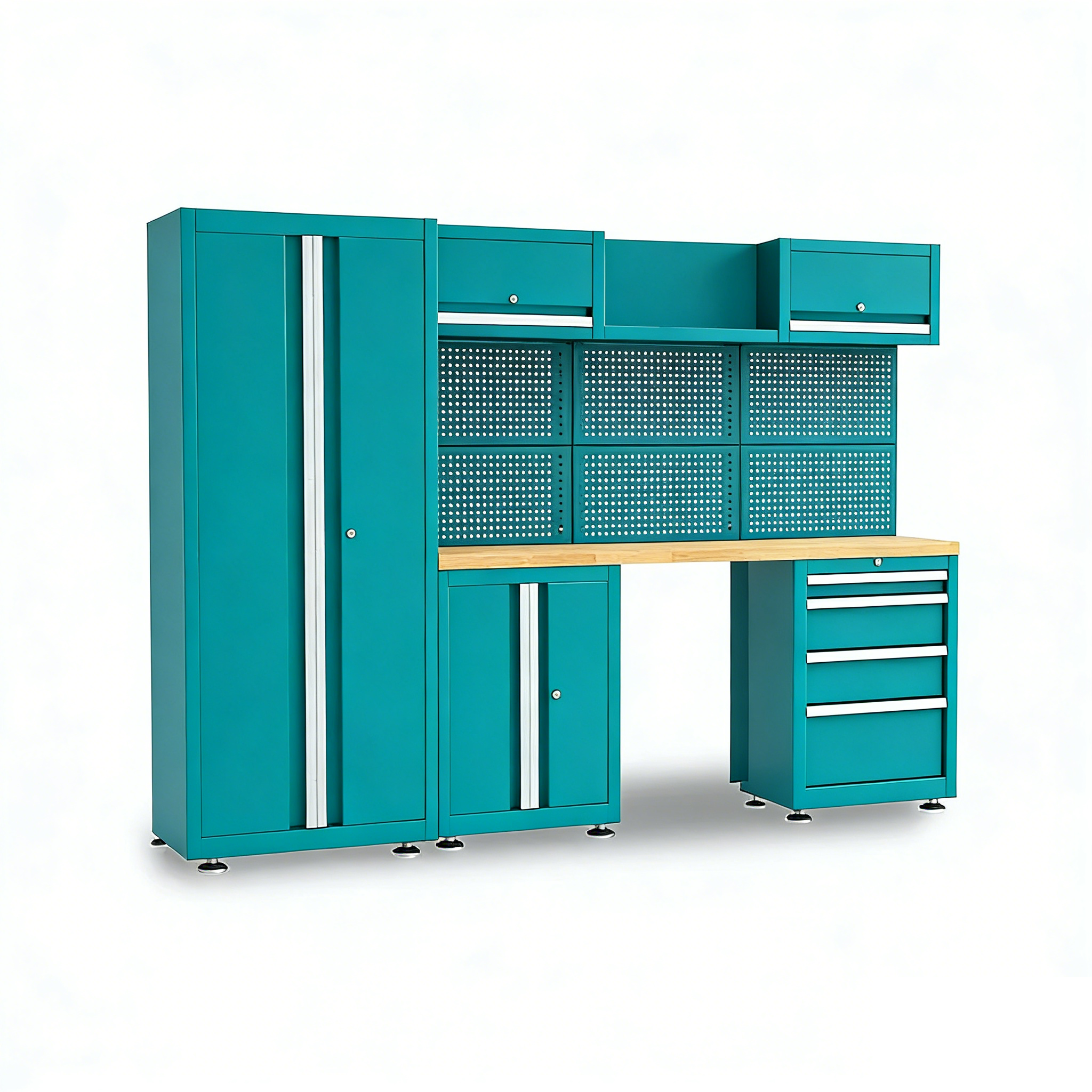
Multifunctional Tool Storage Combination Cabinet Material and appearance: Made of premium cold steel...
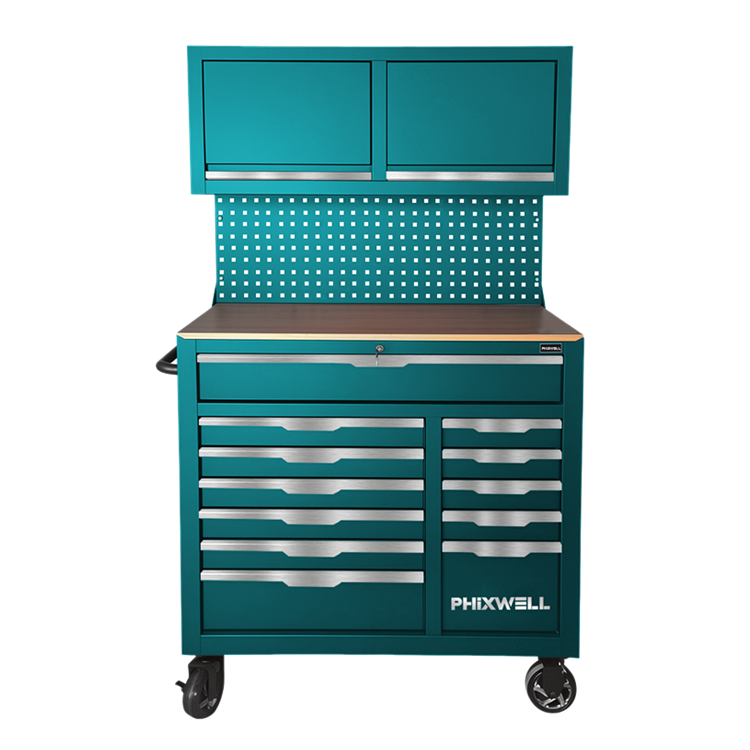
This is a heavy-duty multifunctional tool cabinet workbench set launched by the **PHIXWELL** brand, ...
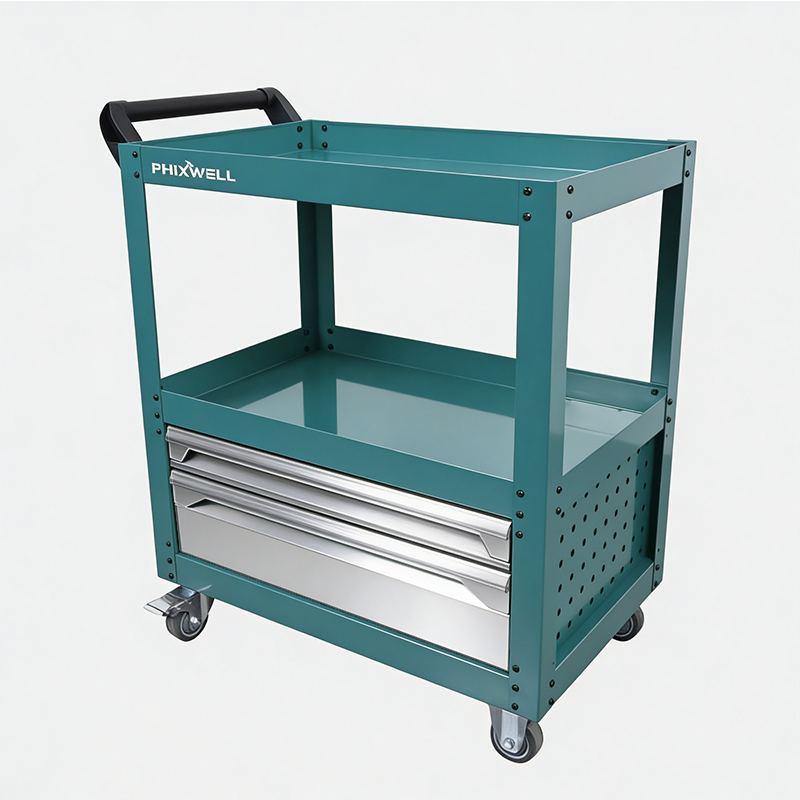
This is a multifunctional tool cart designed specifically for auto repair, maintenance, or industria...
Our annual output of more than 100,000 tool cabinet can meet the needs of customers with different purchase volumes.

+86-18658800788
+86-0512-58499000

New City Industrial Park, No. 108 Sizha Road, Yangshe Town, Suzhou, Jiangsu, China

