 en
en  English
 Deutsch
Multifunctional Tool Storage Combination Cabinet
Multifunctional Tool Storage Combination Cabinet Material and appearance: Made of premium cold steel...

A tool storage cabinet is a freestanding or wall-mounted enclosure designed to organize, protect, and provide controlled access to hand tools, power tools, measuring instruments, and workshop consumables. Unlike open shelving or pegboards, a tool storage cabinet encloses its contents behind doors or drawers, protecting tools from dust, moisture, and unauthorized access while keeping a workshop, garage, or industrial facility organized and safe.
The primary value of a dedicated tool cabinet is not storage capacity alone — it is the systematic organization it imposes. In professional environments, a technician losing 10–15 minutes per shift searching for misplaced tools represents a measurable productivity loss. In aviation maintenance, automotive service, and medical equipment repair, tool control systems built around locked cabinets are mandatory precisely because an unaccounted tool left inside equipment can cause catastrophic failure. For home workshops, the discipline of a dedicated cabinet prevents the tool creep that gradually distributes wrenches across three rooms and two vehicles.
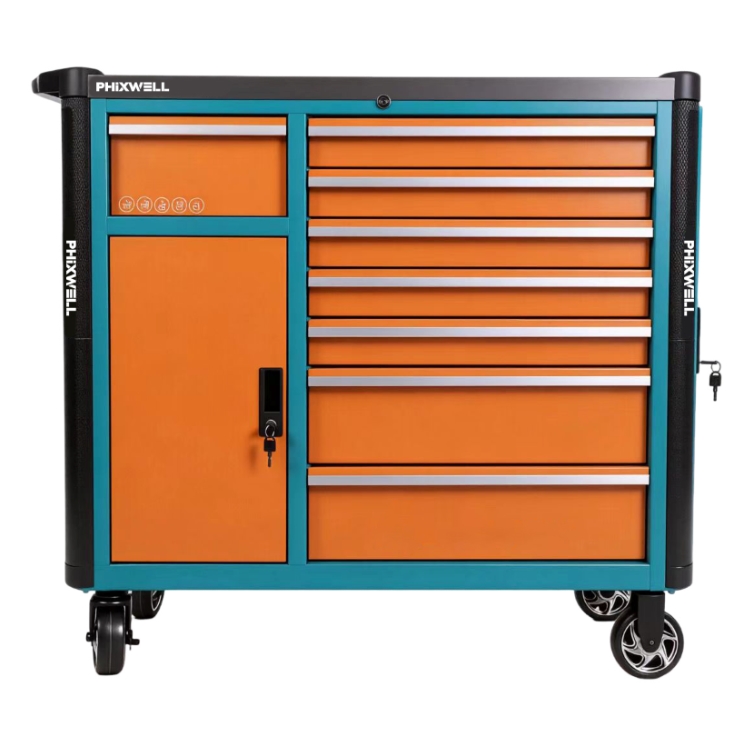
Tool cabinets are available in several distinct formats, each suited to different storage volumes, mobility requirements, and workshop layouts.
The most prevalent format in professional automotive and mechanical workshops. A rolling tool cabinet combines a lower chest — typically 5 to 15 drawers mounted on heavy-duty casters — with an upper hutch or top chest that sits on the work surface of the lower unit. The mobility allows the cabinet to be positioned directly at the vehicle or machine being serviced, reducing walking distance and keeping tools within arm's reach during complex jobs. Professional-grade rolling cabinets from brands such as Snap-on, Cornwell, and Matco support drawer weight ratings of 45–100 kg per drawer, reflecting the density of large socket sets, torque wrenches, and power tool batteries stored in active service environments.
Wall-mounted cabinets preserve floor space by fixing storage to the workshop wall at a convenient working height. They typically feature hinged or sliding doors that open to reveal a combination of shelves, drawer units, hooks, and panel boards for hanging tools. This format is widely used in home garages, maintenance workshops, and industrial tool cribs where floor space is at a premium and tools need to be accessible without moving a heavy cabinet. Heavier steel wall-mounted cabinets require stud or masonry anchoring rated for the expected load — a fully equipped steel cabinet can weigh 80–150 kg when loaded.
Large freestanding floor cabinets without casters are used where the storage volume exceeds what a rolling chest can accommodate, and where the cabinet's position is permanent. Common in industrial tool cribs, maintenance departments, and production facilities, these units may feature full-height double doors opening to adjustable shelving, combined with lower drawer banks. Modular versions allow sections to be bolted together as storage requirements grow, creating a continuous wall of organized tool storage.
Smaller cabinets — desktop units, under-bench drawers, and compact rolling carts — serve technicians who need a subset of tools at a specific workstation without the full footprint of a professional chest. These are common in electronics repair, HVAC service, and light assembly environments where the tool complement is smaller and more specialized than a general mechanical workshop.
| Cabinet Type | Mobility | Typical Capacity | Best For |
|---|---|---|---|
| Rolling chest | High | Medium – large | Auto/mechanical workshops |
| Wall-mounted cabinet | None (fixed) | Small – medium | Garages, small workshops |
| Stationary floor cabinet | None (fixed) | Large – very large | Industrial tool cribs, MRO |
| Portable / compact cart | High | Small | Field service, light assembly |
The material and gauge of a tool storage cabinet determines its load capacity, resistance to denting and corrosion, service life, and price. The three dominant materials in the market are cold-rolled steel, stainless steel, and high-density polyethylene (HDPE).
The standard material for professional and industrial tool cabinets. Steel gauge is the single most important quality indicator — professional cabinets use 16–18 gauge steel (1.2–1.5 mm) for drawer bodies and cabinet walls, while budget units use 20–22 gauge (0.8–0.9 mm) that dents under normal workshop use. The powder coat finish applied over the steel determines corrosion resistance: quality powder coats are 60–80 microns thick, applied over a phosphate conversion coating that provides an additional corrosion barrier. In workshop environments with frequent solvent or oil exposure, the powder coat's chemical resistance matters as much as its mechanical toughness.
Used in food processing, pharmaceutical, and cleanroom environments where chemical resistance and cleanability are mandatory. Stainless steel tool cabinets are substantially more expensive than carbon steel equivalents and are not necessary in general workshop environments, but they are the correct specification where regular washdown with aggressive cleaning agents occurs or where contamination control standards apply.
High-density polyethylene cabinets are lightweight, completely rust-proof, and resistant to most workshop chemicals. They are well-suited to outdoor storage, marine environments, and applications where corrosion is the primary concern. Their limitation is structural rigidity — HDPE cabinets cannot match the drawer weight ratings of heavy-gauge steel units, and they are not suitable for the heaviest professional tool collections.
Beyond material and format, several specific features distinguish a cabinet that performs well over years of daily use from one that deteriorates quickly under professional conditions.
Tool cabinets sold pre-loaded with a tool set represent a significant portion of the consumer and mid-professional market. These packages typically combine a rolling chest or compact cabinet with a general-purpose mechanic's tool set — sockets, wrenches, screwdrivers, pliers, and ratchets — organized in the drawers with foam inserts or tray organizers. They are targeted at homeowners setting up a first workshop, light hobbyists, and tradespeople establishing a new mobile service kit.
The practical consideration when evaluating a tool cabinet with tools is whether the included tool set matches the
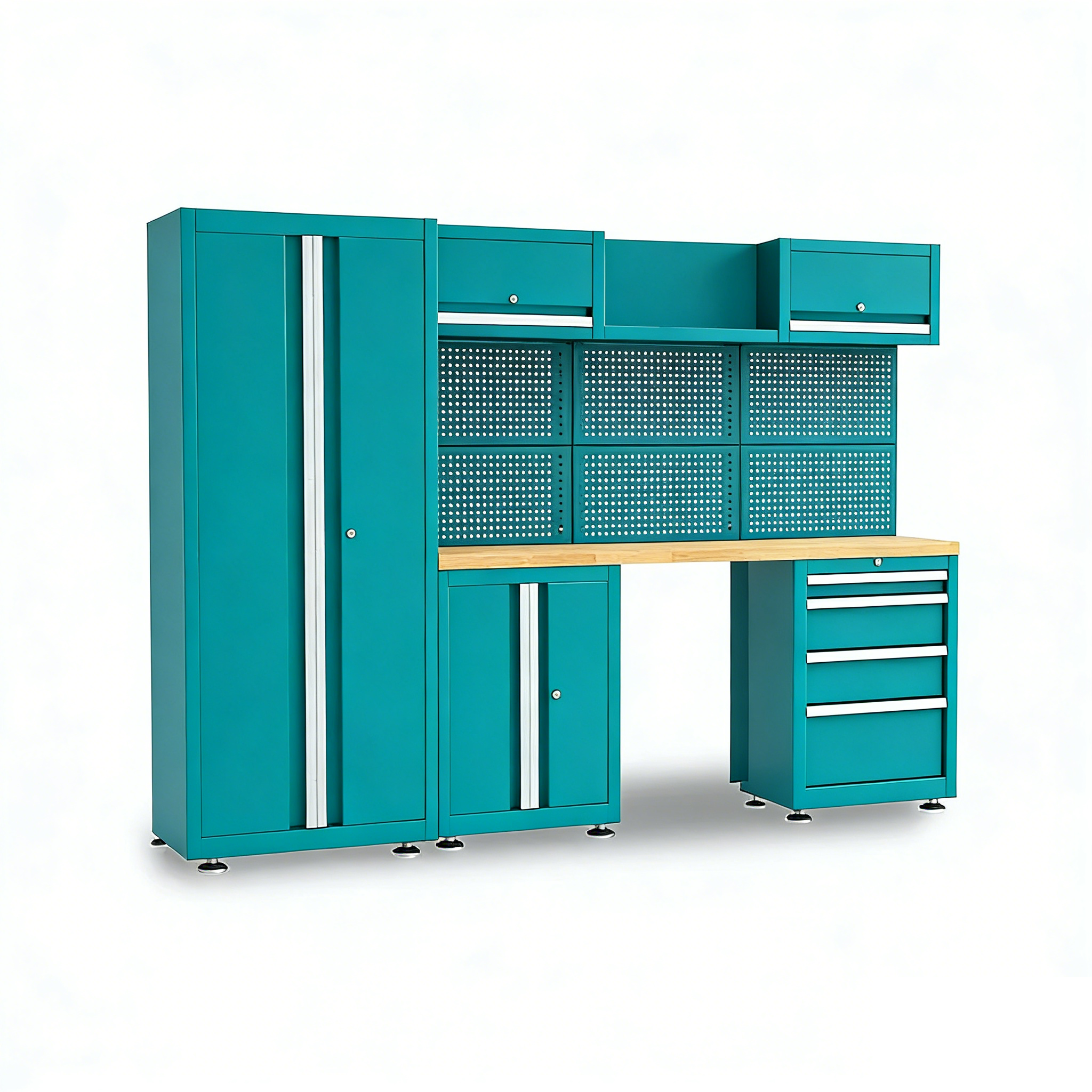
Multifunctional Tool Storage Combination Cabinet Material and appearance: Made of premium cold steel...
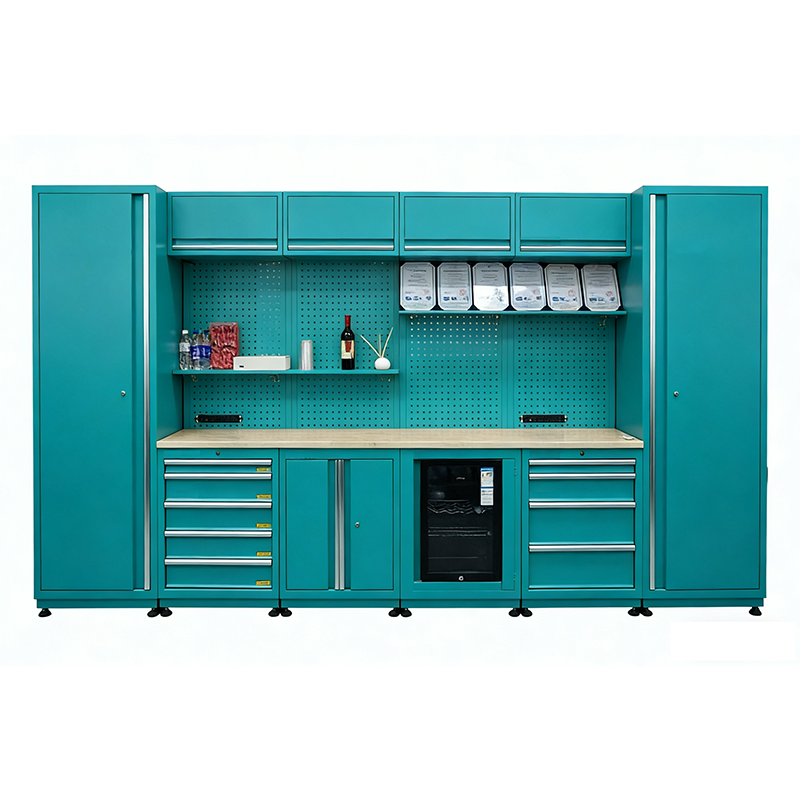
# Workshop Modular Storage Combination Cabinet (Model 719610) Product Introduction This workshop sto...
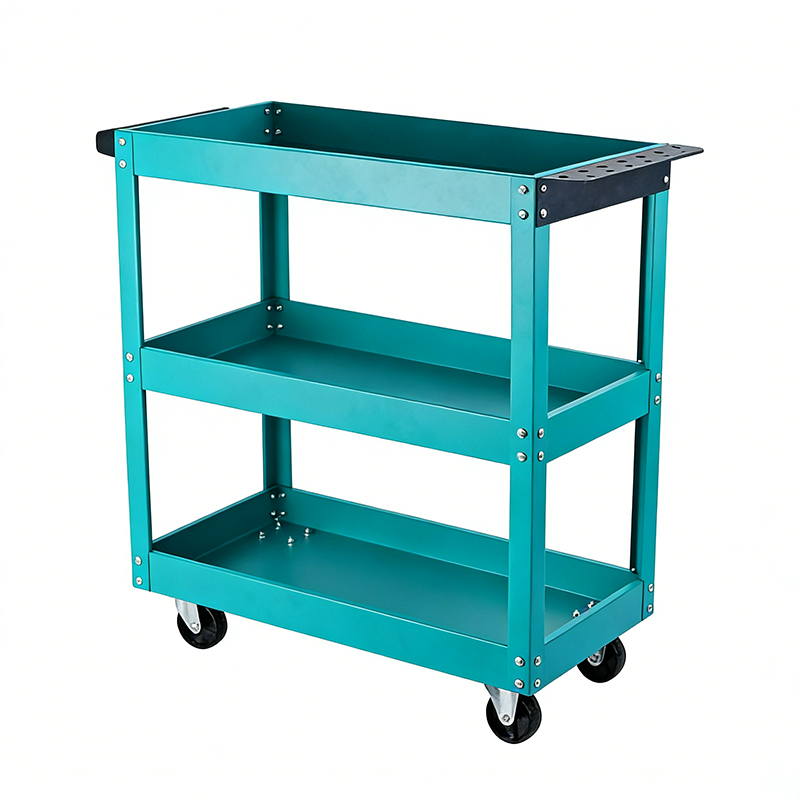
This is a **Three-Layer Auto Repair Tool Cart**, a multifunctional mobile maintenance storage device...
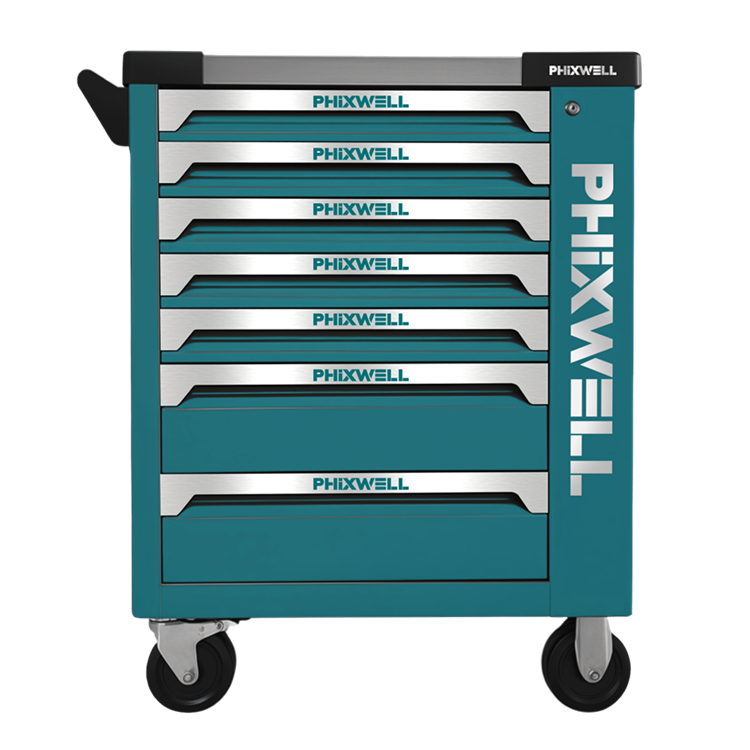
The tool cart group provides a set of tools to solve the problem of tool confusion and difficulty in...
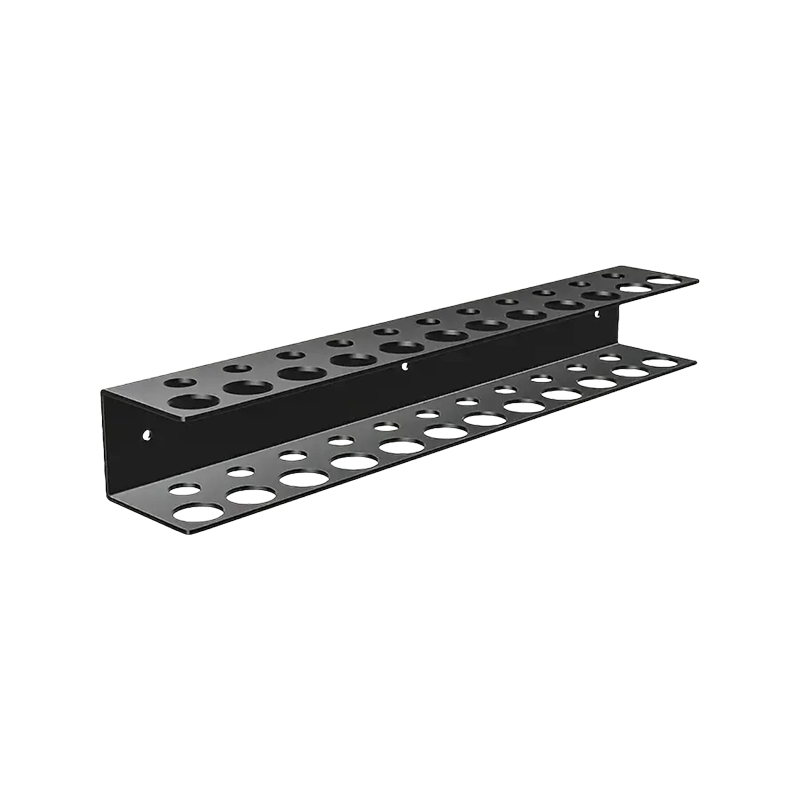
Clear classification: Usually, there are multiple independent slots or hooks, which can be divided a...
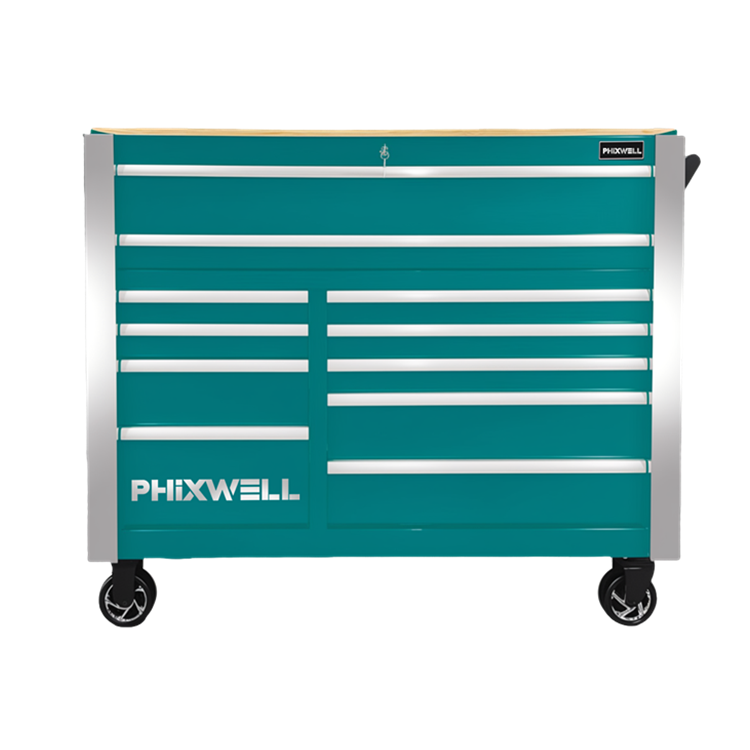
Prevent insufficient tool protection: Avoid rusting, collision or calibration failure caused by long...
Our annual output of more than 100,000 tool cabinet can meet the needs of customers with different purchase volumes.

+86-18658800788
+86-0512-58499000

New City Industrial Park, No. 108 Sizha Road, Yangshe Town, Suzhou, Jiangsu, China

